
October 1, 2026 · 4-minute read
Monaco palace hotels: the pre-season pest control protocol
Terraces, suites, kitchens: before high season, a palace hotel must prove it has pests under control. The spring protocol, area by area.
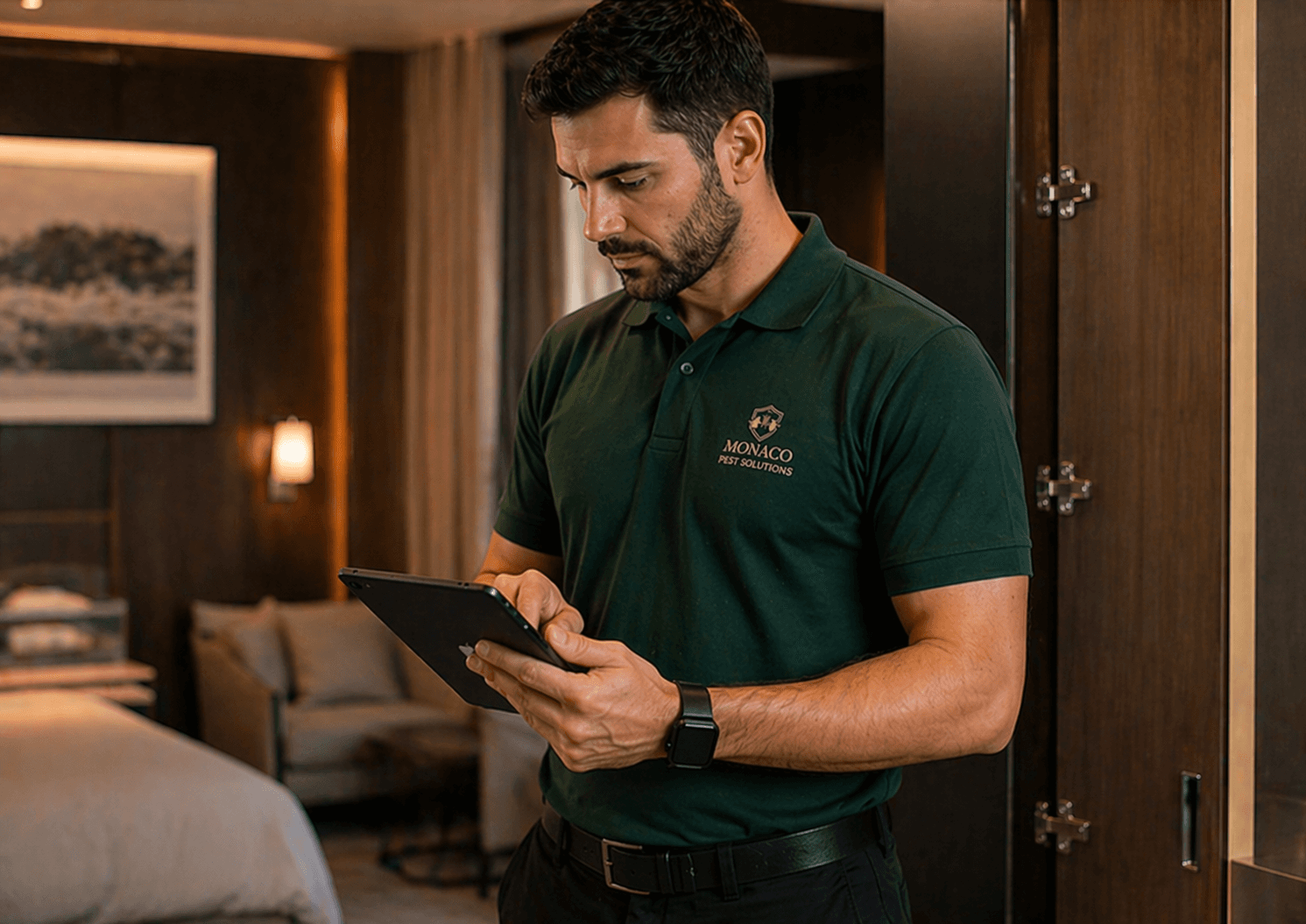
In Monaco, a palace hotel's season starts long before the first summer guests arrive. In spring, terraces reopen, suites closed over the winter come back into service and kitchens step up the pace. It is also when insects become active again and when quality auditors (hotel groups, luxury labels, international rankings, sometimes incognito) walk the corridors. A cockroach on a room-service trolley, a mouse dropping in a linen room or a hornet above the pool is enough to tarnish a reputation. The pre-season protocol therefore has two aims: to prevent, and to be able to prove it.
Why spring is the critical moment
Winter leaves its mark. Closed wings and low-season works have disturbed rodents and sometimes opened new routes through service ducts. With the Riviera's mild climate, several species become active at the same time, and seasonal prevention has to anticipate them all:
- ants, especially the Argentine ant, marching in columns towards pantries and buffets;
- Asian hornet foundresses, building their primary nest under an awning, in a pool house or in a hedge;
- the first tiger mosquitoes, as soon as water stands in a saucer, a gutter or a drain;
- pigeons, looking for nesting spots on cornices and balconies;
- cockroaches, more active as the heat rises in kitchens and plant rooms.
On top of this comes a risk that knows no season: bed bugs, discreet travellers that arrive in the luggage of an international clientele.
The pre-season protocol, area by area
A palace hotel works like a small town: the inspection covers each of its districts, with their target species.
- Kitchens, stores, bars and cellars: searching for cockroaches, rodents and pantry moths; checking deliveries, door sweeps, the back of equipment and drains.
- Rooms and suites: inspecting mattress seams, headboards and armchairs to detect bed bugs before a guest does; checking wardrobes, rugs and throws stored over the winter for clothes moths.
- Linen rooms, basements, spa and refuse areas: rodent traces, oriental cockroaches, silverfish in damp areas, flies, gaps around pipework.
- Terraces, gardens, roofs and façades: wasp and hornet nests, mosquito breeding sites, nesting pigeons, ant trails.
Every finding is located and photographed, then fed into the action plan: proofing, adjusting door sweeps, removing standing water, instructions for housekeeping and kitchen teams, and graduated treatments where needed.
What auditors want to see: written proof
During an inspection, the absence of visible pests is not enough: you have to demonstrate continuous control. A solid pest control file generally includes:
- the plan of monitoring points and treated areas;
- dated intervention reports, with findings, photos and actions taken;
- treatment certificates;
- follow-up of the corrective actions requested from staff;
- the history, showing the trend from one season to the next.
With MPS, intervention reports are signed electronically and illustrated with photos, and treatment certificates can be downloaded at any time from the client area, ready for an audit, a safety commission or an insurer.
Missteps to avoid before opening
- Spraying in a hurry the day before opening: odours in the rooms, residues on surfaces, and insects that scatter instead of disappearing.
- Treating the kitchen but forgetting the service ducts that connect it to the upper floors: the problem simply moves.
- Neglecting staff areas (canteen, changing rooms, accommodation), often the source of re-infestations.
- Waiting for a guest complaint before acting on a suspected bed bug case.
- Intervening without a written record: for an auditor, an undocumented treatment does not exist.
How MPS runs this protocol in a palace hotel
Everything starts with a free on-site audit: visual and acoustic inspection, species identification, mapping of entry points. Then comes a personalised action plan, area by area. The intervention is discreet: our Certibiocide-certified technicians (certificate N121134) work at times chosen to protect your operations and can arrive without distinctive signs. Treatment is graduated (mechanical, biological, then targeted chemical with approved biocidal products), supported by digital monitoring, with respect for your guests' pets and for the biodiversity of your gardens. Reporting closes every visit. Our protocols for the hotel sector are HACCP-compatible in the kitchens.
In high season, the unexpected can still happen: an occupied hornet nest above a terrace, an active infestation, contamination of a food area. A first phone call then triggers our 24/7 on-call service, and we call you back within 6 hours, 7 days a week.
Scheduling your palace hotel's pre-season audit
The right time is late winter, a few weeks before the terraces reopen: early enough to treat, correct and put together a complete file before the first guests arrive. Management, quality department or head chef: call us, from Monte-Carlo to Saint-Jean-Cap-Ferrat.
Request your free quote or call +377 37 70 70 02: reply within 6 hours.
Frequently asked questions
- When should a Monaco palace hotel schedule its pre-season audit?
- Ideally in late winter, a few weeks before the terraces reopen and occupancy rises. That leaves time to treat, fix weak points and gather the documents auditors expect.
- Which documents does MPS provide for a quality audit?
- Intervention reports signed electronically with photos, and treatment certificates that can be downloaded at any time from the client area, along with invoices. They can be shown during an audit, to a safety commission or to an insurer.
- Can you intervene without disturbing guests?
- Yes. Our interventions are discreet, scheduled at times that protect your operations, and the team can arrive without distinctive signs. To arrange the free audit, call +377 37 70 70 02.