
September 16, 2026 · 4-minute read
End-of-season pest audit: what your hotel reports reveal
October and November are the right time to review your hotel's pest season: seasonal trends, weak points and the adjustments to make before spring.
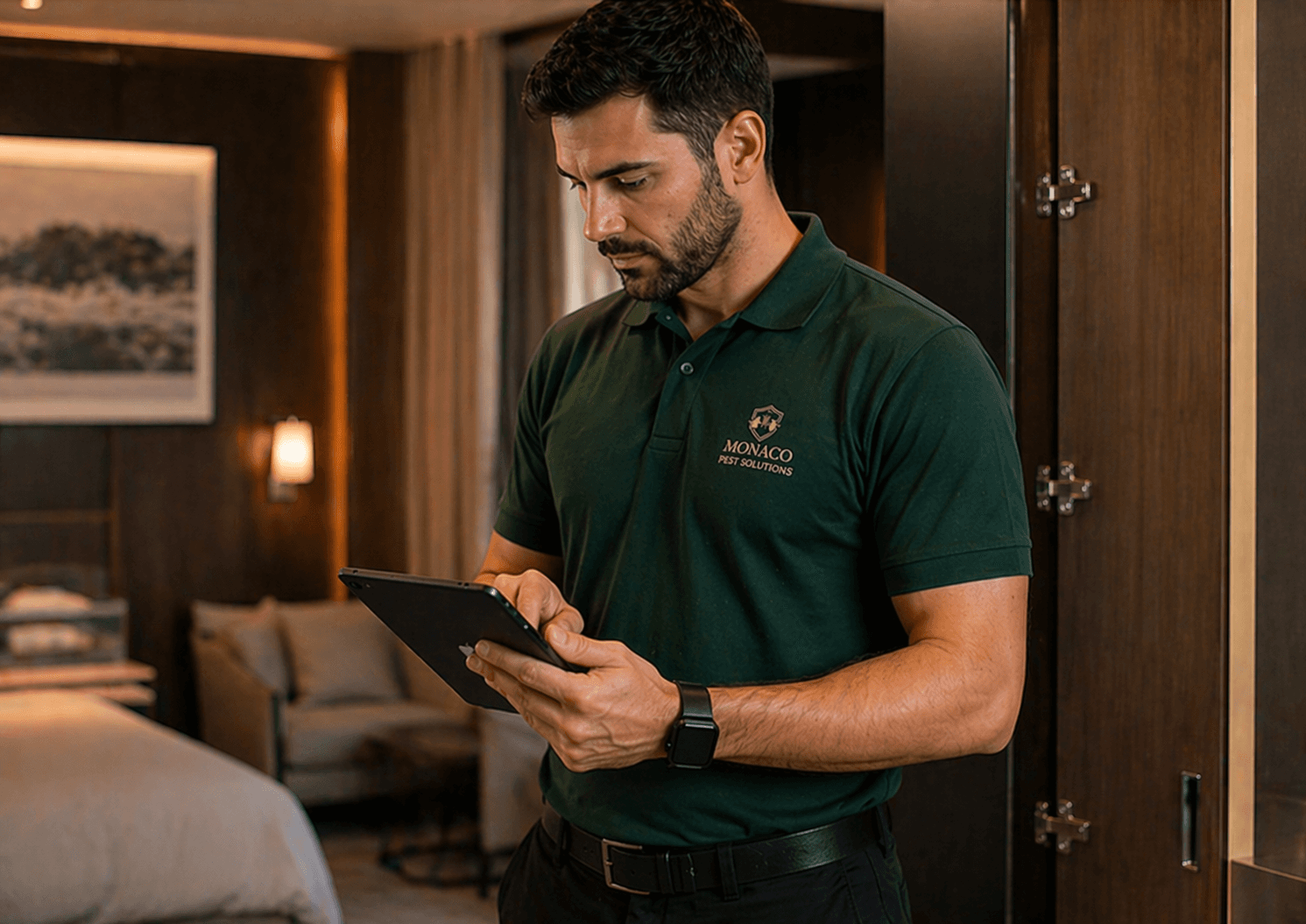
In Monaco's hotel industry, the season leaves little time to step back. Between the major events, from Formula 1 to the Monaco Yacht Show, fully booked rooms and packed terraces, teams deal with reports as they come in. Once the high season is over, October and November offer the ideal window to take stock: what happened, where, when and why? And above all, what needs to be corrected before spring?
Why review the season in October and November
- Memories are still fresh: housekeepers, chefs, maintenance and front desk staff remember the incidents. Gather the seasonal staff's observations too, before they leave.
- Spaces are easier to access: with lower occupancy, rooms, kitchens and technical areas can be inspected in depth.
- Winter is prepared now: in autumn, rodents look for heated shelter, and annual closures leave areas without activity. Our article on rodents settling in for winter in Monaco explains this risk in detail.
- Works are easier to plan in the low season: sealing gaps, redoing joints, replacing grilles.
What your reports reveal
Gather everything produced during the season: intervention reports, treatment certificates, monitoring data and the log of staff reports. Read together, these documents tell a story.
Seasonal trends
- Mosquitoes around terraces, gardens and the pool, from late spring to autumn.
- Wasps and hornets drawn to sweet drinks and desserts served on the terrace, especially in late summer.
- Cockroaches in the kitchen, encouraged by the heat of the equipment and by deliveries.
- Bed bugs linked to the flow of travellers, more frequent when the hotel is full.
- Pigeons on roof terraces and façade ledges.
Recurring weak points
The same floor, room or area appearing several times in the reports often points to a structural cause: a service riser, a false ceiling, a pipe penetration. Delivery bays, the bin store, cellars and room-service trays left in corridors are also classic hotspots.
Procedural gaps
The time between a report and the intervention, the application of the bed bug protocol (room blocked, linen isolated), the traceability expected during your HACCP audits: the review shows where the organisation held firm and where it slipped.
The MPS method for a useful review
Our approach follows the four steps of our method:
- Free on-site audit: review of the season's data, then visual and acoustic inspection of kitchens, floor pantries, linen rooms, sample rooms, waste areas, cellars, roofs and gardens, with identification of species and entry points.
- Personalised action plan for the winter and the following season.
- Discreet intervention if needed, at hours that protect your business, by a team that can arrive without distinctive signs: digital monitoring and graduated treatment, mechanical, biological, then targeted chemical with approved biocidal products.
- Reporting: electronically signed reports with photos and treatment certificates downloadable from your client area, ready for your audits, the safety commission or your insurer.
Adjustments to decide before spring
- Schedule: plan a preventive check before reopening or before the high season resumes, as explained in our article on the spring protocol for Monaco's palaces.
- Works: use the low season to seal the entry points identified.
- Procedures: unpacking boxes outside the kitchens, waste management, the bed bug protocol, tray collection.
- Monitoring: move the devices to the areas where activity was recorded.
- Teams: include reporting instructions in the induction of new seasonal staff.
What not to do
- File the reports away without reading them.
- Wait for the first guest complaint next season.
- Treat the whole property ‘preventively’ without a diagnosis: it is pointless and fixes no underlying cause.
- Forget the areas closed in winter, which rodents colonise silently.
A partner used to the demands of hotels
Palaces and hotels are among our clients, in Monaco and across the Riviera. Our protocols are HACCP-compatible for hotel kitchens. For a situation with immediate risk, such as an active infestation or contamination in a food area, our 24/7 on-call service is triggered after a first phone call, and we call you back within 6 hours, 7 days a week. Discover our dedicated hospitality offer.
Schedule your end-of-season review
Suggest two or three slots in October or November: we will arrange the free audit at a time that protects your business.
Request your free quote or call +377 37 70 70 02: reply within 6 hours.
Frequently asked questions
- When should a hotel's end-of-season pest audit be scheduled?
- In October or November, once the high season is over and before the annual closure or winter works. Teams still remember the incidents and spaces are easier to inspect.
- Which documents should be gathered for the review?
- Intervention reports, treatment certificates, monitoring data and staff reports. With MPS, electronically signed reports with photos, certificates and invoices are all kept in your client area.
- Is there a charge for the end-of-season audit?
- No, the on-site audit is free, as is the detailed quote, with no obligation. Call +377 37 70 70 02 or request your free quote online: reply within 6 hours.