October 8, 2026 · 4-minute read
Rats and mice in Monaco: act in October, before they move in
With the first cool nights, rats and mice look for heated shelter. The 7 entry points to seal in Monaco before winter, and how we can help.

From mid-October to the end of November, Monaco enters the critical period for autumn rodents. With the first cool nights, brown rats and mice look for shelter in heated buildings: cellars, car parks, boiler rooms, plant rooms, lofts. A pair of rats that settles in during October may have produced several litters before the end of winter.
1. Why October and November are the months not to miss
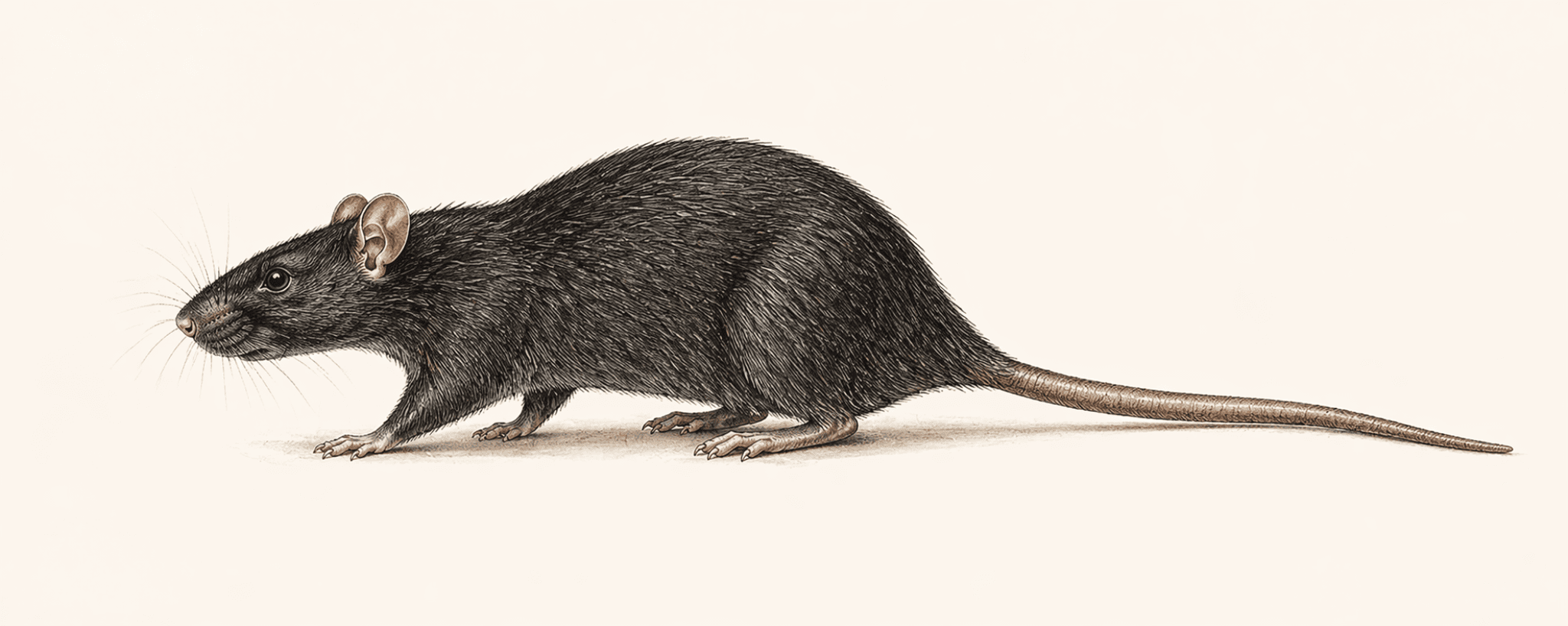
Rodent biology. As winter approaches, brown rats (Rattus norvegicus) and house mice (Mus musculus) look for warm, dry shelters close to food. From the first cool nights, they leave gardens, embankments and outdoor networks for the buildings closest to their summer territory.
Particular pressure in Monaco. Dense buildings, the nearby sea and constant humidity, restaurants and plentiful food, underground car parks that stay milder than the outside air: every attraction factor is there. This is typically when the first signs appear in the cellars, bin stores and car parks of residential buildings.
Sealing up in autumn means avoiding the spring colony. A female rat can have 5 to 6 litters a year, each of 7 to 12 young. A colony that is well established in November becomes much harder to control in March and April. Acting in autumn means dealing with a few entry points rather than with an established colony.
2. The 7 entry points to seal before the end of November
Point 1 — Rainwater and wastewater outlets. Unprotected pipes (corroded or missing grilles, disused traps) are a major access route. The fix: tight-mesh stainless steel grilles, 6 mm at most.
Point 2 — Service ducts between floors. Openings through floor slabs for electrical cables, pipework and ventilation are often poorly filled (degraded polyurethane foam). They are redone with high-density mortar or steel wool, which rodents cannot gnaw through.
Point 3 — Basement and car park doors. A gap of more than 6 mm under a door is enough for a mouse to get through: a brush strip or an aluminium door sweep closes it.
Point 4 — Access hatches and inspection chambers. Poorly sealed hatches in basements, bin stores and boiler rooms are a classic entry point: fit a rubber seal, plus a lock if the hatch can be reached from outside.
Point 5 — Damaged rendered façades. Cracks and chips wider than one centimetre must be filled, particularly at the foot of walls and around pipe penetrations.
Point 6 — Roofs and lofts. Check for broken tiles, aerial cable entry points and unscreened vents. A mouse can squeeze through an opening of less than one centimetre, a rat through a hole of about 2 cm.
Point 7 — Communal bin stores. This is often where an infestation starts in an apartment building: thorough cleaning, a well-fitting door, bins always closed. For apartment buildings, see our page dedicated to condominiums and managing agents.
3. Our method against autumn rodents
Our rodent control service follows the four steps of our method, ideally starting in mid-October:
- Free on-site audit: visual and acoustic inspection, identification of the species (rat or mouse), mapping of entry points with photos and numbering.
- Personalised action plan: a list of the sealing work required and of the monitoring locations, with a detailed quote, free and without obligation.
- Discreet intervention: sealing of access points, digital monitoring, mechanical traps and, where necessary, secure bait stations at strategic locations (anticoagulants in locked boxes, out of reach of children and animals). A check at the end of autumn verifies bait consumption and spots any new entry points that have appeared since.
- Reporting: an electronically signed intervention report with photos, plus a treatment certificate, available in your client area.
4. Warning signs to watch for at home
Visual: black droppings of 1 to 2 cm (rats) or 3 to 6 mm (mice), tracks in the dust, gnawed cardboard packaging.
Sounds: scratching at night in lofts, false ceilings and cavity walls. Rodents are mostly active at night: the noises are easiest to hear when the house is quiet.
Smell: a characteristic musky odour in an enclosed space (a cellar, a cupboard that has stayed shut for a long time).
Damage: stripped electrical cables (risk of short circuit), gnawed insulation, ripped-open food in storerooms. To tell the species apart, see our rats and mice page.
5. A free quote before winter
Key takeaway: most of the year's rodent prevention in Monaco is decided between mid-October and the end of November. A building that is well sealed before winter stands every chance of getting through the season without an established colony; a building left open is exposed to a heavier curative treatment in spring. Better to act now. For other seasonal pests, see also our seasonal prevention page.
Every situation is different: we draw up a free, detailed quote after a visit or an initial conversation, before any intervention and without obligation.
Request your free quote or call +377 37 70 70 02: reply within 6 hours.
Frequently asked questions
- Can a rat really get through a 2 cm hole?
- Yes: an adult brown rat can squeeze through a hole of about 2 cm, and a mouse through an opening of less than one centimetre, because their body follows wherever their head fits. That is why every gap of this size should be sealed before winter.
- How long does it take to proof a whole apartment building?
- It depends on the size of the building, its condition and the number of entry points: the timing is set out in the action plan drawn up after the free audit. We work at times that suit the life of the building; to arrange the audit, call +377 37 70 70 02.
- Can I seal gaps myself with polyurethane foam?
- It is not recommended: rodents easily gnaw through polyurethane foam. Use materials they cannot chew through, such as steel wool, high-density mortar, metal plates or stainless steel grilles; foam can serve, at best, as a finishing layer.