September 7, 2026 · 4-minute read
Roof cleaning on the Riviera: moss removal and water repellent
On the Riviera, salt air, humidity and pine shade encourage moss and lichen on roofs. Why moss removal needs a water repellent, and when to do it.

On the Côte d'Azur, it is tempting to think roofs have an easy life: little frost, plenty of sunshine. Yet between salt-laden sea air, damp autumn and winter nights and the shade of pine trees or neighbouring buildings, roofs in Monaco and along the Riviera are quickly covered with moss, algae and lichen. Removing moss on its own only solves the problem for a while: without a water repellent applied at the right time, the growth comes back. Here is how to go about it, and in which season.
What sea air and shade do to your roof
- Sea spray deposits salt on the tiles. As it dries, the salt crystallises in the pores of terracotta or stone and gradually weakens the surface.
- Humidity and shade, on north-facing slopes, under pine trees or between two buildings, encourage moss, which holds water like a sponge, and lichen, which becomes embedded in the material.
- Pine needles and leaves block gutters and valleys: water overflows, seeps under the tiles and runs down the façades.
- In the hinterland, on stone-slab or tiled roofs in mountain villages, frost cracks waterlogged materials.
Barrel or Roman tiles, the slate of some Belle Époque villas, the stone slabs of hilltop villages: each material reacts differently, and the method must be adapted to it.
Warning signs
- Green or black patches, or orange and grey spots of lichen.
- Tiles that stay dark long after rain.
- Displaced, cracked or broken tiles, or a damaged ridge.
- Gutters that overflow with every shower.
- Water stains on the ceiling of the loft or the top floor.
Moss removal: a method that protects the roof covering
- Inspection of the roof: condition of the tiles, ridges, flashings and drainage, and replacement of broken elements before any treatment.
- Mechanical removal of thick moss, with a brush or scraper.
- Application of an anti-moss treatment suited to the material, left to work, then rinsed off at low pressure.
- Cleaning of gutters and valleys.
A high-pressure washer should be ruled out on old terracotta: it strips the tile's surface layer, makes it more porous, can break or dislodge it, and drives water under the roof covering.
Water repellent: why it completes moss removal
A roof water repellent limits water penetration into the material while letting it breathe. The tile dries faster after rain, absorbs less salt-laden water and gives moss and lichen less of a foothold. It is applied only to a clean, sound and dry surface, right after moss removal. The product is chosen according to the material: what suits a terracotta or concrete tile does not necessarily suit a stone slab, and on natural slate, which has low porosity, its benefit is assessed case by case.
The right timing on the Riviera
- The best periods: early autumn, before the heavy rains, and spring, when the weather is dry and mild.
- To avoid: heatwaves, when scorching tiles make the product dry too fast, and any period when rain is forecast in the days following application.
- In the hinterland, the work must be done before the first frosts.
- In co-owned buildings, plan ahead: roof works are often decided at the general meeting, which takes time.
What not to do
- Climbing onto the roof alone: the risk of falling is real, and an old tile breaks underfoot.
- Using bleach or unsuitable products: stains, damaged materials, run-off into the garden or the pool.
- Applying water repellent to a roof that is still mossy or damp: the product will not penetrate properly.
Roofs and pests: make the most of the work
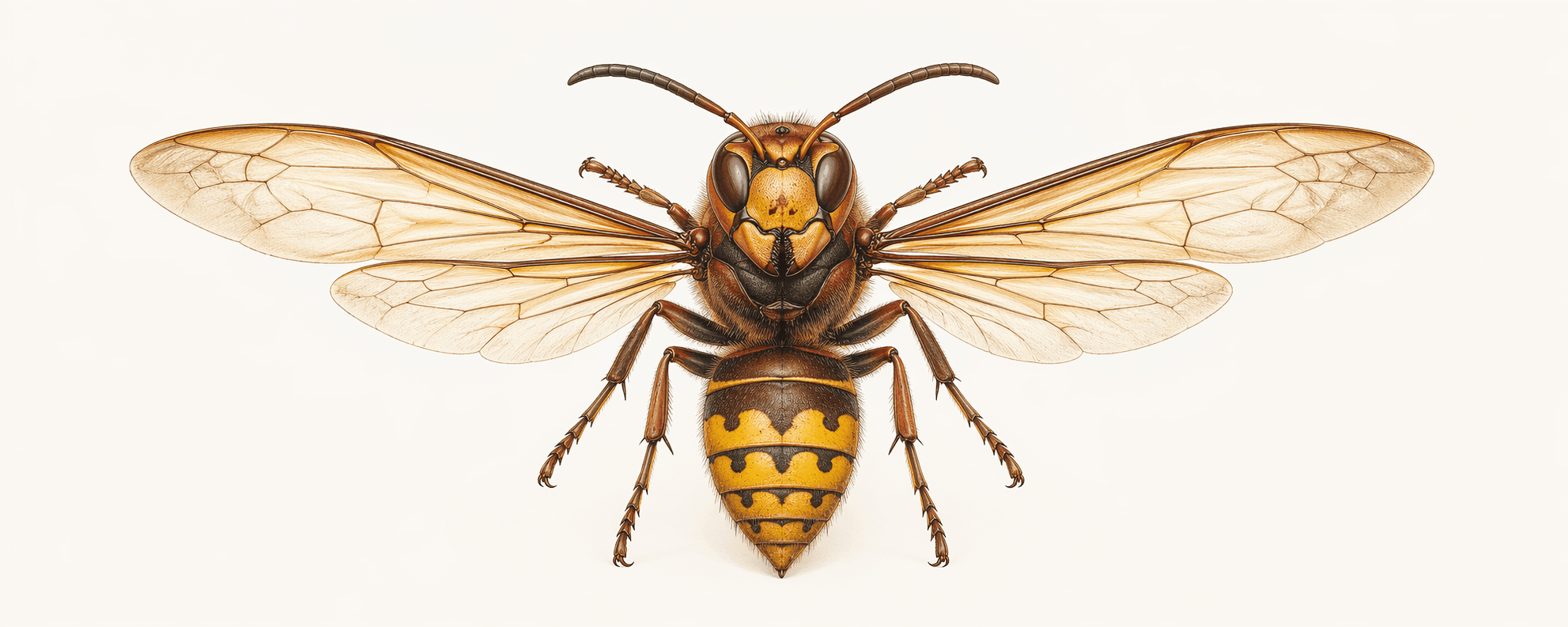
A neglected roof also attracts pests. Blocked gutters hold stagnant water where the tiger mosquito lays its eggs. Displaced tiles give pigeons access to the loft, as well as the black rat, an excellent climber, and wasps and hornets, which sometimes build their nests there: read our article on hornet nests in roofs and timber frames. Finally, pigeon droppings soil and damage the roof covering: our pigeon control service tackles the problem at its source.
How MPS works
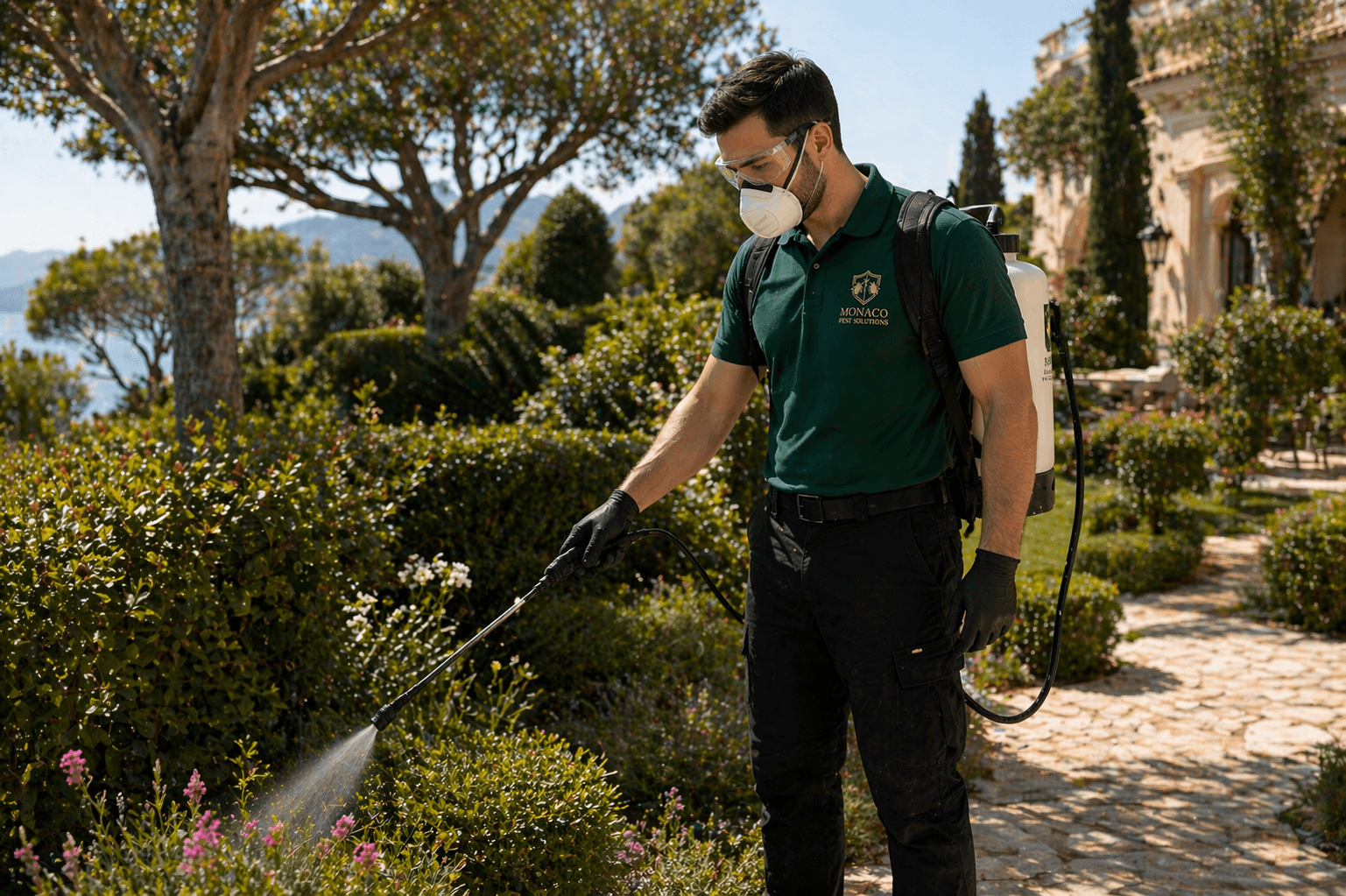
Our on-site diagnosis is free: we examine the roof covering, the drainage and the pests' entry points, then give you a detailed quote, free and without obligation, for roof cleaning and, if needed, pest treatment. We work discreetly, at a time that suits you, throughout Monaco and the Riviera, from Menton to Cannes, for villas and co-owned buildings alike. The intervention report, electronically signed and illustrated with photos, is then available in your client area.
Does your roof need a diagnosis?
A photo of your roof sent by WhatsApp helps us prepare the visit. We will then suggest a slot, ideally within the right weather window.
Request your free quote or call +377 37 70 70 02: reply within 6 hours.
Frequently asked questions
- What is the best season to remove moss and apply a water repellent on the Riviera?
- Early autumn, before the heavy rains, and spring, in dry and mild weather. Avoid heatwaves and periods when rain is forecast in the following days; in the hinterland, get the work done before the first frosts.
- Can a roof be cleaned with a high-pressure washer?
- It should be ruled out on old terracotta: high pressure strips the tiles' surface layer, makes them more porous and can drive water under the roof covering. The preferred approach is mechanical removal, a suitable anti-moss treatment, then a low-pressure rinse.
- How much does roof cleaning with a water repellent cost?
- It depends on the surface area, the material and access: the on-site diagnosis is free, as is the detailed quote, with no obligation. Call +377 37 70 70 02 or request your quote online: reply within 6 hours.