August 11, 2026 · 7-minute read
Dust Mites in Yacht Cabins in Monaco: Diagnosis and Discreet Eradication
Marine humidity, confined cabins, heavy textiles: a yacht is a dream habitat for dust mites. Dockside and at-sea protocol, season planning included.
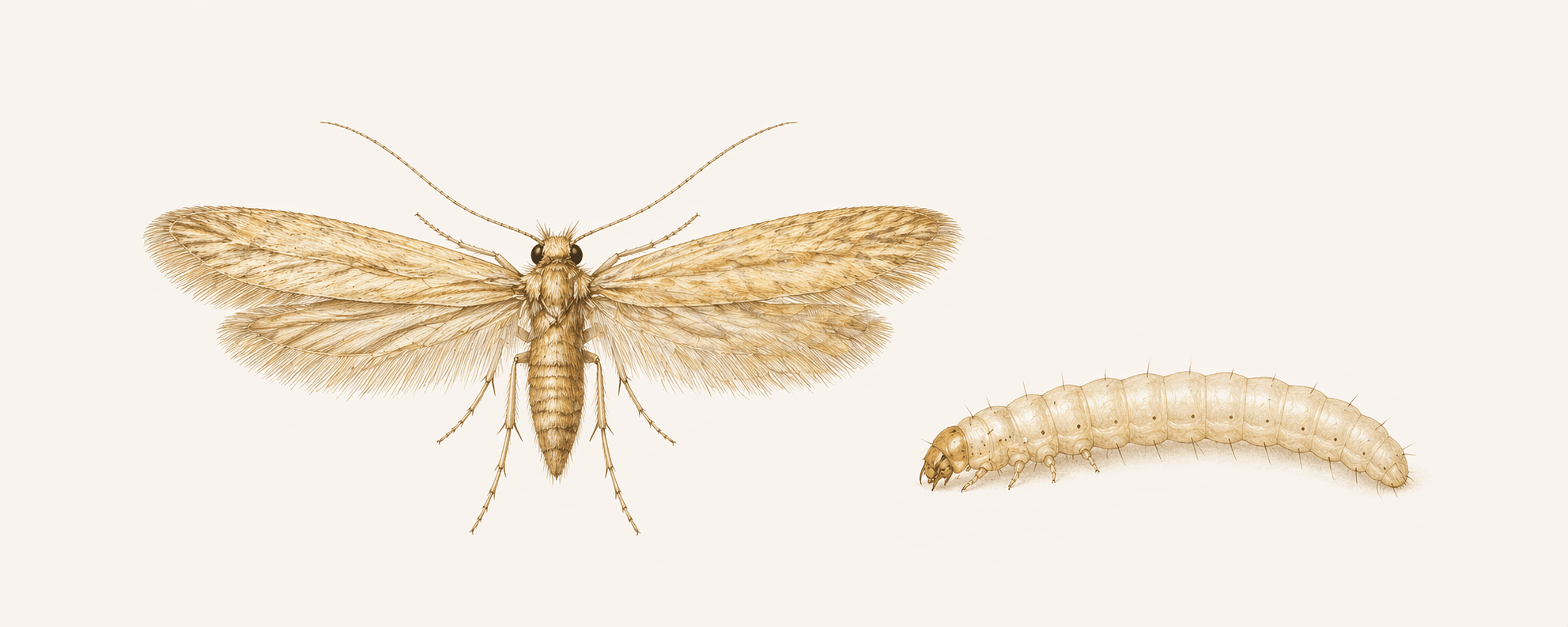
A large yacht concentrates, within a few dozen metres, everything Dermatophagoides pteronyssinus looks for: relative humidity that rarely drops below 65% in the Mediterranean, confined volumes with limited ventilation, cabins lined with heavy textiles, and berths occupied by a succession of guests and crew. The paradoxical result: the most luxurious interiors in the harbour are often the most mite-laden. Monaco Pest Solutions has developed a specific protocol for yachting, operable dockside as well as at sea, designed around the constraints that make this environment unique: space, discretion, charter scheduling. Here is how we approach diagnosis and eradication on board.
Why are yacht cabins an ideal habitat for dust mites?
Ashore, a bedroom benefits from generous volumes, daily airing and seasonal cycles that periodically hold mites back. A cabin accumulates the opposite handicaps:
- Permanent marine humidity: sea air shows 70 to 85% relative humidity much of the year. Every door opening, every cracked porthole, every trip up the companionway recharges the boat with water vapour — which marine air conditioning, sized for thermal comfort more than dehumidification, cannot always extract.
- Confinement: a guest cabin is often less than fifteen square metres with no direct opening, ventilated by a duct network serving several compartments. Air stagnates as soon as the plant idles — typically when the boat is dockside without guests.
- Ubiquitous heavy textiles: padded wall panels, tensioned deckhead linings, thick glued carpets, settees, lined blackout curtains, multi-layer bedding. Per square metre, a yacht contains more furnishing textile than any villa — and every element is a potential reservoir.
- Unoccupied phases: between charters or during winterisation, closed, unheated, unventilated cabins become stable-humidity incubators where populations explode silently.
Add a factor often overlooked: yacht mattresses, custom-cut to hull shapes, are difficult to replace and stay in service for many years — long enough to accumulate a considerable load of Der p 1 and Der f 1 allergens.
How do you detect a mite infestation on board?
Since mites are invisible, detection relies on a cluster of clues that captains and chief stewardesses know well without always connecting them:
- guests complaining of night-time nasal congestion, morning sneezing or irritated eyes only on board, while everything is fine ashore;
- an asthmatic crew member whose symptoms worsen in their cabin — generally smaller and less ventilated than guest cabins;
- a persistent musty smell in certain cabins despite daily housekeeping, the signature of a saturated microclimate;
- recurrent condensation on linings or behind hull-side padding.
Our onboard survey turns these signals into data: cabin-by-cabin humidity measurement, including inside the mattress cores, inspection of reservoir zones (berths, paddings, carpets, supply ducts) and a semi-quantitative assessment of the allergenic dust load. The report handed to the captain ranks cabins by pressure level and serves as the baseline for measuring treatment effectiveness. The whole process takes a few hours, without dismantling, during an ordinary maintenance day.
What is the eradication protocol dockside and at sea?
The protocol applies our reasoned-control principles, adapted to shipboard constraints by technicians holding Certibiocide N°121134. Absolute priority to physical methods is non-negotiable in an inhabited, confined volume air-conditioned on a partially closed loop.
- Phase 1 — extraction: HEPA vacuuming of all cabin textiles: mattresses on every face, bed bases and berth lockers, wall paddings, carpets, curtains. The extracted dust concentrates the bulk of the allergens.
- Phase 2 — thermal shock: high-temperature dry steam on berths and textile surfaces, using nozzles suited to cabin angles and paddings. Dry steam is the only thermal treatment compatible with the joinery, leathers and varnishes of a yacht interior: minimal residual moisture, zero residue.
- Phase 3 — encapsulation: anti-mite encasings sewn to the dimensions of custom mattresses — a yachting-specific point we coordinate with the vessel's upholsterer.
- Phase 4 — airflow sanitation: treatment of the supply ducts serving the treated cabins and inspection of the air-conditioning condensate trays, so the network cannot reseed the cabins.
Dockside, the complete treatment of a 40 to 60 metre yacht takes one to two days, cabin by cabin, coordinated with the vessel's schedule. At sea or at anchor, a reduced team embarks with compact autonomous equipment: this format covers mid-charter emergencies — a strongly allergic guest, for instance — treating a single cabin in under two hours. Critical situations go through our 24/7 emergency line, with boarding possible from the main ports between Saint-Tropez and Menton.
How does the intervention preserve the vessel's discretion?
In yachting, confidentiality is not a commercial option: it conditions access to the boat. Our operating framework carries over the standards we apply to prestige houses ashore, hardened for the maritime environment:
- coordination exclusively with the captain or chief stewardess, who remains the sole point of contact and sole holder of the report;
- technicians in neutral attire, without markings, indistinguishable from any port technical contractor;
- equipment packed in unbranded flight cases, brought aboard via the crew gangway;
- no mention of the vessel, its flag or its owners in any external document whatsoever; a confidentiality agreement signed before boarding;
- interventions schedulable during crew rotations or shipyard days, when contractor presence is routine.
This discretion also applies internally: at the captain's request, the intervention can be presented to the crew as a standard textile hygiene operation — which is exactly what it is.
When should de-infestation be scheduled in the season?
The optimal calendar follows the rhythm of Mediterranean yachting:
- March-April, before recommissioning: the most valuable treatment of the year. It purges the load accumulated during winterisation — the silent population boom period — and delivers a sanitised boat for the first charters.
- June, before peak season: intermediate check of the busiest cabins and top-up treatment if humidity readings justify it.
- September-October, after high season: full post-charter treatment, ideally coupled with end-of-season works, so a maximum load does not ferment all winter in a closed boat.
- Winterisation: properly sized dehumidifiers and periodic ventilation instructions, which divide the starting pressure the following spring.
For yachts in intensive charter, we recommend entering de-infestation in the same maintenance plan as air-conditioning plant servicing, with which it interacts directly. Managed vessels can pool these visits with the other onboard pest-control services described on our yachting page.
How do you prevent reinfestation while cruising?
Between two professional visits, a few simple instructions — easy to fold into the crew's interior procedures — keep the pressure at its lowest:
- humidity standing order: keep cabins below 55% relative humidity, switching to dehumidification mode whenever the boat is unoccupied;
- bed linen washed at 60°C systematically between guests, duvets and pillows laundered at the end of every charter;
- weekly HEPA vacuuming of berths as part of cabin housekeeping, with the ship's vacuum equipped accordingly;
- doors of unoccupied cabins left open under way to encourage air circulation;
- immediate reporting of any condensation on linings, which betrays a thermal bridge to address.
These measures appear in the maintenance memo we hand over after each intervention, calibrated to the vessel's actual configuration.
One standard, from the bridge to the pontoon
Owners, captains, management companies: the level of expectation of a yacht interior deserves the same sanitary standard as the finest suites in the Principality. To understand the pest's biology, see our dust mites page; for a confidential onboard survey, request your free quote: we operate in Monaco and in every port along the Riviera, from Saint-Tropez to Menton — dockside, at anchor or at sea.
Zones served in Monaco and on the Riviera
We operate in particular on Monte-Carlo and La Condamine.
Frequently asked questions
- Can mites be treated during a charter without disturbing guests?
- Yes, in a targeted format. A single cabin is treated in under two hours — HEPA vacuuming, dry steam and resetting — while guests lunch ashore or enjoy an excursion. The team boards in neutral attire via the crew gangway, with compact equipment indistinguishable from an ordinary technical contractor's. Coordination goes exclusively through the captain or chief stewardess. For a full treatment of the vessel, however, it is better to target a window between two charters, ideally coupled with a maintenance day.
- Does dry steam damage the joinery and leathers of a yacht interior?
- No — provided professional equipment is used and correctly set. Dry steam works with a very low residual moisture rate: it destroys mites and eggs by thermal shock without soaking the substrates. Our technicians adjust pressure, distance and contact time for each material, and shield sensitive elements such as high-gloss varnishes and full-grain leathers. It is precisely because it respects exceptional finishes that dry steam is our reference treatment on board, where any persistent chemical product would be unacceptable in a confined, inhabited volume.
- How often should a charter yacht be de-infested?
- The reference rhythm is two complete treatments per year: in spring before recommissioning, to purge the load accumulated during winterisation, and at the end of the season after the last charters. In between, a humidity check in June and weekly HEPA vacuuming of berths by the crew keep the pressure at its lowest. A yacht in intensive charter, with guests rotating weekly, may justify an intermediate targeted steam pass on the busiest cabins, scheduled on a crew-rotation or maintenance day.
- Can a yacht's custom mattresses be fitted with anti-mite encasings?
- Yes. Off-the-shelf encasings almost never fit yacht berths, cut in trapezoid shapes or with rounded corners following the hull. We have anti-mite encasings with sub-10-micron weave made to the exact dimensions of each mattress, in coordination with the vessel's upholsterer, with zips positioned to remain accessible inside berth lockers. Fitted after a complete de-infestation, they durably isolate the mattress core — the vessel's main allergen reservoir — and considerably extend the interval between professional treatments.
- Can the intervention report remain strictly confidential?
- That is our standard. The survey report and intervention record are handed exclusively to the captain or the person they designate, with no copy kept in any system accessible to third parties. No external document mentions the vessel's name, flag or the owners' identity; a confidentiality agreement is signed before boarding. This requirement, inherited from our work in prestige hospitality, is the normal condition of access in yachting and we treat it as an integral part of the service, on the same level as the technical result itself.