August 11, 2026 · 7-minute read
Dust Mites in Luxury Hotel Mattresses in Monaco: A Discreet De-Infestation Protocol
HEPA extraction, 100°C steam, suite rotation: a mattress de-infestation protocol built for five-star hospitality in Monaco, invisible to guests.
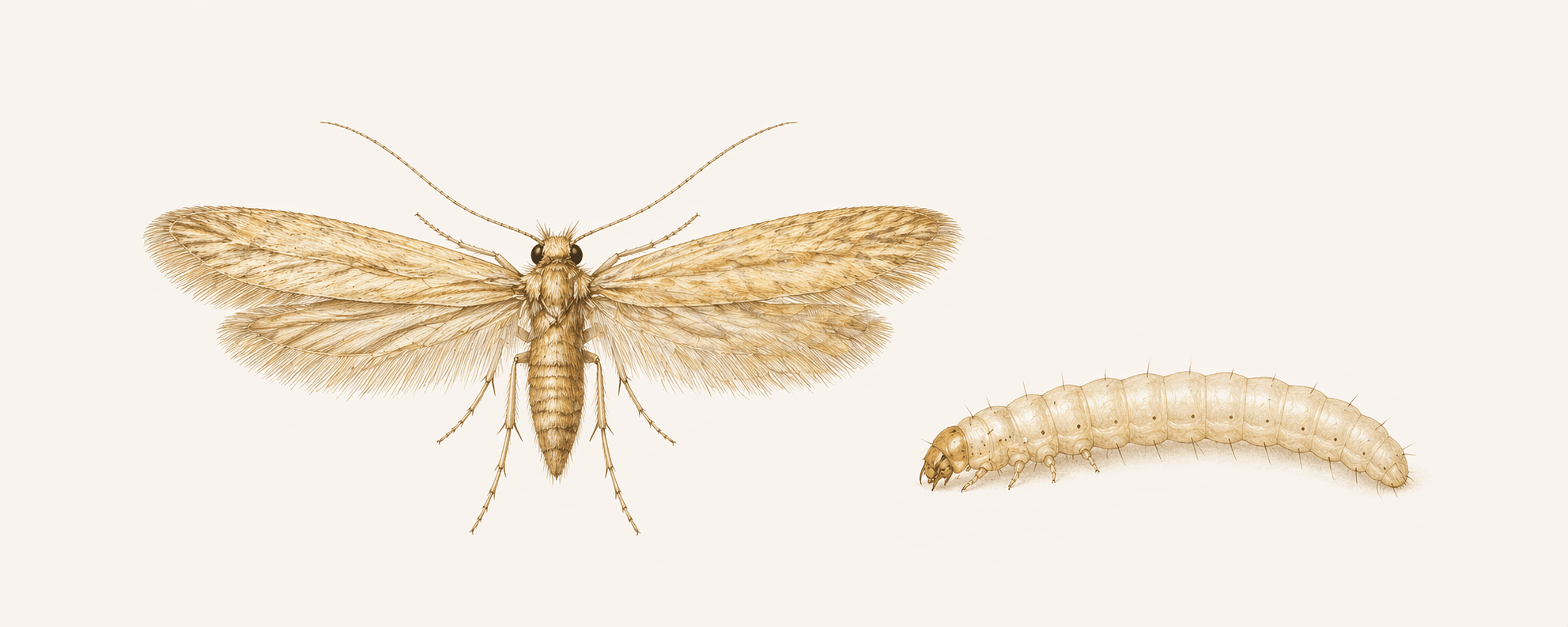
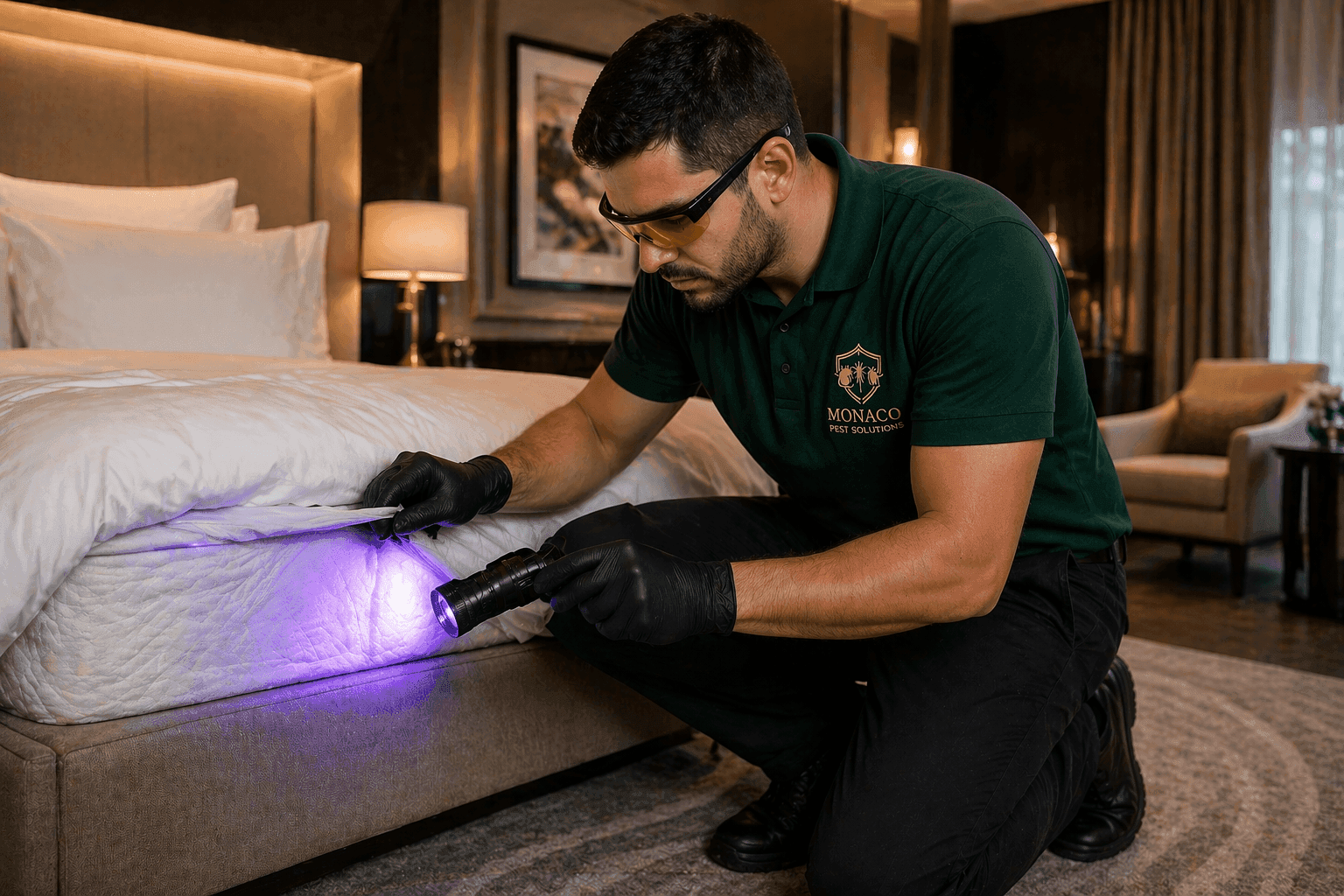
In five-star hospitality, bedding is a promise. Exceptional mattresses, plush toppers, a pillow menu, perfectly pressed linen: everything is designed for flawless sleep. Yet it is precisely this textile ecosystem — warmed every night by a different occupant and exposed to Mediterranean humidity — that constitutes the most favourable habitat imaginable for Dermatophagoides pteronyssinus and Dermatophagoides farinae. Monaco Pest Solutions supports prestige establishments in Monaco and along the Riviera with a de-infestation protocol built around a constraint residential work never faces: the operation must remain completely invisible to guests. Here is how we proceed, and why the subject deserves a place in your hygiene management plan alongside bed bug prevention.
Why are luxury suite mattresses particularly exposed?
A palace mattress accumulates load factors found nowhere else. First, occupancy: where a residential bed hosts the same sleepers, a suite welcomes dozens of guests each season, each contributing skin flakes — the exclusive food resource of dust mites. Second, depth: premium bedding stacks a high-end mattress, topper, protector and underlays, creating deep textile strata where the water vapour produced by a sleeper (up to half a litre per night) condenses and stagnates. Third, climate: in Monaco, outdoor relative humidity sits between 60 and 80% for most of the year, and rooms that are air-conditioned yet regularly opened to the sea maintain a bedding microclimate close to the mites' biological optimum (20-30°C, 65-80% humidity).
The result: without a dedicated maintenance programme, a suite mattress reaches, within two to three seasons, a Der p 1 and Der f 1 allergen load comparable to residential bedding neglected for years — even though the linen is changed daily. Linen laundering, however rigorous, never treats the mattress core, which is the true reservoir.
What risks does a mite load create for an establishment?
Mites do not bite and cannot be seen: the risk is not cosmetic, it is clinical and reputational.
- Allergic guests: a growing share of international clientele is sensitised to dust mites. A night in allergen-laden bedding translates into nocturnal rhinitis, irritated eyes on waking, sometimes asthmatic discomfort. The guest will never see the mite; they will remember a bad night in your hotel.
- Reviews and complaints: because symptoms are immediate, they surface during the stay — at breakfast, at reception, and increasingly online. A mention of "allergy" or "blocked nose all night" in a review durably undermines the perception of your bedding, the central commercial argument of prestige houses.
- Unfulfilled special requests: allergic guests increasingly request "hypoallergenic rooms" at booking. Without a documented protocol, that promise rests on nothing verifiable.
- Housekeeping staff: floor teams handle duvets and pillows daily; chronic exposure to resuspended allergens is an occupational health issue in its own right.
What does the hospitality de-infestation protocol involve?
Our protocol, delivered by technicians holding Certibiocide N°121134, applies reasoned-control principles: physical methods first, approved biocides only as a last resort and never on sleeping surfaces.
- Initial survey: inspection of a representative sample of rooms per category, humidity measurement inside the bedding, mapping of reservoir zones (mattresses, toppers, upholstered bases, padded headboards, carpets, double curtains).
- Mechanical extraction: professional HEPA-filtered vacuuming of the entire bed set — faces, seams, tufting and base — removing allergen-laden dust before any other action. This is the step that measurably cuts the Der p 1 load.
- Thermal steam shock: dry steam at 100°C and above passed over every face of the mattress and topper. The temperature destroys adult mites, larvae and eggs within seconds, leaves no residue, and the dry steam makes the mattress usable again after a short controlled drying period.
- Encapsulation: fitting of anti-mite encasings with sub-10-micron weave on mattresses and pillows in rooms designated hypoallergenic, turning the commercial commitment into a measurable reality.
- Targeted supplementary treatment: if the survey reveals massive peripheral reservoirs (aged carpet, wall hangings), localised application of an approved acaricide, away from contact surfaces, with re-entry intervals built into the floor schedule.
Every campaign produces a room-by-room report, usable in your quality documentation and compatible with a HACCP-style approach extended to the floors.
How often should a five-star property treat its mattresses?
Frequency depends on occupancy rate, the climatic exposure of the rooms (sea-facing or not) and the age of the bedding stock. Our typical recommendation grid for a Riviera property:
- Full steam de-infestation: twice a year, ideally in the shoulder seasons (March-April and October-November), when occupancy allows rooms to be blocked without commercial tension.
- Deep HEPA vacuuming of bed sets: at each quarterly mattress rotation (head-to-foot turning), in synergy with housekeeping.
- Hypoallergenic rooms: six-monthly checks of encasing integrity and allergen load.
- Signature suites with very high occupancy: an additional steam pass mid-season, achievable in one morning per suite.
An annual hygrometry audit completes the system: if rooms consistently show more than 60% humidity within the bedding, the problem is airflow-related and must be fixed at source — otherwise reinfestation is mechanical.
How does the intervention stay invisible to guests?
This is the question every rooms director asks us, and it is where our experience with prestige houses makes the difference.
- Check-out / check-in window: a room is fully treated in 60 to 90 minutes. We slot interventions into the turnover window (12pm departure, 3pm arrival), in direct coordination with the executive housekeeper, without ever blocking a sold room.
- Neutral attire and unbranded equipment: our technicians work in plain uniforms without markings, with equipment carried in flight cases identical to those of in-house technical teams. No liveried vehicle in guest areas.
- Service circulation: exclusive access via pantries and service lifts, schedules aligned with the floors' quiet hours.
- Operational silence: our HEPA extractors are selected for acoustic discretion, compatible with occupied adjacent rooms.
- Contractual confidentiality: no client references are ever disclosed, no intervention is publicly documented. Discretion applies to the pest and to the house alike.
For urgent situations — a strongly allergic guest complaining in an occupied suite, for instance — our 24/7 emergency line enables same-day intervention, even at the height of the season.
How does de-infestation fit into the hygiene management plan?
Dust mites fall outside food-focused HACCP, but the documentary logic is identical and your teams already master it: identify the hazard, define control points, record, correct. In practice, we help properties formalise a "mite allergen" hazard sheet in the floors register, a control plan with frequencies per room category, hygrometric alert thresholds and full traceability of treatment campaigns. This documentation becomes a tangible asset when marketing hypoallergenic rooms and a point of reassurance during hotel label audits. It dovetails naturally with the other components of our offer for prestige hospitality: bed bugs, cockroaches in technical areas, flying insects on terraces.
Where to start?
The first step is a confidential survey: a sample of rooms, an objective measurement of load and humidity, a report quantified in reservoir zones, and a proposed annual plan aligned with your occupancy calendar. A pilot intervention on one wing or floor then validates the system in real conditions before wider rollout. To learn more about the pest's biology, see our dust mites page; to schedule an audit of your bedding stock, request your free quote: we operate across Monaco and the entire Riviera, from Saint-Tropez to Menton.
Zones served in Monaco and on the Riviera
We operate in particular on Nice and Villefranche-sur-Mer.
Frequently asked questions
- How long does it take to de-infest a hotel room?
- A standard room is fully treated in 60 to 90 minutes: HEPA vacuuming of the complete bed set, high-temperature dry steam on mattress and topper, controlled drying and resetting. A suite with several beds and heavy textiles requires half a day. The intervention slots into the check-out/check-in window, so no sold room is ever blocked. For a property-wide campaign, deployment is planned wing by wing or floor by floor across lower-occupancy periods, typically in the shoulder seasons.
- Can guests notice that a de-infestation took place?
- No — and that is a contractual objective. The protocol relies exclusively on physical methods on sleeping surfaces: no smell, no residue, no chemical film. Our technicians work in neutral attire with unbranded equipment moved through service circulations, outside floor presence hours. The room is returned in its original presentation state, with the bed remade to your standards in coordination with the executive housekeeper. Nothing distinguishes a treated room from one that has simply been turned over as usual.
- Do mite-infested mattresses need to be replaced?
- In the vast majority of cases, no. A structurally sound mattress can be fully de-infested with HEPA vacuuming and 100°C dry steam, then protected by encapsulation: replacement is only justified for mattresses at end of life, deformed or deeply stained. Treating rather than replacing preserves a premium bedding stock that represents a considerable investment per room. The initial survey identifies precisely which units are recoverable and which rare units should be retired, documented in a room-by-room report for your asset management.
- How can a hotel offer credible hypoallergenic rooms?
- A credible hypoallergenic room rests on four documented pillars: complete initial de-infestation of the bed set, encapsulation of mattress and pillows with sub-10-micron encasings, removal of superfluous textile reservoirs (thick rugs, heavy double curtains) and six-monthly checks with written traceability. This per-room file enables reservations and reception to answer allergic guests' requests precisely, and turns a marketing claim into a verifiable commitment during audits — a genuine differentiator for international clientele with respiratory sensitivities.
- Is mattress de-infestation compatible with a HACCP approach?
- Yes. Dust mites fall outside the food scope of HACCP, but the method applies perfectly to the floors: hazard identification (Der p 1 / Der f 1 allergens), control points (bedding hygrometry, encasing integrity), frequencies defined per room category, records and corrective actions. We supply the template sheets and intervention reports that feed this documentary system, consistent with the pest-control registers your quality audits already examine on the catering side. The result is one coherent hygiene narrative across the whole property.