September 21, 2026 · 4-minute read
Charter yacht pre-delivery pest audit: the captain's checklist
Before your guests board, one cockroach or bed bug can spoil a charter: the captain's pest checklist, zone by zone, and when to call in help.
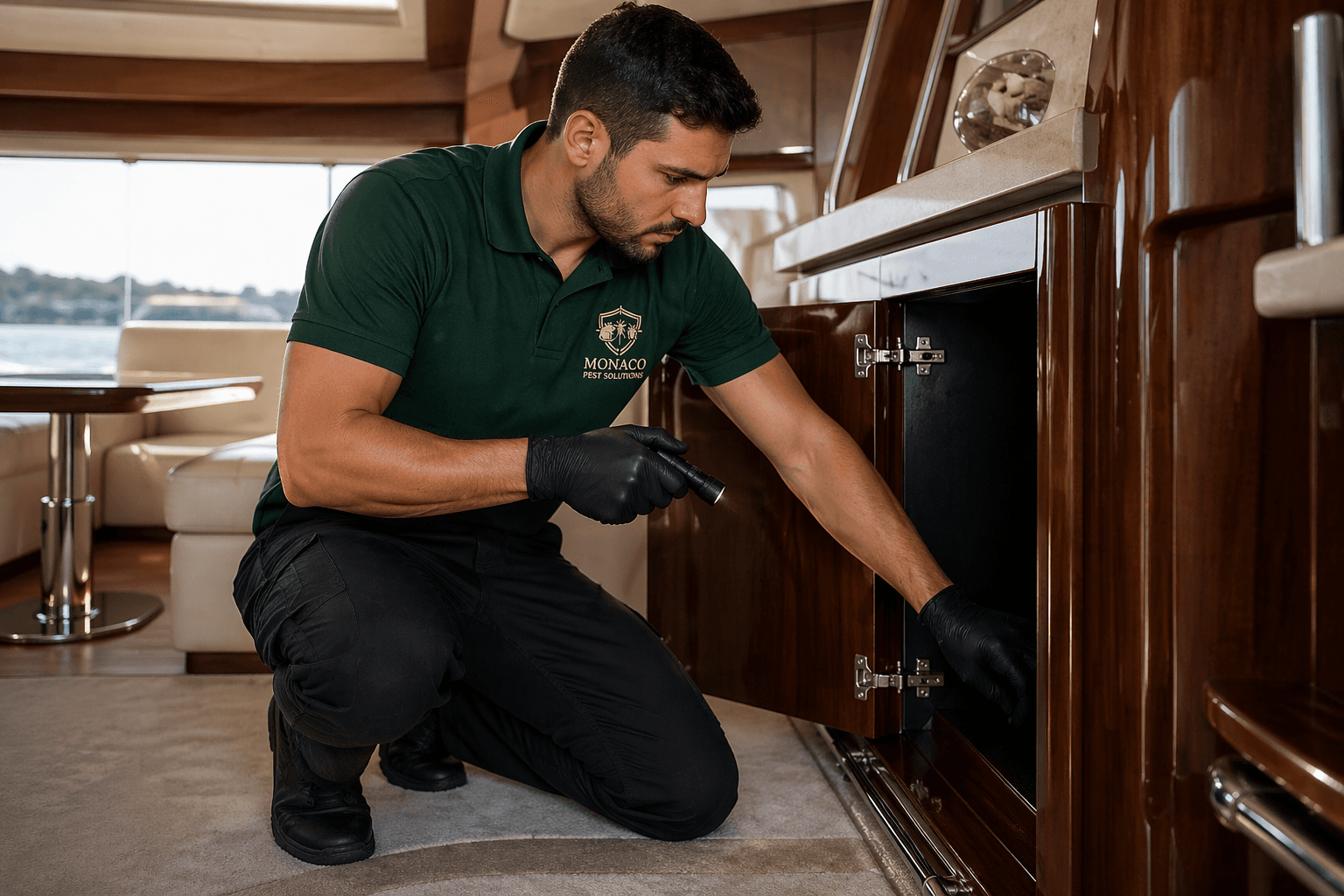
On a charter yacht, handing over to the client leaves no room for approximation. A cockroach crossing the galley during service, a bed bug found in a guest cabin or rodent traces in the provision store are enough to spoil a cruise and tarnish the boat's reputation. In Monaco, between two charters at Port Hercule or Fontvieille, turnarounds are tight: the pre-delivery pest check must therefore follow a simple, repeatable method. Here is the checklist we recommend to captains and heads of department.
Why a yacht picks up pests between charters
Every week, a yacht takes on provisions, luggage, linen and contractors. The ways in are well known:
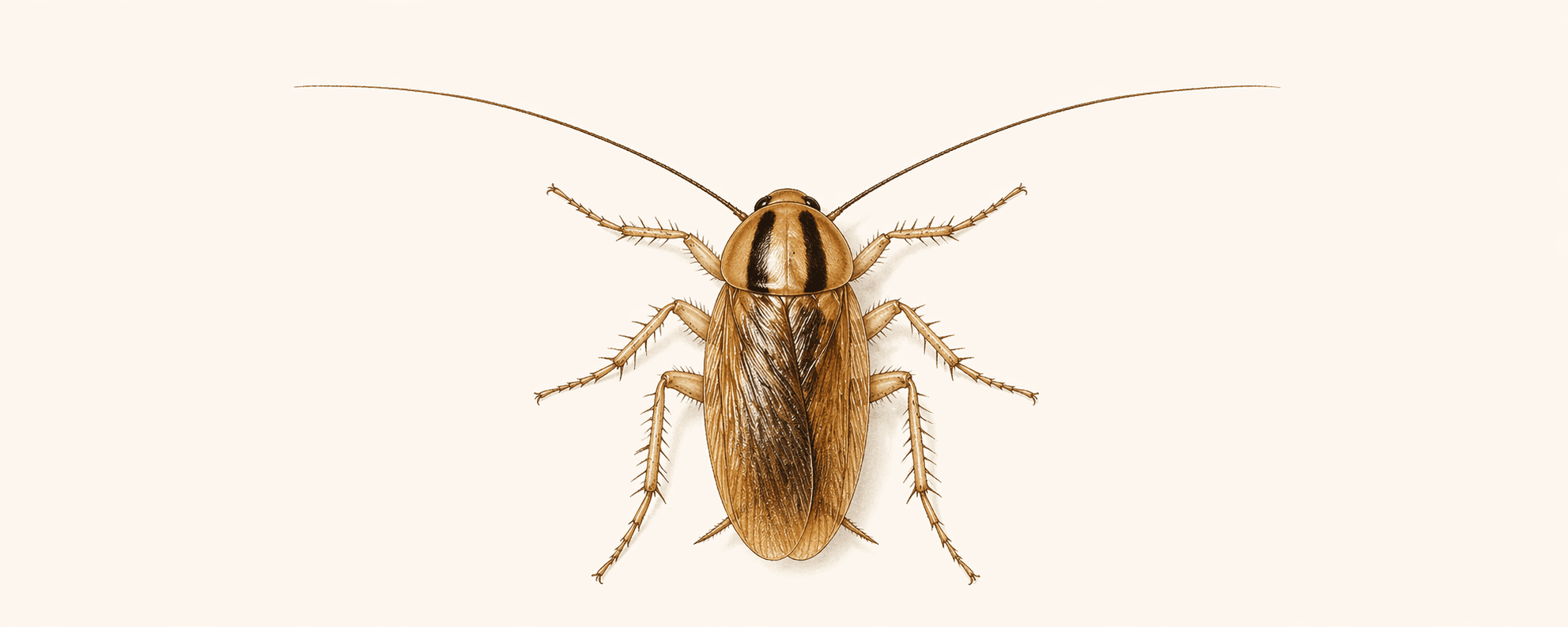
- Provisioning: boxes, crates and bags delivered to the quay can harbour German cockroaches and their egg cases, or pantry moths in flour, rice and dried fruit.
- Luggage, from guests and crew alike, the main vector for bed bugs.
- Mooring lines and the passerelle: rats and mice come aboard along the lines or via a gangway left in place overnight.
- Heat and humidity in the bilge, technical spaces and air-conditioning ducts, ideal for insects that shun the light.
The captain's checklist, zone by zone
Do the round as soon as the previous guests disembark, before the big clean that would erase the clues, then check the provisioning again when it is delivered. Take a powerful torch, always follow the same order and log every observation.
Galley, pantry and provision stores
- Inspect behind and under fridges, ovens and the dishwasher: cockroaches seek out the warmth of the motors.
- Look for small black droppings, shed skins, brown egg cases and a persistent musty smell.
- Open the dry stores: small moths, silken threads or larvae point to pantry moths.
- Make sure no provisioning boxes stay on board: unpacking is done on the quay.
Guest and crew cabins
- Strip the bedding and examine mattress seams, piping and labels, the headboard and the bed base.
- Look for black dots, tiny blood spots, translucent shed skins or small, flat, reddish-brown insects.
- Check wardrobes and luggage lockers, which are often overlooked.
Bilge, engine room and technical spaces
- Look out for rodent droppings, gnaw marks on cables, ducts and packaging, and greasy smear marks along the bulkheads.
- Check that cable and pipe penetrations are properly sealed.
Deck, tenders and mooring
- Make sure rat guards are fitted on the mooring lines and raise the passerelle at night.
- Empty any standing water in covers, the tender, buckets and trays: it is all the tiger mosquito needs to lay its eggs.
- Look under awnings and covers: wasps readily build their nests there when the boat has been idle.
What you must not do
- Set off an insecticide fogger in a cabin the day before boarding: smells and residues linger, and cockroaches and bed bugs scatter instead of being eliminated.
- Move a mattress or linen from a suspect cabin to another one: you risk spreading the infestation.
- Use unsuitable or unapproved products on board, especially near food areas.
- Wait and see: an isolated clue at the quay often turns into a real problem mid-cruise.
When in doubt, escalate straight away
A single clue justifies a call: a live cockroach seen in daylight, a bed bug, a rodent dropping. The earlier the report, the more time there is to act before the guests arrive. For a situation with immediate risk, such as an active infestation, our 24/7 emergency service is triggered after a first phone call, and we call you back within 6 hours, 7 days a week.
How MPS secures your yacht before delivery
Our method is the same as ashore, adapted to the constraints of life on board:
- Free on-board audit: visual and acoustic inspection, identification of the species and of the entry points.
- Personalised action plan, fitted around your turnaround schedule.
- Discreet intervention: our Certibiocide-certified technicians can arrive without distinctive signs, at a time that protects your business. Digital monitoring and graduated treatment: mechanical, biological, then targeted chemical with approved biocidal products, with respect for pets and biodiversity.
- Reporting: an electronically signed intervention report with photos and a treatment certificate, downloadable from your client area for your audits or your insurer.
We work in Monaco's ports and across the Riviera, from Cap-d'Ail to Cannes. To find out more, see our pest control for yachts page and our guides to cockroaches and bed bugs.
Any doubts before your guests board?
Describe the situation and send us a photo on WhatsApp if you can: we will arrange the on-board audit at a time that suits your turnaround.
Request your free quote or call +377 37 70 70 02: reply within 6 hours.
Frequently asked questions
- When should the pest audit be carried out before a charter?
- Ideally as soon as the previous guests disembark, before the big clean that would erase the clues, then again when the provisioning is delivered. If in doubt, call us: in an emergency, we call back within 6 hours, 7 days a week.
- Can a yacht be treated without alerting the guests or the marina?
- Yes. Our technicians can work without distinctive signs, at a time that protects your business, using graduated treatment and approved biocidal products.
- How much does an on-board pest audit cost?
- The on-board audit is free, as is the detailed quote, with no obligation. Call +377 37 70 70 02 or request your free quote online: reply within 6 hours.