
October 5, 2026 · 4-minute read
Pest control that spares pollinators: our Riviera approach
Bees, bumblebees, geckos, hedgehogs, insect-eating birds: how we tackle wasps, mosquitoes and rodents without sacrificing beneficial wildlife.
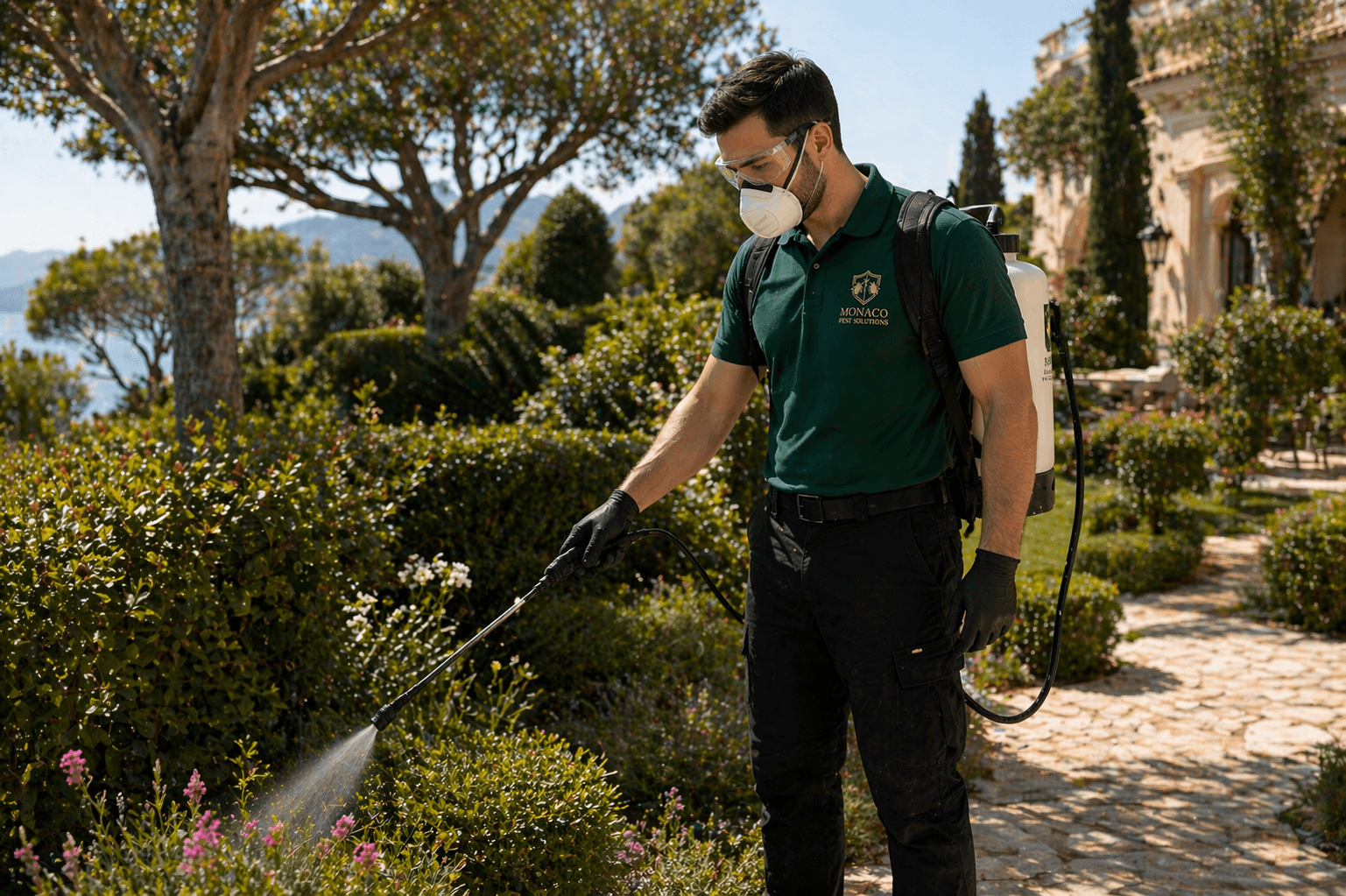
Terraced gardens in Monaco, villas on Cap-Ferrat, hotel patios, flower-filled roof terraces: the Riviera is home to remarkable biodiversity, and some of that wildlife works for you. Bees and bumblebees pollinate citrus trees, rosemary and lavender, geckos hunt the insects drawn to outdoor lights, and tits devour caterpillars. A badly conducted treatment can wipe out these allies along with the pests and, paradoxically, make it easier for the pests to come back. For Monaco Pest Solutions, pest control is not the same thing as destroying beneficial wildlife.
The allies to recognise in a Mediterranean garden
- Honey bees and wild bees: mason bees, mining bees, and the carpenter bee, a large black bee with blue-violet wings, impressive but not very aggressive.
- Bumblebees, active on the coast from late winter, which sometimes nest in the ground or in an old rodent nest.
- Hoverflies, small yellow-and-black striped flies that hover on the spot: people take them for wasps, whereas the larvae of many species devour aphids.
- The Moorish gecko, the gecko of Mediterranean walls, which hunts at night for insects attracted by lights. Our article on the gecko, an ally of the Mediterranean garden is devoted to it.
- The hedgehog, a big eater of slugs, worms and insects.
- Tits, effective against caterpillars, including processionary caterpillars.
- Bats, all protected in France, which eat large numbers of night-flying insects.
Identify before acting: the reflex that saves pollinators
Many needless destructions stem from a mix-up. A carpenter bee inspecting a pergola is not a hornet. A swarm of bees hanging from a branch in spring is not a nest: it usually moves on after a few hours or a few days, and a beekeeper can collect it. A hole in the lawn with a few bumblebees coming out of it usually calls for no treatment at all. Conversely, a papery ball under a roof or hornets coming and going along a hedge justify a prompt intervention. That is why the free MPS audit always includes species identification: we only treat what needs treating.
Integrated pest management: a graduated approach that spares beneficial wildlife
Our method is based on integrated pest management and on graduated treatment: mechanical first, biological next, targeted chemical as a last resort, with approved biocidal products. In practice, this approach rests on a few simple principles:
- Remove the cause before the insect: empty the standing water where tiger mosquito larvae develop, block rodent routes, have accessible caterpillar nests removed in winter.
- Prefer biological solutions: a biological larvicide in water that cannot be emptied, biological treatment of young processionary caterpillars at the right stage, natural predators encouraged rather than fought.
- Target precisely: a wasp or hornet nest is treated by injection into the nest, not by spraying the whole hedge; rodent baits stay locked in secure stations, out of reach of hedgehogs and pets.
- Choose the right moment: no spraying of flowering plants at the times when bees are foraging.
- Leave nothing that could poison: remove treated nests and dead rodents as soon as possible, to avoid poisoning birds, birds of prey and pets.
What you can do in your garden
- Plant nectar-rich Mediterranean species (rosemary, lavender, thyme, sage) and leave one corner less manicured.
- Avoid chemical slug pellets and off-the-shelf insecticides, which are dangerous for hedgehogs, birds and pets.
- Keep a water point for insects, but change the water at least once a week so that it does not become a mosquito breeding site.
- Keep a few dry-stone walls and leave gaps under fences for small wildlife.
- Put up nest boxes for tits away from busy areas.
Have your garden audited by MPS
A villa on Cap-Ferrat, a hotel garden in Monte-Carlo or the grounds of a condominium in Beausoleil: the on-site audit is free, with species identification and mapping of entry points. You then receive a personalised action plan, after which our Certibiocide-certified technicians intervene discreetly, with respect for pets and biodiversity, followed by full reporting with photos in your client area.
Request your free quote or call +377 37 70 70 02: reply within 6 hours.
Frequently asked questions
- A swarm of bees has landed in my garden: should it be destroyed?
- No. A swarm of bees is not a nest: it usually moves on after a few hours or a few days, and a beekeeper can collect it. Keep your distance and do not disturb it.
- Are your treatments dangerous for bees and pets?
- Our method is graduated: mechanical, then biological, then targeted chemical with approved biocidal products, only where necessary. Respect for pets and biodiversity is part of every protocol.
- Can mosquitoes be controlled without harming pollinators?
- Yes: the priority is to remove standing water and to use biological larvicides where water cannot be emptied, rather than spraying flowering plants. For a free audit of your garden, call +377 37 70 70 02.