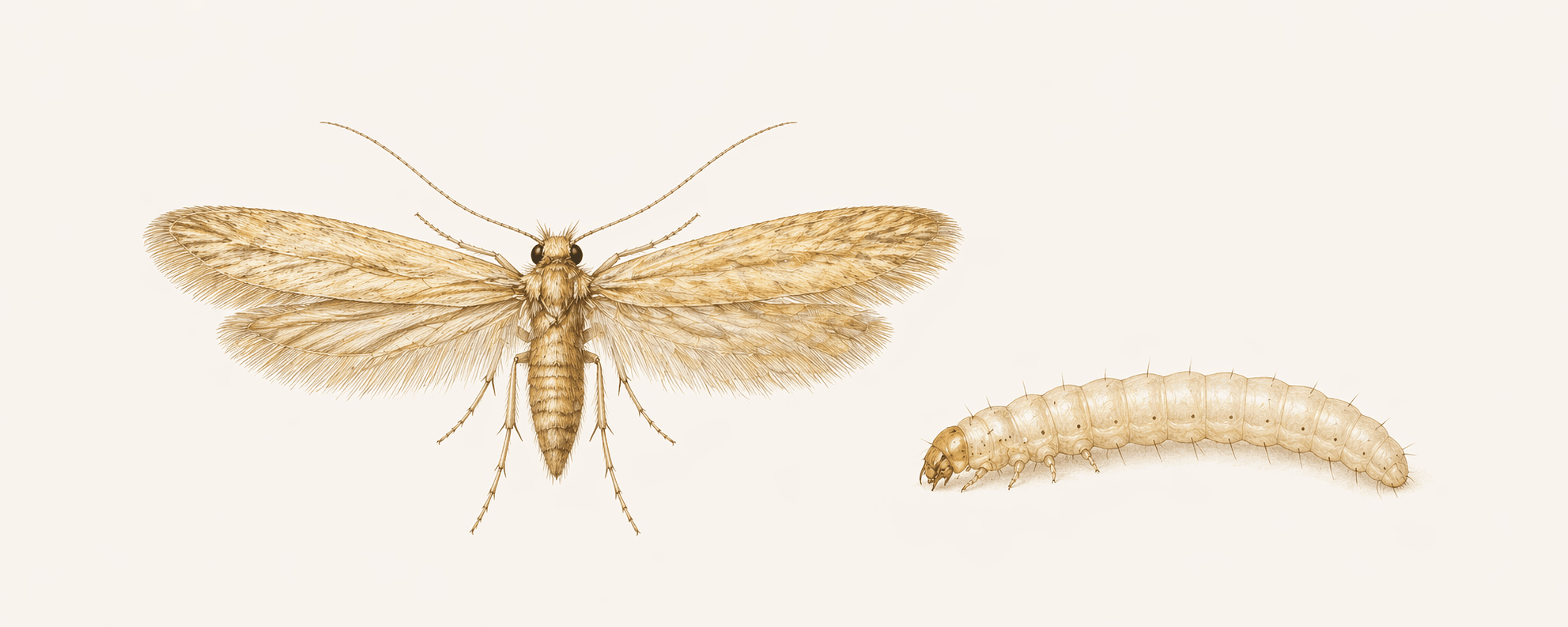
September 17, 2026 · 4-minute read
Processionary caterpillars in Monaco: danger to dogs and children
From February to April, processionary caterpillars come down from the pines: a danger to dogs and children. Emergency steps and winter prevention.
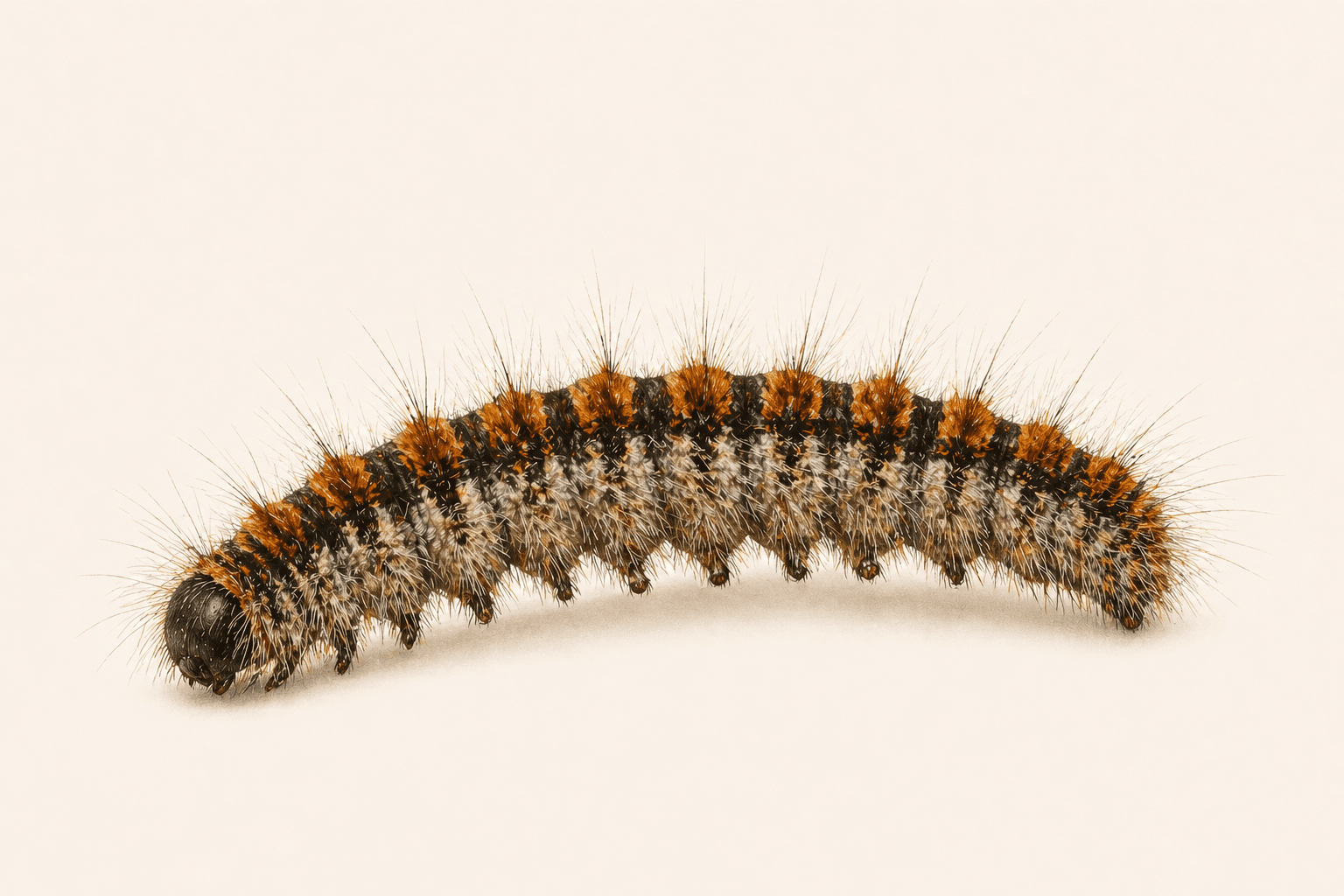
Pine processionary caterpillars (Thaumetopoea pityocampa) are the most underestimated danger in Mediterranean gardens with pine trees. Every year, in Monaco and on the Côte d'Azur, dogs are rushed to the vet after contact with them; in serious cases, necrosis of the tongue can require partial amputation, and some cases are fatal.
1. Recognising the danger: the processionary life cycle
Summer. Female moths lay their eggs on pine needles (stone pines, Aleppo pines, black pines). The eggs hatch at the end of summer.
Autumn and winter. The caterpillars spin a characteristic white silken nest at the top of the pines: it looks like a large ball of cotton wool caught in the branches. They feed on the needles at night and shelter in the nest during the day.
Late winter and spring (usually from February to April in Monaco, sometimes as early as January after a mild winter). The caterpillars leave the nest and form a single-file procession, sometimes several metres long, down to the ground, where they bury themselves to pupate. This is when the danger to people and animals is at its highest.
2. The medical danger
The caterpillars carry microscopic urticating hairs that cause the following reactions.
In dogs (contact out of curiosity: licking, nibbling):
- Immediate swelling of the tongue, within a few minutes
- Possible necrosis of the tongue in the following days, which may require partial amputation
- Risk of asphyxiation if the swelling reaches the throat
- An absolute veterinary emergency: do not wait, go straight to the vet
In humans (contact with the skin, eyes or airways):
- Intense itching and a hives-like rash
- Severe conjunctivitis if the eyes are affected
- Breathing difficulties if hairs are inhaled, especially in people with asthma and in children
- Anaphylactic shock: rare, but possible
In cats: less common (cats are more cautious than dogs), but with the same consequences.
3. The MPS "Processionary Monaco" protocol: winter is the decisive season
Mechanical destruction of nests (from December to February, before the caterpillars come down):
- Spotting pines with nests from the ground
- Access at height adapted to each tree
- Cutting the nest with a telescopic pole, using a containment sleeve
- Immediate bagging of the nest in a sealed container, followed by its destruction
- Technician wearing full-body overalls, a P3 mask and nitrile gloves
Additional treatments (for heavy infestations):
- Pheromone traps, installed in late spring before the moths fly: they catch the male moths and limit reproduction, and therefore the nests of the following winter
- Collar traps fitted around the trunk before the first processions: the descending caterpillars are guided into a bag filled with soil, where they remain trapped
- Biological treatment with Btk (Bacillus thuringiensis kurstaki), effective on young caterpillars in early autumn, for the most affected properties
4. If you discover an active procession
At home (private property):
- Bring children and pets indoors to safety immediately
- If an animal has been in contact: go to the vet without delay, every minute counts
- Do not crush the caterpillars underfoot: this releases hairs into the air
- Call MPS on +377 37 70 70 02: in an emergency, we call you back within 6 hours, 7 days a week (see our 24/7 emergency service)
In a public space (pavement, park):
- Report the procession to the State services in Monaco, or to the town hall of the neighbouring municipality concerned
- Mark off the area if possible, using a clearly visible object
- Warn passers-by with children or dogs
5. Annual prevention for properties with pine trees
We always recommend a three-step programme to owners of villas and to residential buildings with pine trees (Cap-Ferrat, Villefranche, Beaulieu, La Turbie, the lower parts of Monaco):
- Inventory visit in September or October: identifying the pines to watch and estimating the number of nests
- Preventive intervention in December or January: destroying the nests before the spring descent
- Pheromone traps installed in May or June, before the moths fly, to limit the next generation
It is the combination of these three measures that breaks the cycle from one year to the next. For other seasonal pests, see our seasonal prevention advice as well.
6. Have your pine trees checked before winter
A nest spotted in autumn can be dealt with calmly in winter; a procession discovered in spring forces you to act in a hurry. Our on-site audit is free: we identify the affected pines, assess access and provide a detailed quote, free and without obligation.
Request your free quote or call +377 37 70 70 02: reply within 6 hours.
Frequently asked questions
- My dog has touched a processionary caterpillar: who should I call first?
- The vet, immediately: every minute counts to limit damage to the tongue. Meanwhile, if you can do so without exposing yourself, rinse the dog's mouth with plenty of water without rubbing. Then call MPS on +377 37 70 70 02 to deal with the nests causing the problem.
- When should the nests be dealt with? Can it wait until spring?
- It is better not to wait: the ideal time is from December to February, as soon as the nests are visible and before the caterpillars come down. In spring, the processions have often begun and the danger is already there; we can still intervene, but as an emergency.
- Are pheromone traps enough on their own?
- No. They catch the male moths and limit the next generation, but they do not destroy the caterpillars already in the nests. They need to be combined with nest destruction in winter and, if needed, collar traps around the trunks: the on-site audit is free.