October 9, 2026 · 4-minute read
Nurseries and schools in Monaco: back-to-school pest control
After the summer closure, cockroaches, mice and moths threaten nurseries and schools. Our back-to-school protocol: free audit, out-of-hours work.
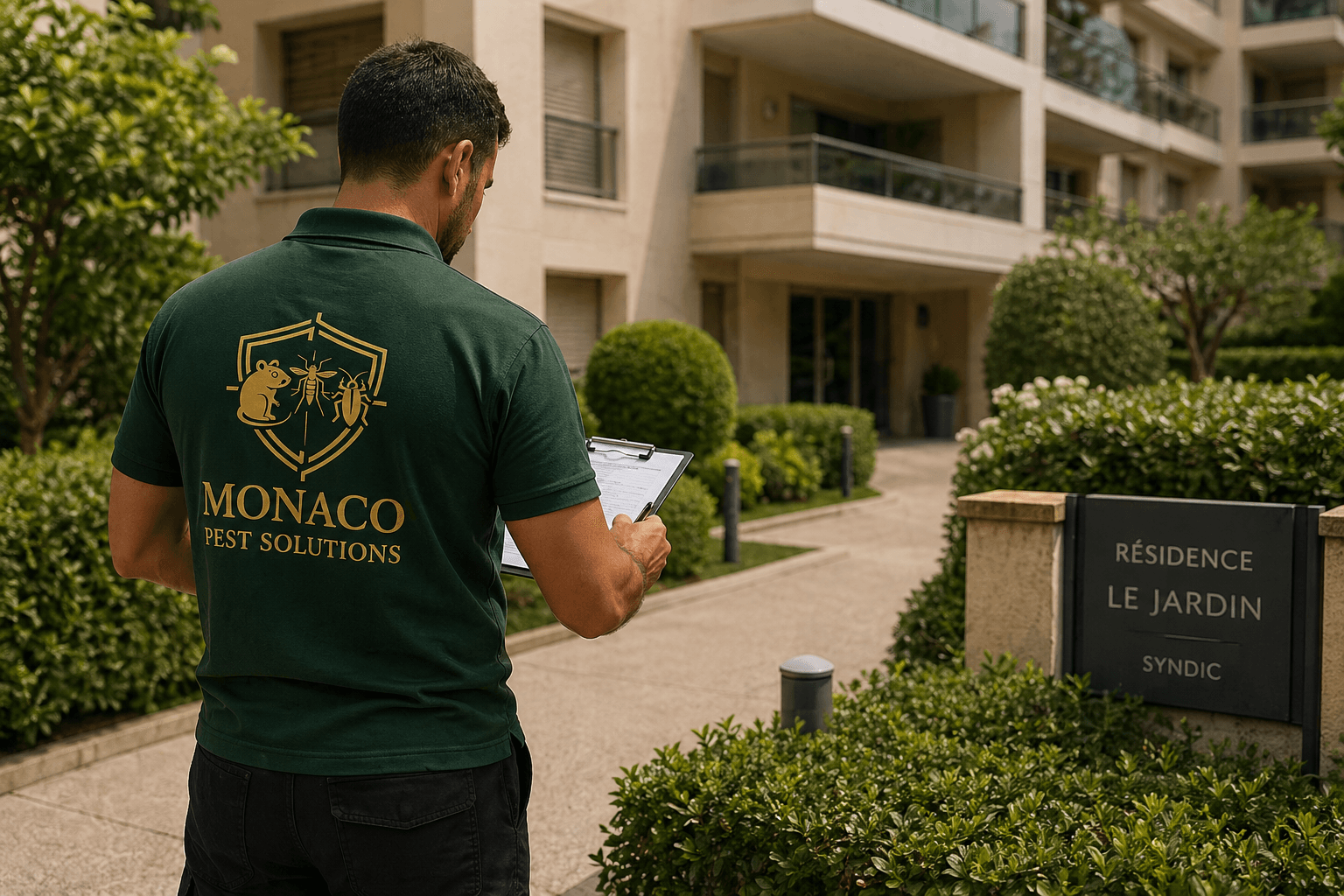
Municipal nurseries, nursery and primary schools, and secondary schools: in Monaco, these public establishments, like their private counterparts, have every reason to apply a strict integrated pest management protocol. Two moments are particularly well suited to it: the start of the school year, from late August to October, and the end of the school year, in June.
1. Why the autumn return to school is critical
The summer closure. After several weeks without occupants, the premises have stayed warm and humid (with the air conditioning switched off), with leftover crumbs: ideal conditions for cockroaches, mice, ants and pantry moths.
September supplies and deliveries. Cardboard boxes, books, school equipment and food for the canteen are classic ways for pests to get in (cockroaches, weevils, moths).
The central kitchen restarts. Canteens resume service: any pest that settled in during the closure then comes into contact with the children's food chain.
Between air conditioning and heating. In autumn, condensation water stagnates in drains and drip trays: so many breeding sites for mosquito larvae if they are not emptied or treated.
2. Our back-to-school protocol for establishments that welcome children
Phase 1 — Audit before the start of term (late August to early September): a full inspection while no children are present, mapping of high-risk areas, and placement of non-toxic monitoring traps. This on-site audit is free.
Phase 2 — Curative treatment if needed (evenings, weekends): we work outside opening hours, in the evening, at weekends or during the school holidays. Preferred methods: cockroach gel bait out of children's reach, dry steam, mechanical traps and pheromone traps.
Phase 3 — Follow-up visit: a check that the treatment has worked, with a report for the school's management.
Phase 4 — Report and certificates: an intervention report signed electronically, with photos, and treatment certificates that can be downloaded from your client area, to be presented during an inspection, to a safety commission or to your insurer. They set out the areas treated, the products used, the dates and the re-entry times to be observed.
3. The 7 non-negotiable rules when children are present
R1 — No chemical treatment while children are present. Interventions take place outside the hours when children are on site. In an emergency, the area is isolated and the children are moved elsewhere.
R2 — No spraying on surfaces that children touch. Tables, floors, toys, nap beds and door handles never receive any biocide.
R3 — Rodenticide stations in cellars and basements only. Locked, inaccessible boxes; no bait in classrooms, canteens or playgrounds.
R4 — Mechanical traps in accessible areas. Snap traps and pheromone traps are placed in adult-only areas (plant rooms, boiler rooms) or in locked cupboards.
R5 — High-temperature dry steam for disinfection: no biocide, purely thermal action. Suitable for toys, nap mattresses and the carpets of reading corners.
R6 — Informing parents. When an intervention takes place, the management informs parents (type of intervention, date, re-entry time). Transparency builds trust.
R7 — A certified provider. Insist on a provider whose technicians are Certibiocide-certified and who uses authorised biocidal products: at MPS, the certificate number is N121134.
4. Typical targets in schools
German cockroaches: central kitchens and warm spots (dishwashers, boilers). Gel bait placed at targeted points, with no aerosols.
House mice: food stores, caretakers' rooms, basements and boiler rooms. Secure mechanical traps.
Ants: playgrounds, terraces and outdoor water points. Sweet gel bait along the edges, away from where children walk.
Pantry moths: flour and cereal stocks in the kitchen. Pheromone traps and more thorough cleaning of containers.
Tiger mosquitoes (until late autumn): planters and rainwater drains in the playground. Biological Bti larvicide only.
5. Plan the inspection of your establishment
Key takeaway: an establishment that welcomes children cannot accept any compromise on safety. Our protocol keeps the risk of exposure to a minimum by combining interventions outside opening hours, non-chemical methods first, and reports ready to present at any inspection. Regular follow-up throughout the year lets you approach hygiene inspections with peace of mind.
Every establishment is different: discover our four-step method, from the free audit to the final report. After a visit or an initial conversation, we draw up a detailed quote, free and without obligation.
Request your free quote or call +377 37 70 70 02: reply within 6 hours.
Frequently asked questions
- Do you carry out treatments while children are present?
- No: interventions take place outside the hours when children are on site, in the evening, at weekends or during the school holidays. In an emergency, the area is isolated and the children are moved elsewhere before any work begins.
- Are parents informed about treatments?
- Yes, by the school's management, which tells them the type of intervention, its date and the re-entry time. We provide the management with everything it needs, including the intervention report available in the client area.
- What if a child is allergic or sensitive to biocidal products?
- Let us know before the intervention: the protocol is then adapted, with biocide-free methods such as dry steam and mechanical traps, or with treatment scheduled during the school holidays. Request your free quote or call +377 37 70 70 02.