July 24, 2026 · 12-minute read
Bed bug detection dogs in palaces: the underused luxury tool
The bed bug detection dog exceeds 95% olfactory reliability, against 60-70% for the human eye. Reliability, difference from visual inspection, breeds, housekeeping coordination and discretion in luxury hospitality.
Bed bug detection dogs in palaces: the most underused tool in luxury hospitality
A bed bug detection dog in Monaco clears a doubt in a few minutes where a visual inspection ties up a team for an hour. On the Riviera, where a room blocked in high season is a direct loss and a reputational risk, canine detection is not a spectacular gimmick: it is the most precise diagnostic instrument available to an upscale property. Yet it remains largely underused, often reduced to a crisis response when it performs best in doubt-clearing and preventive screening.
This underuse stems from a misunderstanding. Many managements picture the sniffer dog as a response to an already established, visible, endured infestation. The reality is the opposite: the canine nose excels precisely at the stage where the human eye still fails, when a few individuals and a handful of eggs hide in a mattress seam or behind a skirting board. It is this gap in sensitivity that gives the tool its full value in a context where neither a false negative nor a pointless spraying can be tolerated.
This article details what the bed bug and its olfactory detection really involve: the measured reliability of the method, its difference from visual inspection, the working profiles of the dogs used, the organisation of a discreet palace intervention, and above all the coordination with housekeeping and pest control that, more than anything, determines success.
Nose reliability: what a 95% detection rate really means
A properly prepared and well-maintained dog reaches an olfactory detection rate above 95%, where an experienced human inspector caps at around 60 to 70% in real conditions. This figure deserves to be understood rather than recited, because it governs how the tool is used.
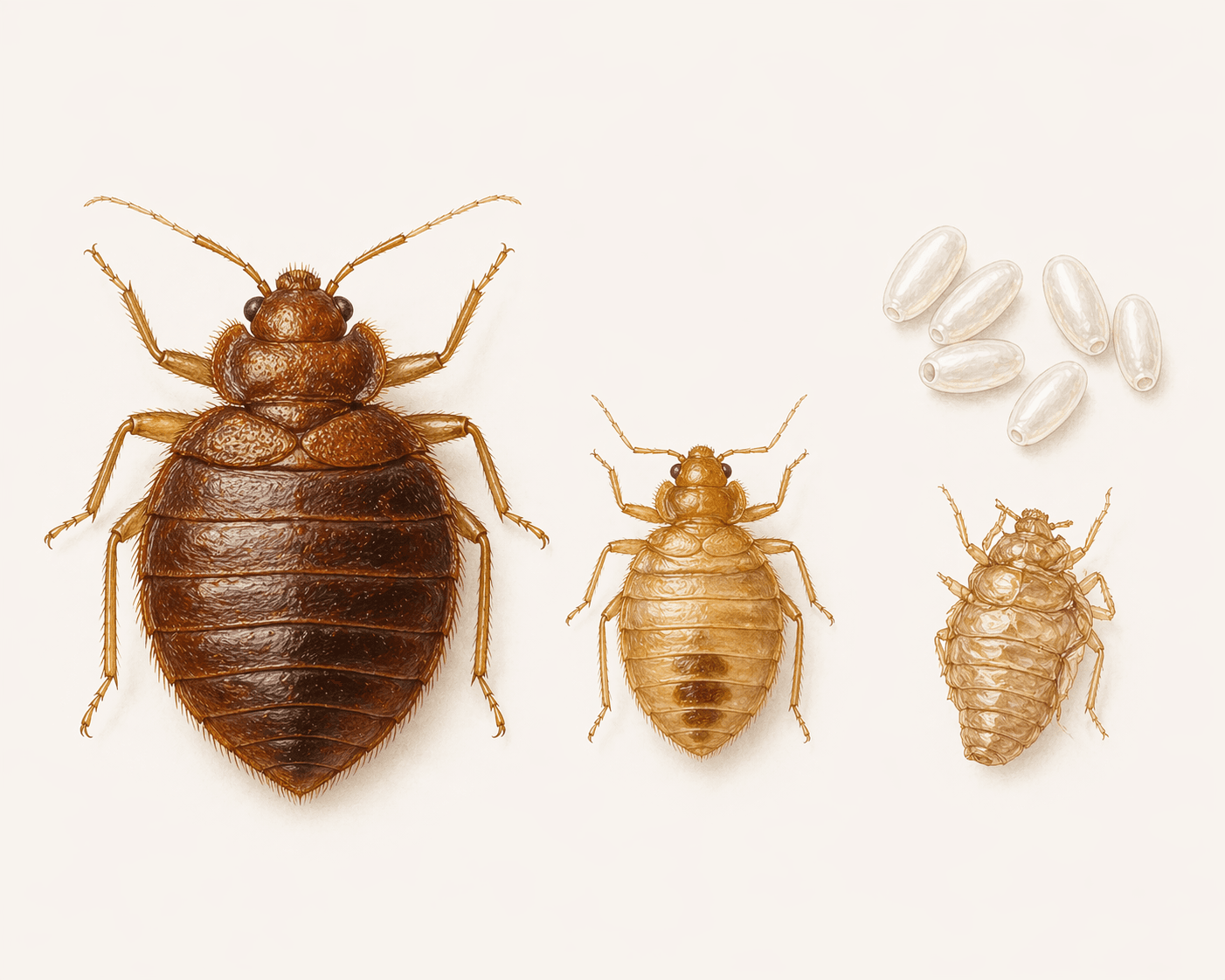
The bed bug emits a characteristic bouquet of volatile organic compounds: aggregation pheromones, exuvia residues, eggs, droppings. The canine sense of smell, with several hundred million olfactory receptors where the human aligns a few million, discriminates this signature at minute concentrations. Where a technician must see a trace — a black dropping, a translucent moult, a live individual — the dog detects a presence still invisible, including behind a surface, in a construction void or inside a closed box spring.
Performance is not magic but method. A rate above 95% assumes an animal trained in discrimination — able to tell a live bug or a viable egg from an old, operationally irrelevant carcass — working in short sessions, regularly recertified, and handled by a person who can read its behaviour. Reliability is a system, not an innate quality: it depends as much on the dog's freshness on the day as on the rigour of the protocol. A tired team, working an overheated room saturated with parasitic odours, will see its performance drop. This is why serious canine detection always comes with a framework: limited session duration, breaks, zone rotation, and cross-validation of strong alerts.
The nature of the alert must also be understood. A good dog "marks" — it freezes, sits or stares at the emission point — without scratching or destroying. The mark indicates a zone, not a precise individual: the technician then takes over to confirm visually and target the treatment. The nose points, the eye confirms, the protocol decides.
Sniffer dog versus visual inspection: two complementary logics
Setting canine detection against visual inspection would be an analytical error. The two methods do not measure the same thing and complement each other in a well-designed system.
Visual inspection remains indispensable. It documents a room's condition, identifies established traces, allows the age of an infestation to be assessed and the stage qualified. A housekeeper trained in early hotel detection knows where to look — mattress seams, headboard, skirting boards, box-spring frame, wall-ceiling junction — and can spot warning signs within minutes per room. It is the daily first line of defence, integrated into the workflow.
But the eye has structural limits. It does not see through a surface, does not detect a few isolated eggs in a deep seam, and its performance depends heavily on fatigue, light and operator experience. Fine-combing every room on a floor visually takes considerable time and remains probabilistic at the early stage.
This is where canine detection for the bedbug hotel comes into its own. The dog sweeps a corridor of rooms in a fraction of the time of an exhaustive manual inspection, with greater sensitivity at the incipient stage. It is therefore used in broad sweeps — quickly screening a large number of rooms — and in doubt-clearing — settling an ambiguous situation after a guest report, or checking a room adjacent to a confirmed case. The ideal sequence does not oppose the two: the dog targets, the human confirms, and visual inspection documents. Hours of blind inspection are saved while the risk of a false negative is drastically reduced.
Which breeds for bed bug detection, and how they are prepared
The question of breed comes up often, but it is secondary to individual selection and quality of preparation. No particular training programme holds a monopoly: what matters is the working profile.
Dogs with a strong nose and high play drive are favoured, with a stable temperament in unusual environments. Retriever, working spaniel, beagle or light shepherd types are frequently chosen, along with crosses selected for olfactory endurance rather than looks. Size matters too: a moderately built dog slips under a box spring, works around valuable furniture and operates in a room without imposing its bulk. Coat and lineage matter less than three qualities: sustained concentration, clean marking and sociability around guests.
Preparation rests on conditioning to the target odour and on reward. The dog learns to associate the olfactory signature of the live bug and the viable egg with a reward, then to discriminate that odour from decoys and inert carcasses. Training continues throughout the animal's working life: regular sessions, performance checks, periodic recertification. A detection dog is never "finished" — it is maintained, like a measuring instrument that is recalibrated.
The handler is the invisible half of the team. They read behavioural changes, manage fatigue, position the animal, avoid zones that saturate the nose, and can tell a real alert from passing interest. Without this fine reading, the best dog in the world produces erratic results. The skill lies in the pair, never in the animal alone.
The palace intervention protocol, room by room
A canine detection intervention in a luxury property is prepared as much as it is executed. Improvising a dog pass through a busy palace is courting incident.
Upstream, the perimeter is framed with management and housekeeping: rooms to check, reason for the pass — routine preventive screening or doubt-clearing after a report — access windows and confidentiality constraints. Rooms to inspect must be vacated and ventilated if needed, but above all prepared without prior spraying: a recent chemical treatment masks the target odour and ruins reliability. Intense ambient fragrances, which disturb the olfactory work, are also to be avoided.
The pass itself is methodical. The handler guides the dog along a regular sweep pattern, from floor to high points, dwelling on risk zones: bed, box spring, headboard, upholstered furniture, skirting boards, luggage area. The dog marks, the technician notes the location and carries out a targeted visual check. A clear distinction is drawn between the strong, confirmed alert that triggers a treatment protocol and the weak interest that calls for a simple documented check.
Each pass produces a written record: rooms checked, status of each, marked points, actions taken. This documentation feeds the property's reporting and, in the event of an audit or guest dispute, materialises the operator's diligence. Canine detection only holds lasting value when logged: an undocumented check is, administratively, a check that never happened.
Housekeeping and pest control coordination: the real success factor
This is the point most underestimated, and yet it decides everything. A canine detection system is only worth its coordination with housekeeping and the pest control team. The dog is a sensor; the information it produces must still circulate and trigger the right actions.
Housekeeping is the permanent lookout. Housekeepers see every room every day; they are the first to spot a suspect trace, a guest complaining of bites, a suitcase back from a risk area. But they need a simple reporting channel, free of fear of sanction, and a clear instruction: what to do in the sixty seconds following an observation. A quick report triggers a targeted canine doubt-clearing before the situation spreads to adjacent rooms.
The pest control team, for its part, turns the alert into action. It confirms, maps the extent, decides on treatment — thermal, mechanical, targeted chemical — and schedules a follow-up canine check to validate eradication. Without this chaining, the dog's mark remains dead information. With it, the detection-confirmation-treatment-check chain closes cleanly, and an incipient infestation never becomes a declared one.
Coordination requires shared rules: who alerts whom, within what time, with what traceability. In the best-organised properties, canine detection fits into an annual calendar alternating rotating preventive screening and doubt-clearing interventions. This kind of system is at the heart of a palace-grade annual pest-control contract, where the dog becomes a planned link rather than an emergency resort.
Absolute discretion: a technician-dog team invisible to guests
In a palace, discretion is not a comfort option: it is a condition of practice. A guest must never sense that a pest-control check is underway, still less associate the property with a bed bug problem. The whole system is designed around this invisibility.
The team blends into the setting. Civilian or neutral dress with no conspicuous branding, discreet equipment, a calm and perfectly sociable dog, arrival via service accesses, windows set for low-traffic periods: nothing signals a technical operation. A well-prepared detection dog does not react to guests, does not fidget, does not vocalise — it works in silence and marks without destroying. It is precisely this behavioural control that authorises its presence in a prestige environment.
Confidentiality extends to documentation. Reports circulate under a confidentiality framework, property identities are never disclosed, and the whole operation runs under a non-disclosure agreement. A serious provider never names its luxury-hospitality references — and it is precisely this reserve that builds trust. Discretion is not an add-on: it is the heart of the service.
Field feedback from luxury hospitality: zero rooms lost
The economic value of canine detection reads in one simple figure: the number of rooms lost. In luxury hospitality, every room immobilised over a bed bug doubt is an immediate loss, to which is added the far heavier risk of a negative guest review describing bites. The goal of a good system is not to treat fast: it is never to block a room needlessly.
That is exactly what canine doubt-clearing allows. Faced with an ambiguous report — a guest mentions itching, a housekeeper spots an uncertain mark — visual inspection alone often leaves management with an uncomfortable choice: block the room as a precaution, or put it back on sale and take a risk. The dog decides. A marked room enters protocol; a clean room, checked with reliability above 95%, is put back on sale immediately, with no immobilisation or pointless treatment.
Over a season, this ability to decide avoids the accumulation of rooms blocked "just in case". It also avoids blind preventive treatments, costly and intrusive, by reserving intervention for the zones actually concerned. Rotating screening, room by room floor by floor, detects incipient foci before they reach guests, which shifts the logic: crises are no longer endured, a controlled risk is managed. Properties that have integrated canine detection into their routine report the same benefit — fewer rooms lost, fewer heavy treatments, and a reputational risk brought back to a manageable level.
Integrating canine detection into a controlled annual system
Canine detection reaches its full measure when it stops being an emergency resort and becomes a planned cog. Used alone and reactively, it puts out fires; integrated into an annual system, it prevents them.
Concretely, this means articulating three levels. Daily, housekeeping ensures visual vigilance and reporting. Periodically, rotating canine screening sweeps rooms by sampling, to intercept incipient foci before they declare themselves. Occasionally, canine doubt-clearing settles ambiguous situations and validates eradications after treatment. These three levels reinforce each other: daily vigilance feeds screening, which feeds doubt-clearing, all logged in reporting usable at audit.
Our technicians operate under Certibiocide certification (No. 121134), a guarantee that application, storage and traceability protocols meet the requirements applicable to premises open to the public. Canine detection is added as a diagnostic brick, not as a substitute for treatments: the dog points, the protocol treats, the check validates. It is this rigorous sequence, more than the isolated performance of a sensor, that durably protects a property.
To assess the relevance of such a system in your property, the starting point is a confidential technical visit. It maps the risks, defines the screening rhythm suited to your configuration, and sets the confidentiality framework. You can request it via a free quote: the visit commits you to nothing, and discretion is guaranteed from the first exchange.
The questions our clients ask most
Canine detection raises legitimate questions from property managements, both on the reliability of the method and on its integration into a palace's daily life. The answers below summarise the most frequent questions, from the real detection rate to the discretion of the team and the preparation of rooms. They complement the protocols detailed above and lay the groundwork for a technical exchange with our teams.
Zones served in Monaco and on the Riviera
We operate in particular on Roquebrune-Cap-Martin and Menton.
Frequently asked questions
- Is a bed bug detection dog really more reliable than a human inspection?
- Yes, in terms of olfactory sensitivity. A prepared and well-maintained dog exceeds 95% detection, against 60 to 70% for an experienced human inspector at the early stage. The difference lies in the nature of the signal: the dog detects an odour signature at minute concentrations, including behind a surface or inside a closed box spring, where the eye must see a physical trace. The two methods remain complementary: the dog points and clears the doubt, visual inspection confirms and documents. The stated reliability does, however, assume a strict framework — short sessions, rooms not treated beforehand, regular recertification of the team.
- Does the dog's pass disturb the palace's guests?
- No, if the system is properly designed. The whole organisation aims for invisibility: a team in neutral dress with no branding, a calm and perfectly sociable dog that does not react to guests, arrival via service accesses, windows set for low-traffic periods. A well-prepared detection dog works in silence, does not vocalise and marks without destroying anything. Guests perceive nothing of a technical operation. The documentation itself circulates under a confidentiality framework, and the intervention runs under a non-disclosure agreement. This discretion is not an add-on: it is the very condition of a service suited to prestige hospitality.
- Which dog breed is best for detecting bed bugs?
- No breed holds absolute superiority, and no particular training programme is authoritative on its own. What matters is the individual profile: a strong nose, high play drive, a stable temperament in unusual environments and good sociability. Retriever, working spaniel, beagle or light shepherd types are frequently chosen, along with crosses selected for olfactory endurance. A moderate build makes work under box springs and around valuable furniture easier. Three qualities outweigh lineage: sustained concentration, clean marking and calm around guests. Performance comes from the trained team, not the breed.
- How should a room be prepared before the detection dog's pass?
- The essential rule is above all not to treat the room beforehand: a recent chemical product masks the target odour and lowers detection reliability. The room must be vacated and, if needed, ventilated before the intervention. Intense ambient fragrances, diffusers and strongly scented cleaning just before the pass are to be avoided, as they saturate the dog's nose. Furniture stays in place — the dog must be able to reach the bed, box spring, headboard, skirting boards and luggage area. This preparation is set with housekeeping upstream, within a confidential window defined with management.
- When should you call on a sniffer dog rather than a classic inspection?
- The dog is particularly relevant in two situations: broad sweeps and doubt-clearing. In a sweep, it quickly screens a large number of rooms — a whole floor, a wing — far faster than an exhaustive manual inspection, which makes it the ideal tool for rotating preventive screening. In doubt-clearing, it settles an ambiguous situation: a guest reports bites, a housekeeper spots an uncertain trace, or a room adjacent to a confirmed case must be checked. In these cases, the dog avoids blocking a room needlessly by declaring it clean with reliability above 95%. To precisely document an established infestation, however, visual inspection remains indispensable.
- Does canine detection remove the need to treat bed bugs?
- No, these are two distinct and complementary steps. The dog is a diagnostic tool: it detects and locates, but does not treat. Once a room is marked and visually confirmed by the technician, a suitable treatment protocol is triggered — thermal, mechanical or targeted chemical depending on the situation. A follow-up canine check then validates eradication. The sequence is always the same: the dog points, the protocol treats, the check validates. Our technicians operate under Certibiocide certification (No. 121134), guaranteeing protocols compliant with the requirements applicable to premises open to the public. Detection integrates most effectively into an annual system articulating daily vigilance, rotating screening and doubt-clearing.