July 6, 2026 · 4-minute read
Bed bugs in hotels: the protocol that safeguards a reputation
A room shut down over bed bugs can cost a Monegasque hotel more than several weeks of revenue if the press gets hold of it. Here is the protocol that…
Why bed bugs are the blind spot of luxury hospitality
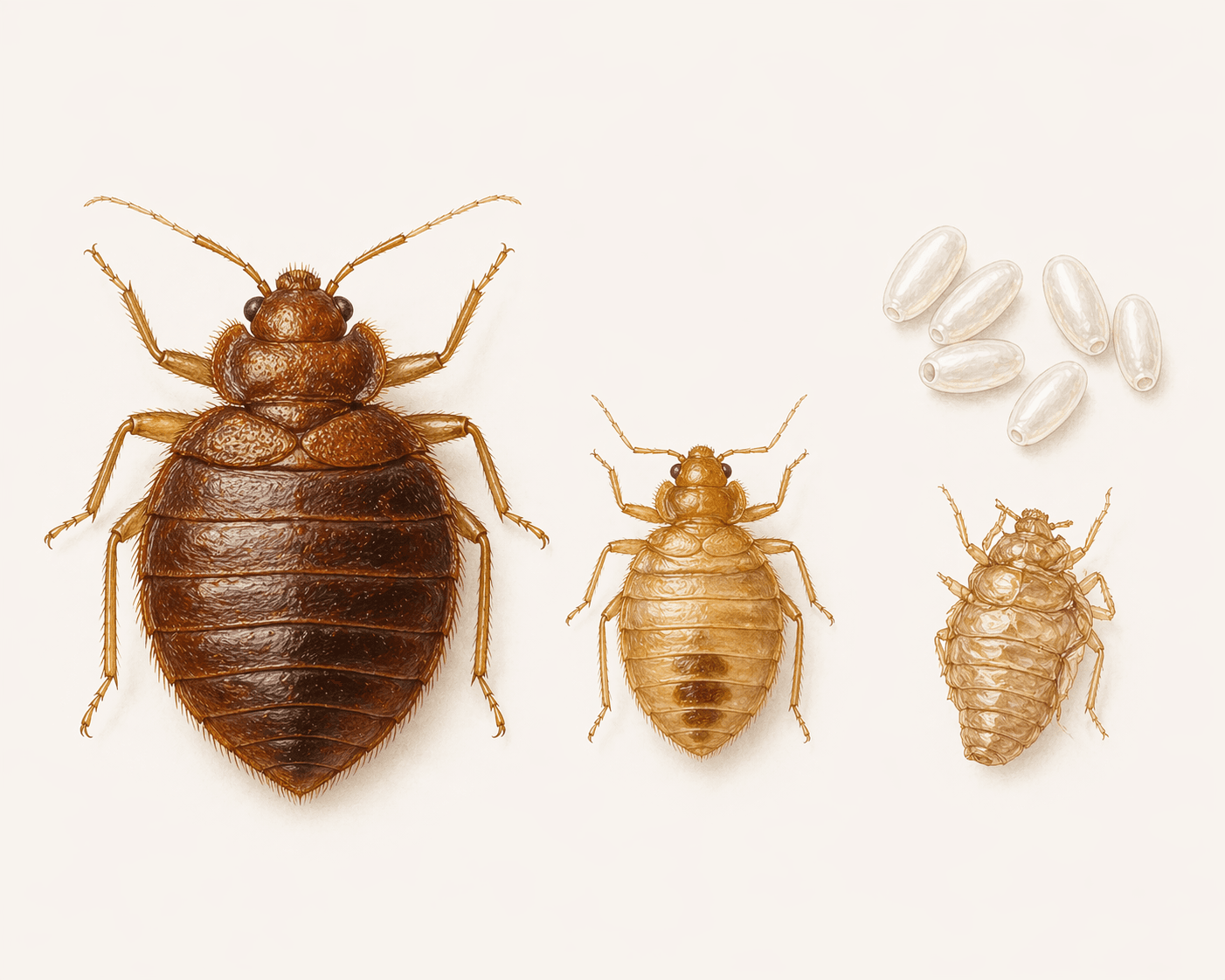
The French Riviera is a permanent international crossroads. Every day, luggage from every corner of the world passes through the rooms of palaces, boutique hotels, holiday residences and private yachts. Cimex lectularius — the bed bug — travels with that luggage, unnoticed, and can settle within days into a mattress seam, behind a skirting board or inside a bed base.
The direct cost of an infestation (treatment, laundry, sometimes replacement of bedding) is rarely the real problem. The real problem is reputation: a viral guest review, a photograph of bite marks on social media, and the property loses several months of brand image — even contracts with high-end agencies that run unannounced audits (the international hotel rankings, the independent luxury hotel alliances).
The three lines of defence
A serious protocol rests on three lines of defence: prevention, early detection, rapid treatment.
1. Prevention
- Encasings (bed bug-proof covers) fitted on every mattress and bed base, checked at each turnover.
- Training housekeeping staff to recognise the signs (black spots along seams, exuviae, pearlescent eggs).
- Strict policy for porters: no guest bag should come into direct contact with the next room valets.
2. Early detection
- Targeted visual inspection at each turnover, in particular on mattress seams, headboards, skirting boards and electrical sockets.
- In hotels with high turnover, calling on a detection dog once or twice a year is the most accurate tool available today.
- Interceptor traps under the bed legs in high-risk rooms (frequent international clientele).
3. Rapid treatment
Once an infestation is confirmed:
- Isolate the affected room and the adjoining ones (bed bugs travel through technical ducts).
- Apply high-temperature dry steam (> 120 °C) to every textile, mattress, bed base and seam.
- Follow up with a targeted authorised insecticide applied to refuge zones (skirting boards, bed bases, headboards).
- Return after 14 days to break the larval cycle (eggs survive the first pass).
- Document every step: it is this paper trail that shields the hotel in the event of an audit or a complaint.
Discretion: the criterion that makes the difference
In luxury hospitality in Monaco, in Saint-Jean-Cap-Ferrat, in Roquebrune-Cap-Martin, no resident guest should ever see a technician in a "pest control" uniform. Our interventions are carried out:
- In discreet civilian attire, with unmarked vehicles,
- During off-service hours (night-time, weekly closure, off-season),
- Under a systematic NDA signed ahead of the contract,
- With an encrypted digital report, accessible only to the hotel's quality contacts.
*Do you run an establishment in Monaco or in the Alpes-Maritimes and would like to audit your anti-bed bug set-up before the season? Contact us, swift reply.*
The questions our clients ask most often
How long does an intervention take? On average 90 minutes for an audit + 2 to 4 hours for a standard treatment in an apartment or a villa. For complex sites (palaces, restaurants in operation, multi-block co-owned buildings), an intervention may be spread across several night-time slots to respect your operations. The schedule is always discussed upfront, never imposed.
Is the return to occupancy quick? For the vast majority of our treatments (bait gel, dry steam, mechanical fitting), the return is immediate or after 1 to 2 hours of ventilation. For authorised residual treatments, we always specify the recommended waiting time (typically 2 to 4 hours). For aerosol biocides, the waiting time is extended to 6 hours and we issue a return-to-occupancy certificate.
Which legal documents and certificates do you issue after the intervention? After every intervention, you automatically receive in your client portal a signed digital report with before/after photographs, a treatment certificate enforceable against audits, safety commissions and insurers, and an update of the applied-biocides register (exportable on request by the French and Monegasque health authorities).
Is there any follow-up after the intervention? Yes, always. Depending on the service, we schedule a control visit at D+7, D+14 or D+21 according to the biological cycle of the species treated. Under a 360° monitoring contract, follow-up is continuous, with quarterly reports and immediate interventions triggered by any alert on your side.
The cost of action versus the cost of inaction
An untreated infestation typically costs ten times more in curative treatment than in preventive cover. A few concrete examples from the Riviera:
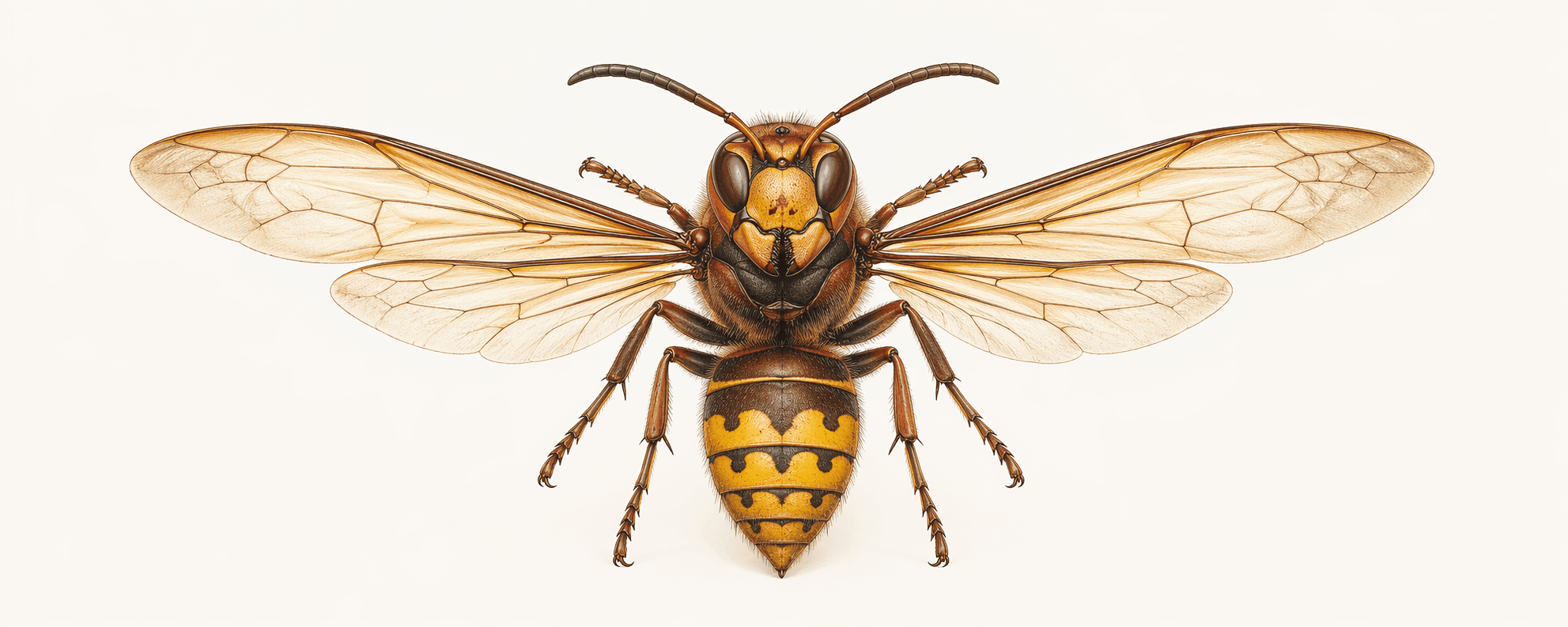
- A primary Asian hornet nest destroyed in April:à chiffrer–250. The same nest at secondary stage (August):à chiffrer–1,200. The same colony wiping out a neighbouring apiary: beekeeping losses of several thousand euros + biodiversity impact.
- A palace room closed for 72 hours for a bed bug treatment in season:à chiffrer,400 in lost revenue + reputational damage. The same incident spotted pre-season:à chiffrer in treatment, zero operational impact.
- A premium gastronomic kitchen shut down for 5 days by a safety commission over cockroaches: >sur devis,000 in lost revenue + risk of HACCP downgrade. An annual 360° contract:à chiffrer,800–3,500.
- A co-owned building discovering an advanced longhorn beetle infestation:à chiffrer,000–50,000 in repair works + curative treatment. A preventive acoustic diagnosis every 5 years:à chiffrer per visit.
The rule is universal: an audit always costs less than a repair.
Our environmental commitment
All our protocols are designed to minimise the impact on Mediterranean biodiversity. In concrete terms, that means: refusing systematic preventive spraying, selecting the biocides with the most favourable environmental profile in their category, favouring mechanical and biological methods whenever available, respecting non-target species (bees, geckos, hedgehogs, insectivorous birds, bats), and keeping an exportable register of applied biocides on hand for the authorities.
We also commit to explaining these choices to clients. Integrated pest management is not a marketing pitch — it is a discipline that requires time for diagnosis and explanation. On sites where a request for "preventive spraying without diagnosis" is made, we systematically propose an alternative: monitoring, audit, targeted treatment of proven risk zones.
For professionals: regulatory compliance
Our documentation is designed to smooth the audits carried out by your quality partners. Our intervention reports are compatible with the the international hotel rankings, the independent luxury hotel alliances, the high-end hotel groups and hôtels de luxe indépendants standards in hospitality, and with third-party certification bodies and an environmental certification body audits in catering and food processing. The biocide register complies with the French decree of 28 June 2017 and with European the European framework on professional biocides.
For charter yachts, our documentation is translated into English and accepted by the main management companies (the leading yacht management groups, the leading yacht management groups, the leading yacht management groups). Contractual NDA is systematic. No establishment name, owner name or yacht name appears in any of our external communications.
The culture of high-end service
Our technicians come from the 5-star services sector, from yachting and from prestige hospitality. This culture of discretion and high-end service is our signature. No resident guest should ever see a technician in a "pest control" uniform. No identifying photograph ever leaves our perimeter. No yacht name, no client name, no identifying detail appears in any of our external communications.
This stance is not a commercial argument — it is a contractual obligation towards our high-end clientele. And it is the same standard we apply to private clients, because high-end service is defined by its consistency, not by its intermittence.
Practical checklist to print
For professionals who want to steer the first line of defence themselves, here is a checklist of 10 concrete points to apply each month on site, with the aim of detecting problems as early as possible — before an infestation becomes visible and expensive:
- Visual inspection of mattress seams in 2 rooms drawn at random per floor (5 minutes per room).
- Check of the seals on cold rooms in the kitchen. Any damaged seal must be replaced without delay.
- Verification of the skirting boards at the foot of the beds and of the bedside electrical sockets. Photograph any anomaly.
- Inspection of laundry bags in the linen room. Laundry should never sit open for more than 4 hours.
- Audit of flower-pot saucers on terraces and balconies (larval breeding sites for the Asian tiger mosquito). Empty weekly.
- Check of gutters and rainwater downpipes. Any blockage creates a breeding ground.
- Inspection of technical spaces (boiler rooms, refuse rooms, crawl spaces). Spot any droppings.
- Verification of the condition of bait stations in place. Station number + photo + control date.
- Inspection of loft spaces, green terraces and roof access points. Detect primary hornet nests before June.
- Monthly briefing of department heads: a sign spotted in time is worth a thousand curative interventions.
Our contact to take things further
For clients on a 360° contract, this checklist is built into your client dashboard and automatically feeds your quarterly report. For one-off clients, we offer on request a one-hour on-site training session for your housekeeping staff, department heads or in-house technicians — free of charge for clients on an annual contract.
All our contracts include 24/7 access to our proprietary digital platform, where you can find at any time the complete history of your interventions, before/after photographs, treatment certificates, the biocide register and the safety data sheets (SDS) of the products used. Documents can be downloaded as many times as needed for your audits, commissions and insurers.
For emergencies (hornets near a terrace, suspected bed bugs in an open hotel, cockroaches in a professional kitchen), we commit to a phone callback swiftly, 7 days a week, with intervention available swiftly.