October 2, 2026 · 5-minute read
New pest species in Monaco in 2026: the impact of climate change
Brown marmorated stink bug, Argentine ant, Japanese bush mosquito, Oriental hornet: what climate warming changes for pests in Monaco.
Monaco's climate is warming, like that of the whole Mediterranean basin: longer and hotter summers, shorter and milder winters, more irregular rainfall. The direct consequence for pest control: species that were once absent or marginal are settling in and multiplying, while those already present enjoy a longer season of activity.
1. The 4 species changing the game
Brown marmorated stink bug (Halyomorpha halys)
Native to East Asia and recorded in France since 2012, it has spread widely across Europe, particularly in neighbouring Italy. How to recognise it: about 1.5 cm long, marbled brown, shield-shaped, with white-banded antennae. Main problem: it seeks to overwinter in heated homes (October-November), slips in through window joints and hides in curtains and cupboards. It is not dangerous, but it smells foul when crushed: it is better to vacuum it up or trap it. Our article on the brown marmorated stink bug in autumn explains the right steps.
Argentine ant (Linepithema humile)
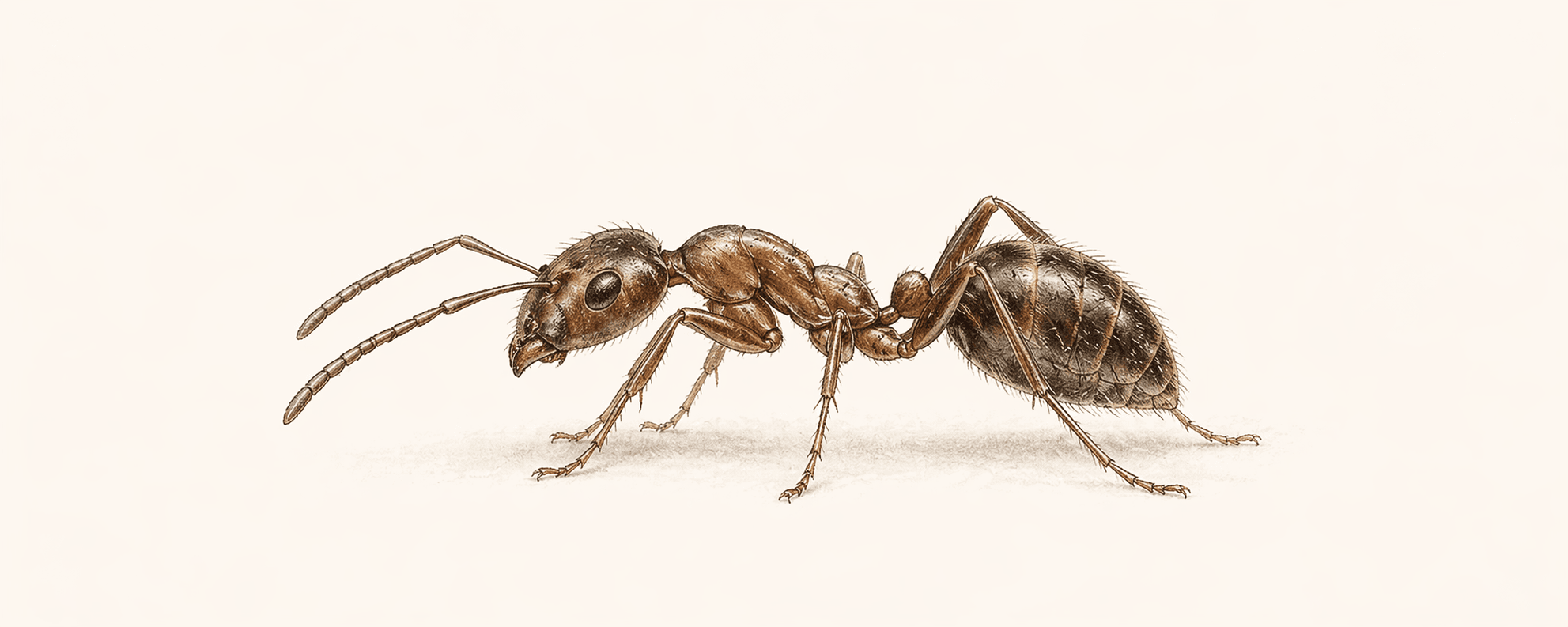
A Mediterranean supercolony: interconnected nests that cooperate along thousands of kilometres of coastline, from Italy to the Iberian Peninsula, Monaco included. Long established on the coast, it benefits from mild winters and has displaced many local ant species. Problem: it invades villas and flats in their thousands and remains very hard to eradicate, as its nests are numerous and often located outside the property. Treatment relies on specific baits applied over several months. See our ants page.
Japanese bush mosquito (Aedes japonicus)
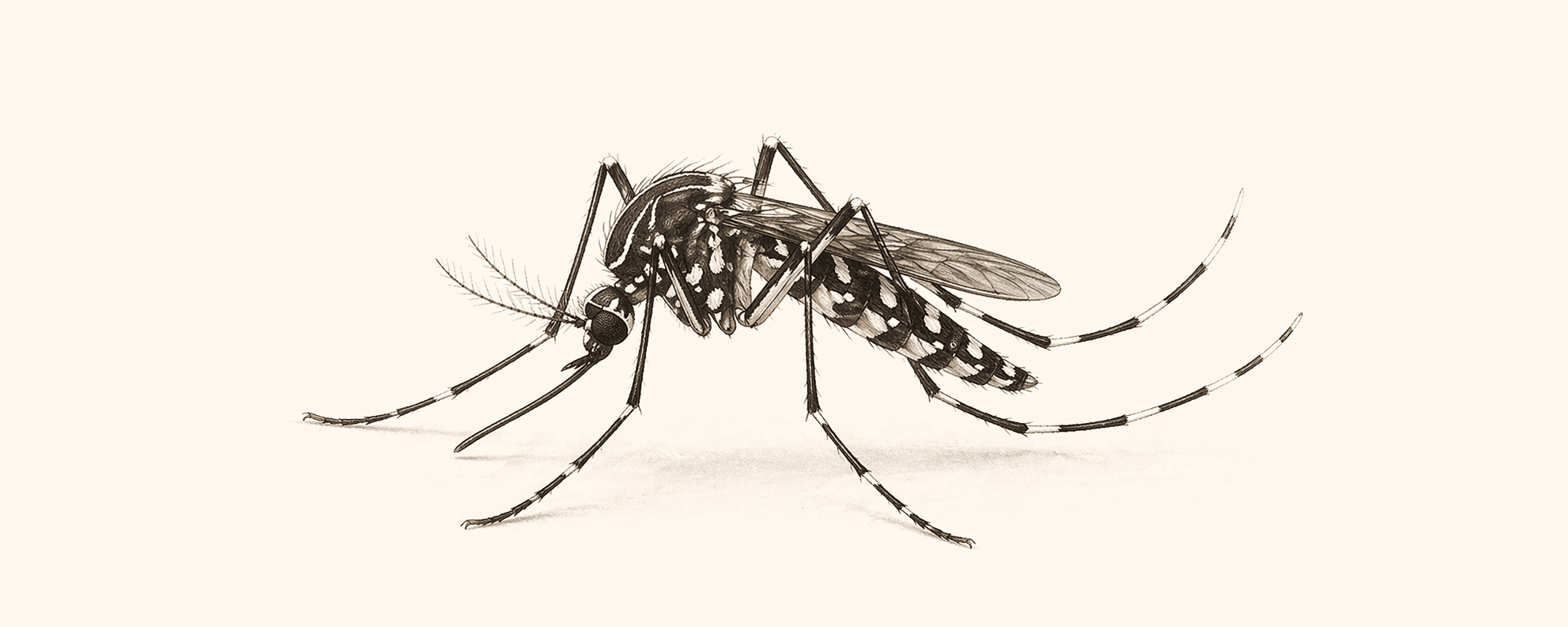
A cousin of the tiger mosquito and also invasive, it is already established in several European countries. More cold-tolerant than the tiger mosquito, it can be active earlier in spring and later in autumn: it is a species to watch on the Riviera. Control follows the same approach as for the tiger mosquito (Bti in standing water, CO₂ traps), with a wider intervention window.
Oriental hornet (Vespa orientalis)
Naturally present in the eastern and southern Mediterranean basin, it is expanding its range north-westwards and has already been reported in the south of France. How to recognise it: 2.5 to 3.5 cm, reddish-brown body crossed by a broad yellow band on the abdomen. Behaviour: like the Asian hornet, it hunts wasps and bees; its sting is very painful and it defends its nest vigorously. Its nests are often underground or built in wall cavities, which makes them harder to detect.
2. Established species enjoy a longer season
Warming does not just bring new species: it also lengthens the season of familiar pests. The tiger mosquito, established in the Alpes-Maritimes since 2004, can remain active until November in mild autumns, and warmer late seasons extend the activity of many insects. Some species that tolerate heat and drought less well could, on the contrary, decline, but there is not yet enough data to say so at the scale of Monaco: be wary of hasty claims. To find out everything about the tiger mosquito, see our dedicated page.
3. How we are adapting our approach
Faced with these species, our integrated pest management method keeps its principles, but each step becomes more important:
Identify before acting. The free on-site audit includes species identification: with an unusual stink bug, ant or hornet, it is the species that determines the right treatment. A misidentified invasive species is often wrongly treated.
Adapt the treatment to each species. The Argentine ant, strongly attracted to sugar, is treated with sweet baits laid down over time, rather than with sprays that have little effect on a supercolony. The underground nests of the Oriental hornet call for a different destruction technique from the aerial nests of the Asian hornet.
Monitor over time. Digital monitoring and intervention reports, available in your client area, make it possible to follow how a site evolves from one season to the next.
Broaden seasonal prevention. With earlier springs and milder autumns, mosquito prevention starts earlier and continues later in the year.
4. What this means for our clients
Villa with a garden: keep an eye on standing water (saucers, inspection chambers, pool covers), ant trails along walls and any hornet activity at ground level or in a dry-stone wall.
Palace and hotel: in autumn, the brown marmorated stink bug tries to get in through windows and can travel in luggage; keep watch on exposed rooms and window frame seals, with complete discretion for guests.
Yacht: every port of call multiplies the opportunities for insects to come aboard with provisions or in sheltered corners of the deck; an inspection at the quay on return helps spot an unusual species early.
Restaurants: on terraces, the Argentine ant joins wasps and flies; in the kitchen, any presence is dealt with following HACCP-compatible protocols, ideally from the start of the season.
5. An unusual species at your home? Let's talk
If you spot an unusual species, take a sharp photo (plain background, ruler alongside for scale) and send it to us by WhatsApp on +377 37 70 70 02. We will reply and, if necessary, arrange a free on-site audit, followed by a detailed quote, free and without obligation.
The climate is changing and our methods are adapting: with careful monitoring and targeted treatment, these new species remain manageable in Monaco.
Request your free quote or call +377 37 70 70 02: reply within 6 hours.
Frequently asked questions
- How can I tell the brown marmorated stink bug from the native forest bug?
- The brown marmorated stink bug measures about 1.5 cm; it is marbled brown, with white-banded antennae and light spots along the edge of the abdomen. The native forest bug (Pentatoma rufipes) is a more uniform brown, with reddish legs; if in doubt, photograph the insect and call +377 37 70 70 02.
- Is the Argentine ant really harder to treat than a local ant?
- Yes. A local ant usually lives in a single, localised colony, whereas the Argentine ant forms a supercolony with many interconnected nests, often located outside the property. Treatment relies on sweet baits applied over several months: the realistic goal is to keep the population under lasting control.
- Should I worry about the Oriental hornet in my garden?
- It mainly hunts wasps and bees, but it defends its nest vigorously and its sting is very painful. Because its nests are often underground or hidden in a low wall, you can stumble on one while gardening: if you see large reddish-brown and yellow insects going into the ground, leave them alone and call +377 37 70 70 02.