November 23, 2026 · 5-minute read
Insect control in winter in Monaco: the insects that thrive on central heating
Cockroaches, bed bugs, moths and silverfish keep breeding in heated homes: the signs to watch for and how insect control works in winter.
When temperatures drop, people assume insects vanish until spring. Outdoors, that is partly true. Indoors, it is the opposite: in a heated flat, a restaurant kitchen or a residence where the windows stay shut, several species keep breeding all winter. In Monaco, where buildings are linked by service ducts, cellars and shared bin rooms, an infestation that starts at a neighbour's can also reach your home. Here are the insects that take advantage of the heating, the signs to watch for and how pest control works in winter.
Why winter does not solve the problem
Insects that live indoors do not depend on the weather. They need warmth, a little moisture, food and hiding places, and a heated home offers all of this around the clock. We air rooms less, cook more over the holidays, stock up on food, take winter clothes out of the wardrobe and travel for the holidays. Each of these gives a small population that went unnoticed in autumn the chance to grow. Waiting for spring often means letting several generations follow one another.
Cockroaches: the winter pest par excellence
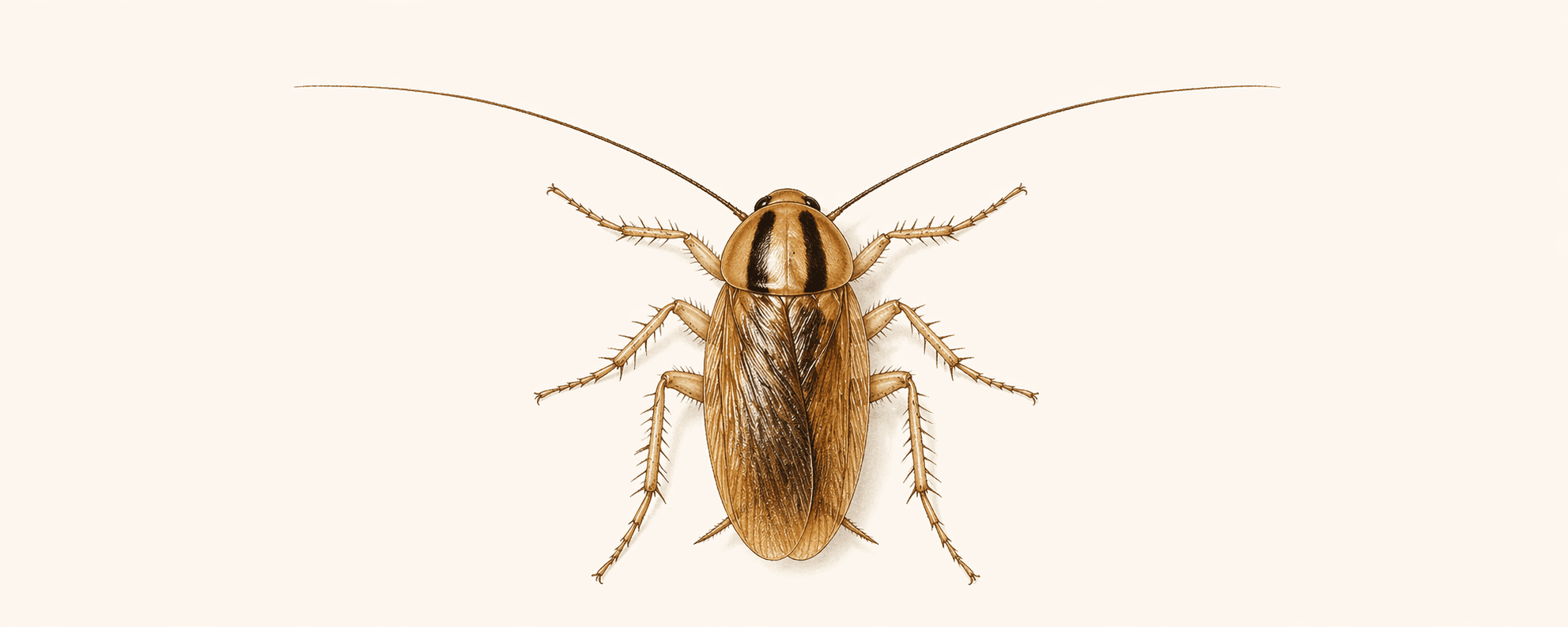
The German cockroach seeks out the warmth of kitchens: behind the fridge, under the dishwasher, inside appliance motors and in the ducts carrying hot-water pipes. It is nocturnal, so seeing one in broad daylight often means the population is already large. Other clues: small black droppings like grains, oothecae (brown egg cases) and an unpleasant smell in cupboards. Shop-bought insecticide sprays tend to push cockroaches into neighbouring flats rather than eliminate them. Our cockroaches page describes the species found in Monaco and our gel bait protocol, with no need to leave the premises.
Bed bugs: watch the holiday luggage
The end-of-year holidays are a time of travel: hotels, rentals, trains and planes. Bed bugs travel in suitcases and clothing, then settle in mattress seams, the bed base and the headboard. When you get home, unpack away from the bedroom, inspect the seams and wash whatever can be washed at a high temperature. Warning signs are bites in clusters or lines on waking, small black spots on the mattress and blood marks on the sheets. Do not move the mattress to another room: you could spread the infestation. Everything is explained on our bed bugs page, including our dry steam treatment at 180 °C.
Pantry moths: the holiday stocks
Flour, dried fruit, chocolate, spices, cereals: cupboards fill up in December, and so do pantry moths. You spot them as small grey-brown moths flying in the kitchen in the evening, silky threads in packets and small larvae in jars. Throw out affected food, store the rest in airtight containers and clean the shelves, especially the corners and joints where eggs hide.
Clothes moths and silverfish
Clothes moths attack wool, cashmere and silk stored away from the light: the holes are often discovered when the winter jumpers come out. Wash or dry-clean items before putting them away and inspect the bottom of wardrobes. Silverfish like poorly ventilated bathrooms and damp rooms; their presence almost always points to a moisture problem that must be fixed before any treatment.
What you can do today
- Note where and when you see the insects, and take a photo: it helps identify the species.
- Remove what feeds them: crumbs, leftovers, pet bowls left out overnight, open bins.
- Reduce moisture: air the rooms for a few minutes every day and fix any leaks.
- Avoid shop-bought aerosols on cockroaches and bed bugs: they scatter the insects and make professional treatment harder.
- Tell the managing agent or building manager if you live in an apartment block: an infestation in the common areas is treated at building level.
How pest control works in winter
Effective insect control starts with identifying the species, because the wrong diagnosis leads to the wrong treatment. The technician then assesses the extent of the infestation using traps and signs of activity, and chooses the most targeted treatment possible: gel bait for cockroaches, dry steam for bed bugs, pheromone traps for moths. A follow-up check is then scheduled to make sure activity has stopped, and you receive an intervention report. Winter has one advantage: homes are occupied and visits can be arranged around your schedule. To get organised, read our guide on preparing your home before insect control.
Our technicians work in plain clothes, with an unmarked vehicle. Our switchboard answers from 8 am to 10 pm every day and we intervene 24/7, anywhere in Monaco, in French and English.
Need advice?
Free on-site audit, then a free, no-obligation quote. Don't let winter settle an infestation in: the earlier it is treated, the simpler the intervention.
Request your free quote or call +377 37 70 70 02: reply within 6 hours.
Frequently asked questions
- How much does insect control cost in Monaco?
- It depends on the species, the extent of the infestation, the surface area and the layout of the premises. We start with a free on-site audit, then draw up a free, no-obligation quote. Call +377 37 70 70 02: reply within 6 hours.
- Should I wait until spring to treat cockroaches or bed bugs?
- No. In a heated home, these insects breed all year round. The earlier an infestation is treated, the simpler the intervention.
- Why avoid shop-bought insecticide sprays?
- On cockroaches and bed bugs, they often scatter the insects into other rooms or neighbouring flats, which then makes professional treatment harder.