September 10, 2026 · 4-minute read
Jardin Exotique Monaco: balancing wildlife and pest control
Geckos, bats, tits: in Monaco's Jardin Exotique, pests can be controlled without harming beneficial wildlife. Here are our rules.
The Jardin Exotique district, perched on the western heights of the Principality and blessed with a particularly mild microclimate, is home to remarkable beneficial wildlife that few other districts of Monaco can match: Moorish geckos, pipistrelle bats, tits, common wall lizards, solitary bees and bumblebees.
Our work in this district follows one strict principle: tackling pest pressure without compromising beneficial biodiversity. This is the spirit of our integrated pest management method: a graduated treatment, first mechanical, then biological, with targeted chemical treatment only when necessary, respecting pets and biodiversity.
1. The natural allies of the Jardin Exotique
Moorish geckos (Tarentola mauritanica). These geckos hunt at night, often near outdoor lights, catching mosquitoes, moths and other insects drawn to the light. Killing them or blocking their access means losing a natural regulator.
Pipistrelle bats (Pipistrellus pipistrellus). As an insectivore, the pipistrelle eats a large number of small flying insects every night, including mosquitoes. Like all European bats, it is a protected species.
Great tits and blue tits. The great tit is one of the few birds that eat pine processionary caterpillars: it helps keep their numbers in check in the district's pine trees.
Solitary bees and bumblebees. Essential pollinators of flower-filled terraces, they are not inclined to sting.
2. Our rules for reasoned pest control in the Jardin Exotique
R1 — No broad-spectrum insecticide on façades frequented by geckos: it would poison them indirectly, through the treated prey they eat.
R2 — Bats are left alone. If a pipistrelle accidentally flies into a room (a window left open on a summer evening), switch off the light, open the window wide and let it find its own way out; never grab it with bare hands.
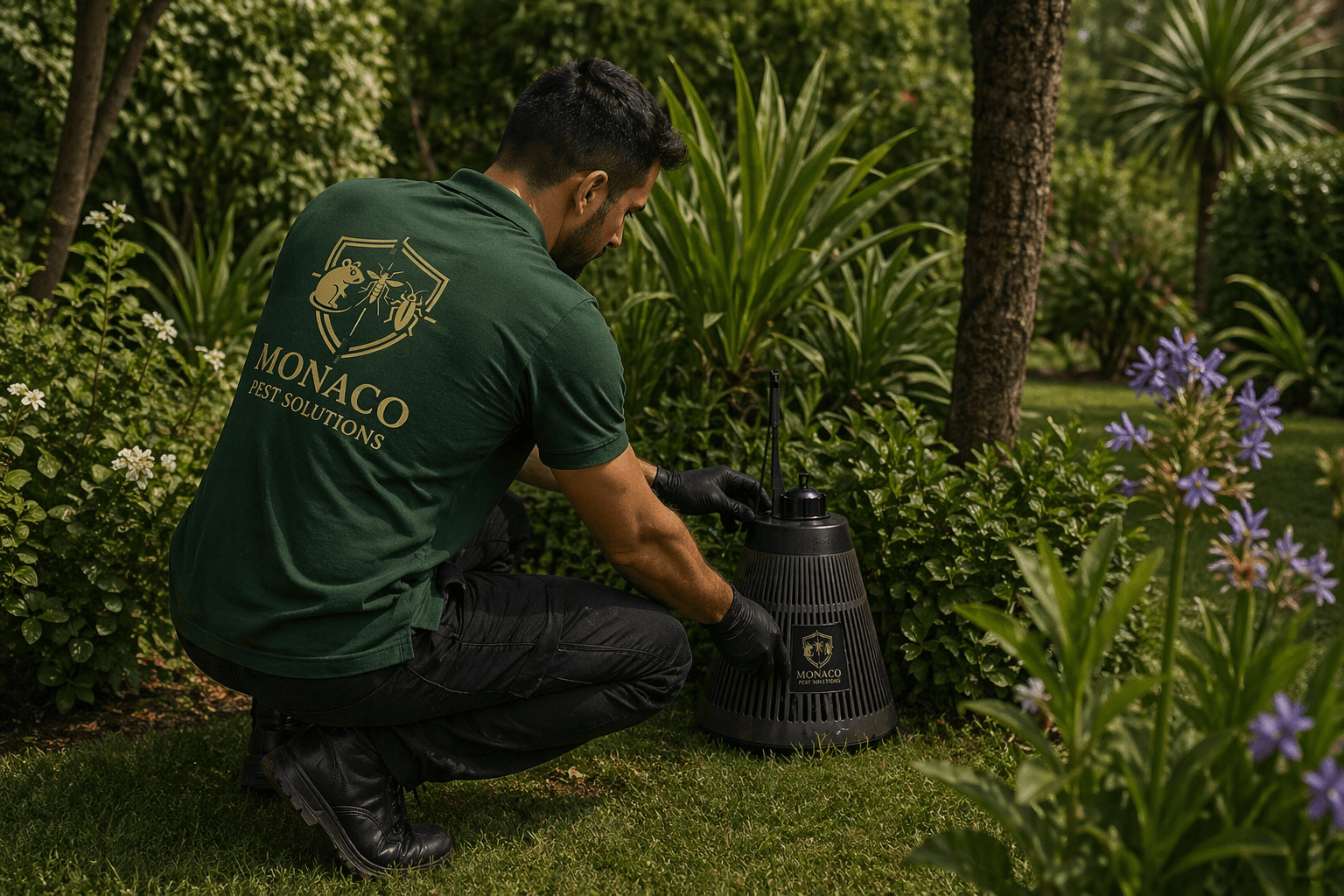
R3 — Mechanical traps and targeted baits rather than outdoor spraying. Rodenticide bait stations are reserved for indoor spaces (basements, car parks, cellars), never on façades or in the garden.
R4 — Bti in standing water against mosquitoes. This biological larvicide, harmless to vertebrates, targets the larvae in ponds, fountains and rainwater butts. No outdoor pyrethroids in gardens visited by bees.
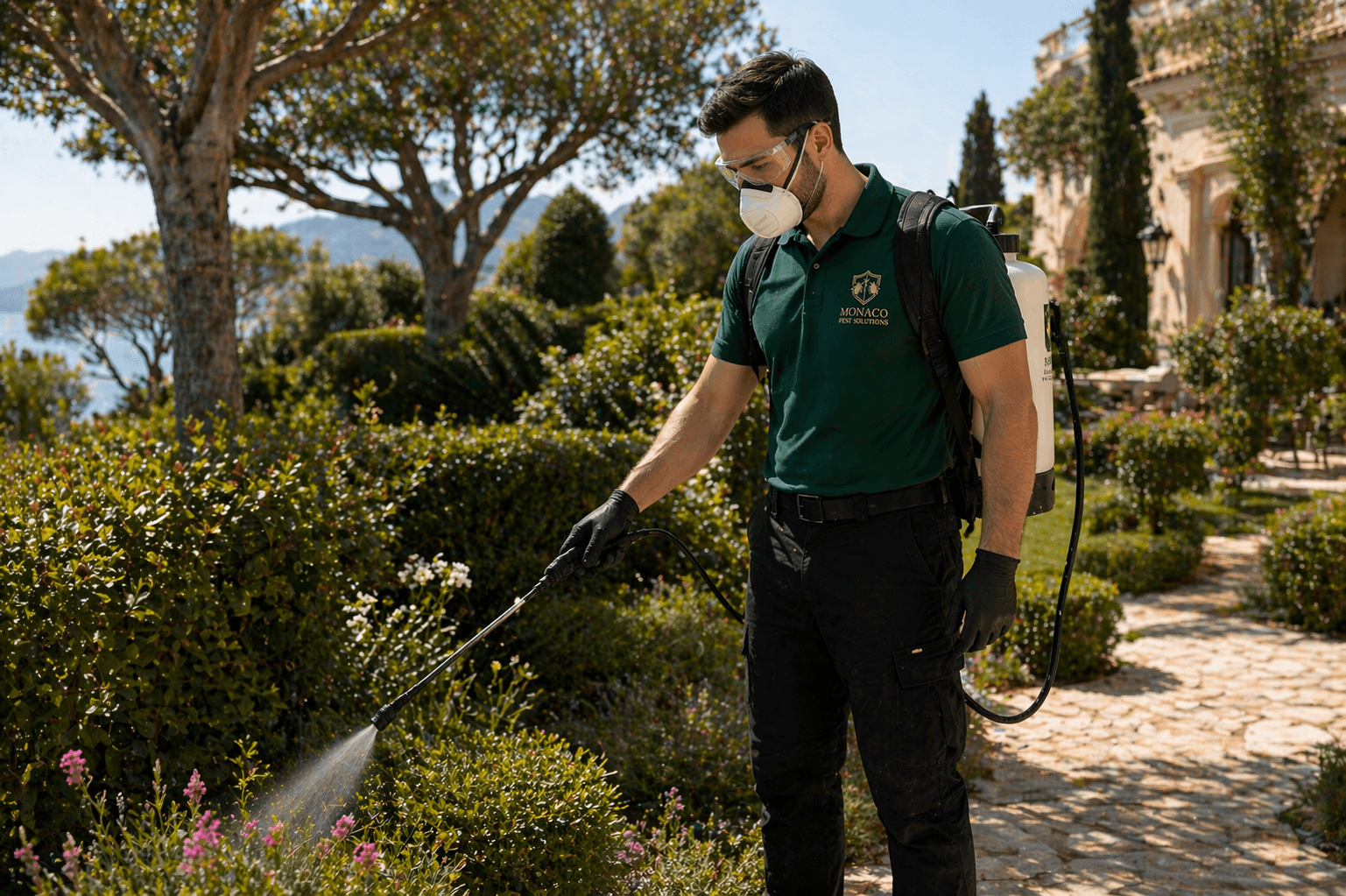
R5 — Timing and areas chosen around wildlife. If outdoor spraying becomes unavoidable, it is strictly localised, never applied to flowering plants, and scheduled around the hours when bees and bats are active.
3. The pests we treat in the Jardin Exotique
Pine processionary caterpillars: mechanical destruction of the nests in winter (December to February), before the late-winter and spring processions. No chemical treatment on tall trees, to protect the tits that feed on the caterpillars. More information on our processionary caterpillars page.
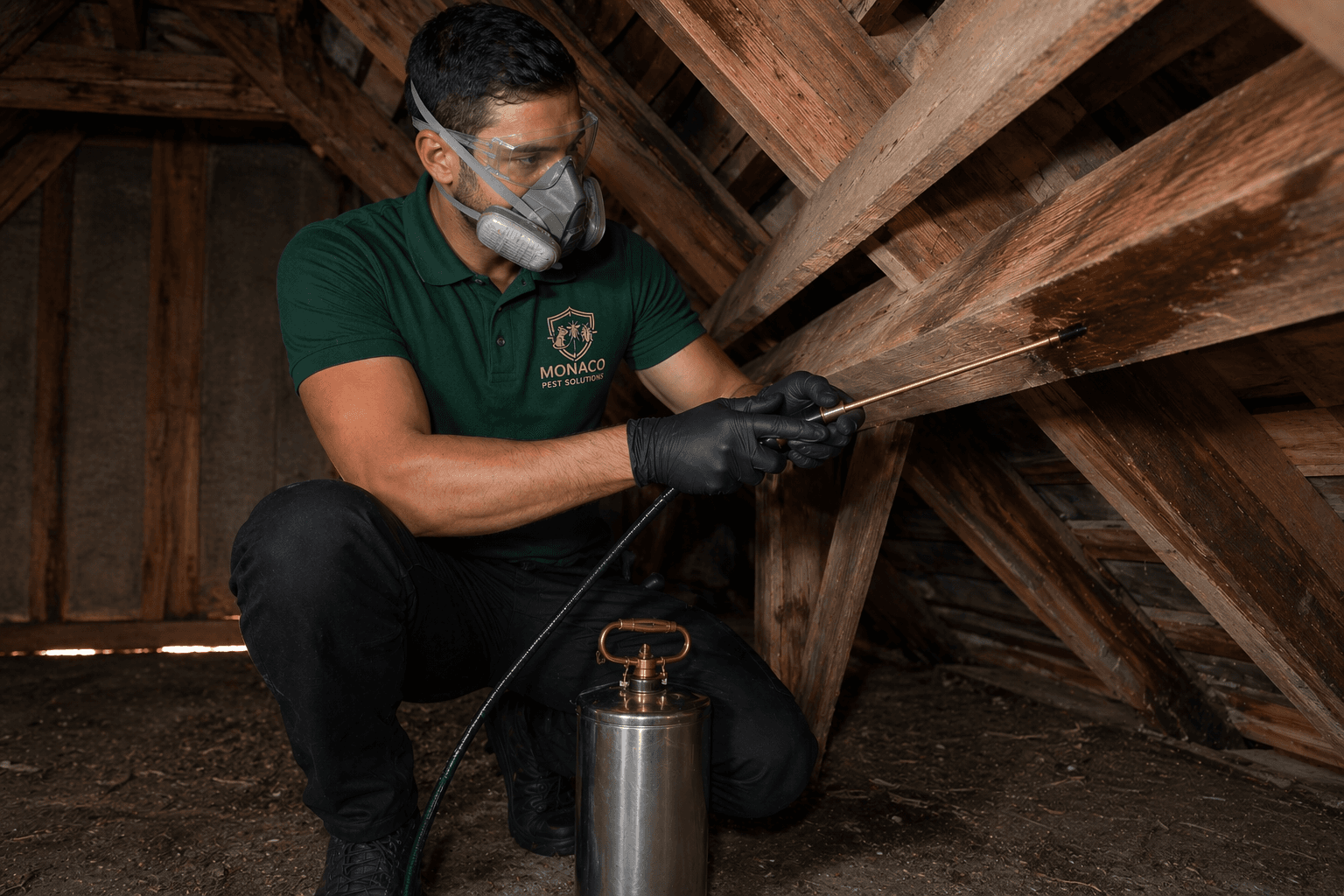
Rats in lofts and walls: mechanical traps in lofts and crawl spaces, locked bait stations in basements, sealing of entry points. No rodenticide in the garden: there is a risk of secondary poisoning of birds of prey that feed on rodents, such as owls and kestrels.
Asian hornets: an invasive alien species and a major predator of bees. Their nests are best destroyed in the evening or at night, once the workers have returned. The European hornet, a native species, is treated only when its nest poses a real danger (a walkway, a terrace, a child's bedroom). See our Asian hornets page.
Cockroaches and bed bugs: targeted indoor treatments only, gel bait against cockroaches and dry steam against bed bugs, with no outdoor spraying.
4. A free audit that takes biodiversity into account
Our on-site audit is free and without obligation: visual and acoustic inspection, species identification, location of entry points. In the Jardin Exotique, it also allows us to:
- identify the beneficial wildlife present on your property;
- distinguish real risks from unfounded fears;
- draw up a personalised action plan adapted to your garden.
To strengthen this natural balance, you can also put up nest boxes for tits, bat boxes or an insect hotel.
5. A protective regulatory framework
Monegasque environmental law governs the protection of wildlife, and bats are protected throughout Europe. We use only approved biocidal products, applied by Certibiocide-certified technicians (certificate N121134), and we always favour the solution with the least impact on beneficial wildlife.
6. Jardin Exotique: request your free audit
Do you live in a villa or residence in the district? Describe the situation and, if possible, attach a photo of the insect or the damage you have noticed: we will arrange a free on-site audit and suggest solutions that respect beneficial wildlife. See also our work in the Jardin Exotique district.
Request your free quote or call +377 37 70 70 02: reply within 6 hours.
Frequently asked questions
- Are the geckos and lizards in my garden pests?
- No: the Moorish gecko, which hunts at night on walls near lights, and the common wall lizard, active by day, feed on insects. Their presence is rather a sign of a healthy garden, and there is no reason to get rid of them.
- There is a bat in my living room: what should I do?
- Don't panic: it came in by accident, usually through a window left open in the evening. Switch off the indoor lights, open the window wide and let it fly out on its own, without ever grabbing it with bare hands; bats are protected species.
- Are the bees in my garden dangerous? Should I have them removed?
- Solitary bees and bumblebees, valuable pollinators, are not inclined to sting and call for no treatment. If a swarm of honeybees settles in a wall or a roof, it is better to call a beekeeper to collect it rather than destroy it.
- How can hornets or processionary caterpillars be treated without harming beneficial wildlife?
- We favour mechanical and targeted methods: destroying processionary caterpillar nests in winter, destroying Asian hornet nests in the evening, and using no rodenticide in the garden. For a free on-site audit, call +377 37 70 70 02.