
August 10, 2026 · 4-minute read
Oriental cockroaches in cellars: a protocol for managing agents
Oriental or American cockroaches in cellars and bin stores: identification, treatment protocol and a digital report for the managing agent.
They come out of floor drains at night, run along the walls of the bin store and vanish under the cellar door as soon as the light goes on. In apartment buildings across Monaco and the Riviera, the oriental cockroach is the basement specialist. For a managing agent, the stakes go beyond mere nuisance: hygiene in the common parts, residents' concerns and the risk of the insects moving up into the flats. Here is how to recognise it, what to do, and the protocol that gets rid of it for good.
Oriental or American cockroach: identifying the species correctly
Not all cockroaches are treated the same way, which is why identification matters.
- The oriental cockroach (Blatta orientalis): about 2.5 cm long, very dark brown to black, with a glossy look. The male has short wings, the female mere stubs; neither of them flies. It likes cool, damp places, climbs smooth surfaces poorly and therefore stays mostly in cellars, crawl spaces and on ground floors.
- The American cockroach (Periplaneta americana): larger (up to about 4 cm), reddish brown, with a pale band behind the head. It seeks the warm humidity of sewers, boiler rooms and service ducts, and can fly short distances.
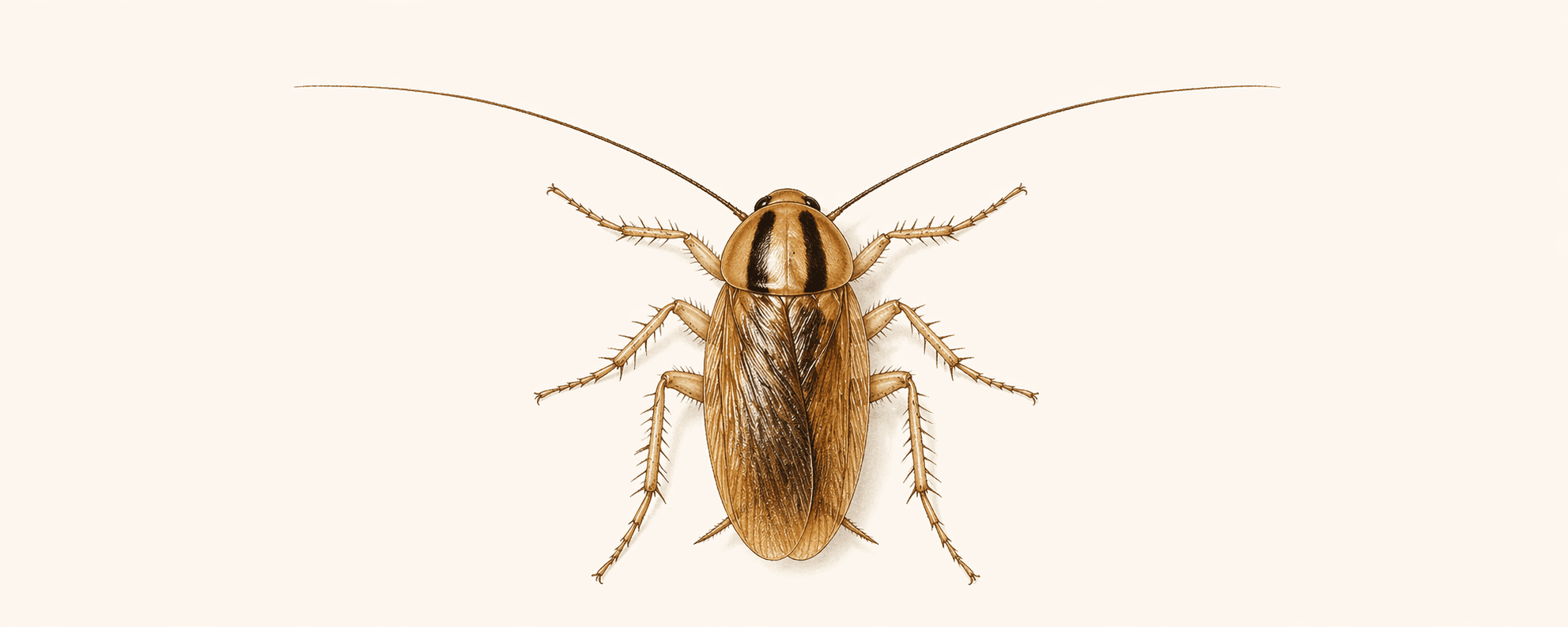
- The German cockroach, small and light brown with two dark stripes, lives mainly in kitchens: that is a different problem, covered on our page about cockroaches.
Why cellars and bin stores attract them
A building's cellar offers everything the oriental cockroach needs: darkness, humidity, food and hiding places. The critical points are the same from one building to the next:
- Dried-out floor drains: in a rarely used cellar, the water in the trap evaporates and opens a direct passage from the drainage network.
- The bin store: bags left on the floor, bins without lids, spilt liquids.
- Pipe penetrations: cracks, ducts and poorly sealed openings connect the different levels.
- Storage: cardboard boxes, old furniture and paper retain moisture and provide shelter.
Monaco's terrain adds its own twist: many buildings have several underground levels, often set against the rock, where humidity persists all year round.
Signs of an established infestation
- Cockroaches spotted at night, when the light is switched on; seeing them in broad daylight generally indicates a large population.
- Droppings: small, black, cylindrical pellets along the walls.
- Egg cases (oothecae): dark brown capsules about one centimetre long, each holding around fifteen eggs.
- Empty moults and, in heavy infestations, a characteristic musty smell.
Beyond the disgust they cause, these insects carry bacteria from sewers and waste to the surfaces they walk over, and their droppings contain allergens.
What the managing agent can do right now
- Collect reports: location, time, photo. A map of sightings guides the diagnosis.
- Have water regularly poured into the drains of cellars and plant rooms that are rarely used.
- Have the bin store cleaned: closed and washed bins, a clear floor, leaks repaired.
- Ask residents to declutter their cellars, especially cardboard boxes left on the floor.
Mistakes that make things worse
- Individual insecticide sprays in a private cellar: they do not reach into cracks, do not destroy egg cases and drive cockroaches into neighbouring cellars.
- Treating a single cellar: an infestation ignores property boundaries. Common parts and private cellars must be treated together.
- A single visit with no follow-up: the eggs protected inside the egg cases hatch several weeks later. A follow-up check is essential.
The MPS protocol for co-ownerships
Our four-step method adapts to the scale of a whole building:
- Free audit: visual inspection of basements, the bin store, drains and ducts, identification of the species, location of entry points and hotspots.
- Personalised action plan: areas to treat, corrective measures for the caretaker or contractors, schedule, access to private cellars and information for residents.
- Discreet intervention: digital monitoring and graduated treatment, first mechanical and biological, then targeted chemical treatment with approved biocidal products, applied by Certibiocide-certified technicians, with respect for pets.
- Reporting: a report signed electronically with photos, a downloadable treatment certificate and invoices, all gathered in the online client area. The managing agent thus has a clear file to present to the residents' council, the general meeting or the insurer.
To find out more about how we support residential buildings, see the page dedicated to co-ownerships and managing agents.
Take stock of your basements
Cockroaches reported in the cellars, the bin store or the common parts? The earlier the intervention, the simpler it remains. The audit is free and the detailed quote is sent to you as soon as possible, with no obligation.
Request your free quote or call +377 37 70 70 02: reply within 6 hours.
Frequently asked questions
- How can I tell an oriental cockroach from a German cockroach?
- The oriental cockroach is about 2.5 cm long, very dark brown to black, and lives in damp cellars and bin stores. The German cockroach is smaller, light brown with two dark stripes, and is mostly found in kitchens.
- Do private cellars need to be treated too?
- Yes: an infestation ignores property boundaries, and treating only the common parts leaves hotspots untouched. The action plan covers access to private cellars and information for residents.
- How does the managing agent receive the intervention report?
- The report signed electronically, with photos, and the treatment certificate can be downloaded from the online client area. To arrange a free audit of your basements, call +377 37 70 70 02.