October 16, 2026 · 10-minute read
Pest control in Monaco: what the law says
Sovereign Ordinance No. 10.943: the official list of pests and the duties of owners, managing agents, landlords and building sites in Monaco.
Since late 2024, pest control in Monaco has been more than a matter of common sense: it is now set down in black and white. Sovereign Ordinance No. 10.943 of 20 November 2024 on the control of animals posing a threat to public hygiene or health, and its implementing text, Ministerial Order No. 2024-648 of the same date, both published in the Journal de Monaco of 29 November 2024, establish the official list of pests and spell out who must act, how and how often. Owners, managing agents, landlords, tenants, project owners: here is what these texts require, explained in plain English.
Which animals are officially classed as pests in Monaco?
The Ministerial Order sets out, in its annex, the list of "animals regarded as pests". It includes:
- one bird: the feral pigeon (Columba livia);
- rodents: the black rat, the brown rat, the Polynesian rat and the house mouse;
- household pests: cockroaches, bed bugs, fleas, ticks and pyralids, the family of moths to which several pantry moths belong;
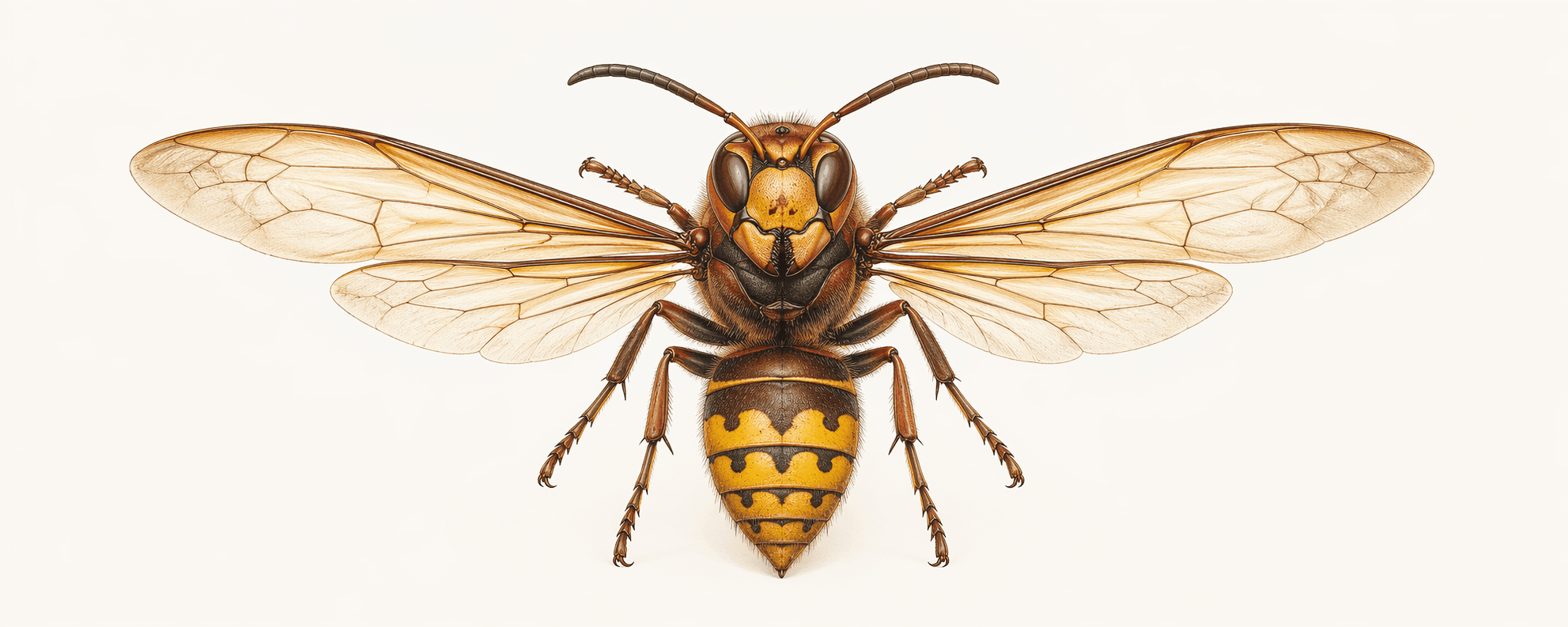
- insects that bite, sting or irritate the skin: mosquitoes of the genera Aedes (including the tiger mosquito), Anopheles and Culex, the pine processionary caterpillar, the Asian hornet and the oriental hornet;
- wood-boring and stored-food insects: termites, the house longhorn beetle, the lyctus powderpost beetle, Hesperophanes sericeus, the deathwatch and common furniture beetles, and weevils.
A protected species can never be regarded as a pest: the Ordinance excludes any animal whose preservation is ensured by the Principality's international commitments or by the regulations on natural heritage. Conversely, several common unwanted visitors are not on the list: common wasps, the European hornet, clothes moths, silverfish, ants and spiders. Treating them is still possible, and often worthwhile, but they do not fall under the obligations described below.
Owners and managing agents: what is mandatory in common areas
This is the core of the system (Article 3 of the Ordinance). The owner of a building or, in a co-owned building, the co-owners' association must prevent pests from appearing and spreading in the common areas: courtyards, walkways, entrance halls, corridors, staircases, bicycle and pushchair stores, bin rooms, garage access routes and caretakers' premises. To do so, they must:
- implement preventive or curative measures, including eradication operations;
- keep these areas clean;
- maintain the protection and deterrent devices already installed;
- check periodically for the presence of pests;
- make sure private drainage and sewage systems are in good condition.
The Order (Article 2) sets the frequency: eradication operations take place as a preventive measure, as often as necessary and at least twice a year, as well as whenever there is an infestation. They may be carried out only by qualified professionals who hold the Certibiocide certificate (see below).
Each operation follows a precise procedure:
- seven calendar days beforehand, the owner or managing agent informs the occupants through a legible and accessible notice posted in the building; in an emergency, this period may be shortened with the authorisation of the director of the Direction de l'Action Sanitaire (Monaco's health authority);
- the notice states (Article 4 of the Order) the name of the professional and their telephone number, the nature and date of the operation, the name of the active substance and its antidote, the numbers of the emergency services, of a French poison control centre and of the nearest vets, as well as the area covered by the operation;
- after the operation, the professional gives the owner or managing agent a certificate of intervention, which is kept at the disposal of the State services;
- within the following seven calendar days, the professional returns to the premises to check and clean up, in particular to remove dead animals and traps.
For a managing agent, the practical consequence is simple: at least two visits a year, each one scheduled, announced on a notice and documented. An annual prevention contract with scheduled visits, like those we offer to co-owned buildings and managing agents, lets you keep to this schedule without giving it a second thought.
Infestation in an apartment: who pays?
The Ordinance also settles the question that most often causes friction in co-owned buildings:
- in the event of an infestation, the owner or managing agent offers the occupants the option of extending the operations to their private areas, at their own expense;
- if the infestation originates in private areas because of their occupants, it is those occupants who bear the cost of all the operations needed to end the infestation of the building;
- an occupant who refuses to have the operations extended to their home may receive a formal notice from the health director: either accept the offer, or have their home treated at their own expense.
Hence the importance of a thorough inspection before any costs are shared out: knowing where the infestation started determines who pays. In an apartment building, rodent control or a cockroach treatment always begins with this search for the source: cellars, service risers, bin rooms, then the apartments.
What owners and managing agents risk if they fail to act
If the obligations of Article 3 are not met, the health director may send the owner or the co-owners' association a formal notice by registered letter with acknowledgement of receipt (Article 4 of the Ordinance). It sets out the failings observed and the time allowed to remedy them.
The person concerned has five calendar days to submit their observations. If the measures are not taken within the time allowed, the State services may, unless the person objects, have the operations carried out at the person's expense. They are also liable to the measures provided for in Article L. 550-3 of the Environment Code and to the penalties set out in point 2 of Article 417 of the Criminal Code.
The State services may also act on their own initiative when they find pests: monitoring, destroying the animals and informing the public (Article 5). Away from the public highway, they intervene with the consent of the person who can authorise access, at the expense of the owner, the co-owners' association or the occupant, as the case may be.
Landlords and tenants: a healthy home from the day the keys are handed over
Article 6 of the Ordinance is short and clear: every landlord of a dwelling is required to hand over to the tenant a dwelling free from any infestation by animals regarded as pests. Renting out an apartment with bed bugs, cockroaches or mice is therefore contrary to this provision. Before letting a property, or between two tenants, an inspection lets you start on a sound footing.
That does not make the tenant a mere bystander: Article 7 requires the owner, the managing agent or the tenant to take all measures to ensure that pests are neither a source of nuisance, nor a risk of human contamination by a communicable disease, nor a risk of an epidemic spreading among animals.
Pigeons: a ban on feeding, a duty to protect buildings
Two rules apply directly to pigeons:
- the feeding ban (Article 7 of the Ordinance): it is forbidden to deliberately throw or leave out food, including seeds, in any public or private place when doing so is likely to attract pests; the State services and duly appointed qualified professionals are exempt;
- protecting buildings (Articles 13 and 14 of the Order): when the proliferation of pigeons creates a health risk, the owner or managing agent installs, or arranges for the installation of, deterrent devices or any system that prevents pigeons from landing,without spoiling or damaging the appearance of the building; failing that, the health director may order this work.
These measures apply with due regard for the protection of wildlife. That is the principle behind our pigeon control work: spikes, nets and wires fitted with care, without ever harming the birds.
Building sites: before demolition and during the works
The project owner of any demolition or construction site, that is, whoever commissions the work, must bring in a qualified company (Article 8 of the Ordinance, Article 3 of the Order):
- one operation at least five calendar days before work begins;
- then at least one operation every two weeks for the entire duration of the works;
- before each operation, a legible notice posted to inform the people working on the site;
- after each visit, a certificate of intervention, and a check and clean-up visit within seven days.
The project owner must also eliminate or monitor any standing water to prevent mosquito breeding sites. The logic is simple: demolition drives out the rodents living in basements and underground networks, and treating before the site opens stops them from dispersing into neighbouring buildings.
Bed bugs: the Order sets out the sequence of steps
For bed bugs in a home, the Order (Articles 7 and 8) requires you to start with physical control:
- wash infested laundry at 60 °C or higher;
- steam-clean nooks, crannies and upholstery at 100 °C;
- vacuum up the bugs and their eggs, then immediately change the vacuum cleaner bag and throw it away in a tightly sealed plastic bag;
- pack infested items for disposal in airtight bags, and keep uninfested or cleaned laundry and items protected in airtight bags.
Cold (at least 72 hours at -20 °C for laundry and small items) and heat (the empty home heated to 70 °C) can supplement these measures. If the bed bugs persist, a chemical treatment is carried out with nobody present, by a qualified professional. In other words, an off-the-shelf insecticide spray is not the answer the text has in mind.
Mosquitoes: an obligation for every resident
To combat the tiger mosquito and the other mosquitoes on the list, the Order (Article 9) addresses the owner, the occupant or the managing agent. Each of them must, in the places for which they are responsible:
- get rid of containers that could serve as larval breeding sites, or prevent egg-laying by physical means;
- avoid creating any pools of standing water;
- empty and clean ornamental pools, vases, animal troughs and other containers at least once a week;
- maintain ponds with weekly monitoring, cover basins of non-drinking water and remove disused cisterns and abandoned reservoirs, watering troughs and wash-houses;
- fit cisterns and rainwater collectors, which must be watertight, with a vent protected by mesh no larger than 1 millimetre;
- keep gardens and planted areas carefully maintained.
Around a suspected or confirmed case of an arbovirus disease (dengue or chikungunya, for example), or as a preventive measure, the State may have an area with a radius of at least 150 metres treated at night, after informing the public; everyone must then follow the temporary protection instructions.
Who is allowed to treat? Certibiocide and biological control
The Order (Article 6) restricts the use of biocidal products intended for professionals to holders of a valid individual Certibiocide certificate issued in a European Union or European Economic Area state, in the category matching the products (pests, disinfectants or other products, such as wood preservatives). A company without Certibiocide therefore cannot carry out the mandatory operations for a co-owned building or a building site.
The text also calls for giving priority to biological control, that is, the use of beneficial organisms, whenever it is at least as effective as other methods (Article 5).
Monaco Pest Solutions is a Monegasque company (RCI 26S10394) holding Certibiocide certificate N121134. We practise integrated pest management and provide an intervention report after every visit.
Key points at a glance
- Official list: feral pigeon, rats and mice, cockroaches, bed bugs, fleas, ticks, pyralids, mosquitoes, the pine processionary caterpillar, Asian and oriental hornets, wood-boring insects and weevils.
- Apartment buildings and co-owned properties: operations in common areas at least twice a year and whenever there is an infestation, by a certified professional, with a notice posted seven days beforehand and a certificate afterwards.
- Infestation originating in a home: the costs fall to its occupants.
- Landlords: a home free from any infestation when it is handed over to the tenant.
- Building sites: treatment at least five days before work starts, then every two weeks.
- Feeding: prohibited when it is likely to attract pests.
- Failure to comply: formal notice, then operations carried out at the expense of the person responsible.
This article summarises Sovereign Ordinance No. 10.943 and Ministerial Order No. 2024-648 of 20 November 2024, published in the Journal de Monaco No. 8723 of 29 November 2024. It is no substitute for reading the official texts or for legal advice.
Need a professional?
Managing agent, owner, landlord or project owner: we schedule your mandatory operations and come out within 6 hours, 24/7, anywhere in Monaco.
Request your free quote or call +377 37 70 70 02: reply within 6 hours.
Frequently asked questions
- How many pest control operations are mandatory each year in a co-owned building in Monaco?
- At least two a year in the common areas, as a preventive measure, plus as many more as necessary and one whenever there is an infestation (Ministerial Order No. 2024-648, Article 2). They are entrusted to a Certibiocide-certified professional, announced to occupants by a notice posted in the building seven days beforehand, then followed by a certificate of intervention and a check-up visit within seven days.
- Who pays for the treatment when the pests come from an apartment?
- When the infestation originates in private areas because of their occupants, it is those occupants who bear the cost of all the operations needed to end it throughout the building (Sovereign Ordinance No. 10.943, Article 3). In other cases of infestation, the owner or managing agent offers the occupants the option of extending the operations to their home, at their own expense.
- Can you rent out an infested home in Monaco?
- No. Article 6 of Sovereign Ordinance No. 10.943 requires every landlord to hand over to the tenant a home free from any infestation by animals regarded as pests: bed bugs, cockroaches, rodents or fleas, for example. An inspection before the tenant moves in lets you start on a sound footing.