
August 22, 2026 · 4-minute read
Pests in 2027: our forecast for Monaco and the Riviera
Tiger mosquitoes, Asian hornets, Argentine ants, bed bugs: the pests to watch in Monaco in 2027, and how to get ready for them right now.
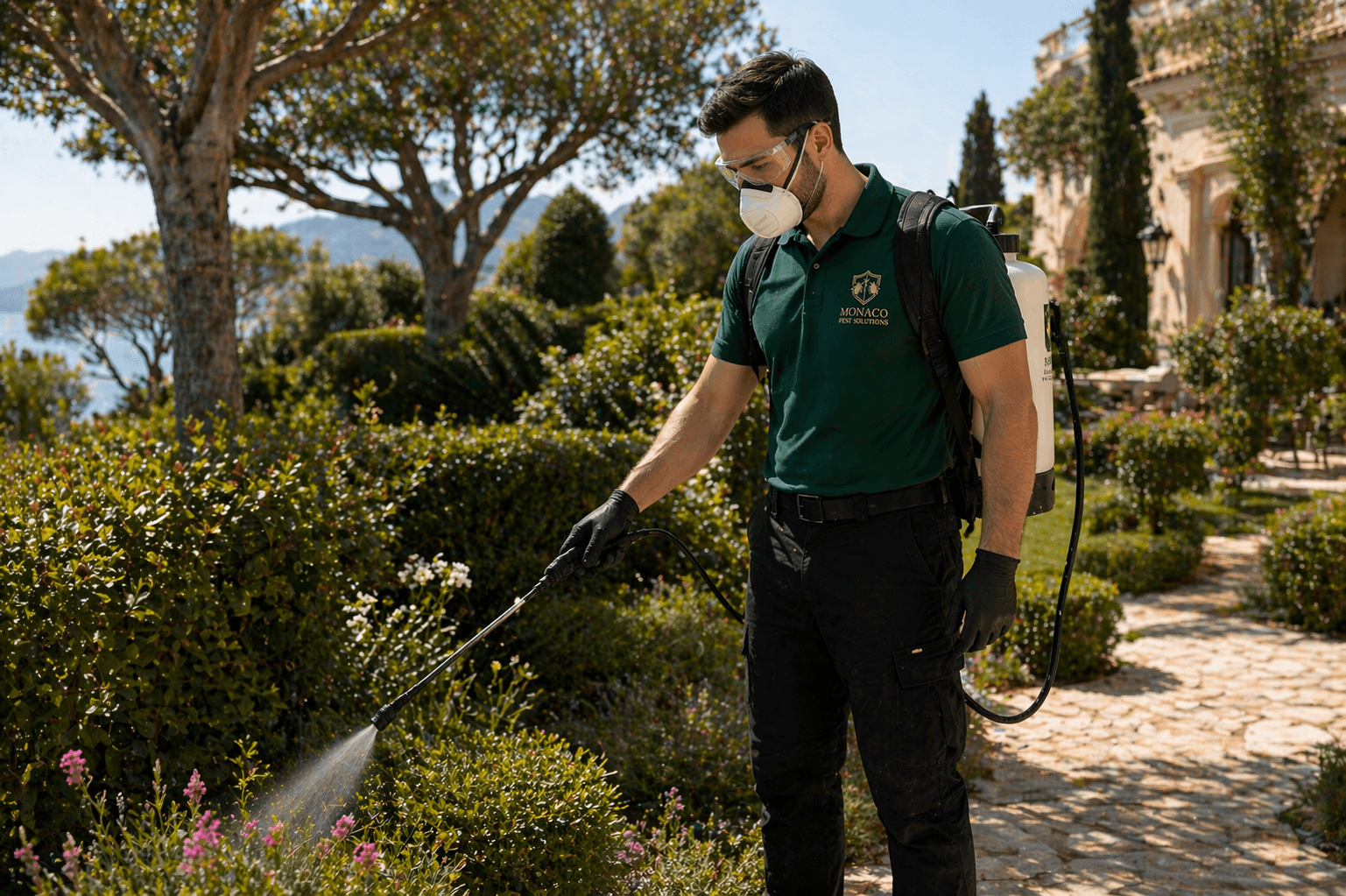
Mild winters, early springs and late summers that stretch into October: on the Riviera, these conditions favour several pest species. Monaco adds its own density to the mix, with apartment buildings, palace hotels, restaurants, yachts and visitors from all over the world concentrated in a very small area.
Here is what we expect for 2027, based on well-documented trends, and what you can do right now.
Climate, density, travel: three drivers of pest pressure
- Climate: milder temperatures lengthen the period when insects are active and make it easier for them to survive the winter.
- Urban density: building sites, underground networks, car parks and kitchens bring food, warmth and shelter close together.
- International mobility: suitcases, goods, potted plants and boats carry insects from one port or country to another.
Tiger mosquito: a season that keeps stretching
The tiger mosquito was first detected in mainland France in Menton, in 2004. It is now firmly established along the whole Côte d'Azur, and cases of locally transmitted dengue or chikungunya are regularly reported in the south of France in summer.
For 2027, we expect marked activity from spring to autumn, especially in villa gardens, on terraces and in residential buildings with patios. In summer, it takes about a week to go from egg to adult, so empty anything that holds water every week (saucers, buckets, tarpaulins, gutters, drain covers) and have water points that cannot be removed treated. Our tiger mosquito page sets out the most useful steps.
Asian hornet: earlier founding queens
Classified as an invasive alien species in France, the Asian hornet is well established in the Alpes-Maritimes. Mild springs tend to bring forward the emergence of founding queens, which build their primary nest in a garden shed, under the eaves or inside a roller-shutter box. As summer goes on, the colony may move to a secondary nest, often perched at the top of a tree.
Our forecast: primary nests from March on the coast, and secondary nests active until the first cool days. The best defence is still to inspect your outdoor shelters in spring and to have any occupied nest dealt with by a professional. See also our advice on the Asian hornet.
Argentine ant: the Mediterranean supercolony
Along the Mediterranean coast, the Argentine ant forms a supercolony that stretches for thousands of kilometres: neighbouring nests do not fight each other, they cooperate. After a dry spell or heavy rain, the ants march in columns into kitchens and bathrooms.
Insecticide sprays only kill the workers you can see, while the queens, which are very numerous, stay safely hidden. Effective control combines removing sources of food and moisture, sealing the entry routes and placing targeted baits along the trails. Find more details on our ants page.
Bed bugs: vigilance for hotels and yachts
The more travellers move around, the more bed bugs travel with them, in suitcases and linen. Palace hotels, hotels, furnished apartments, charter yachts: every change of guests is an opportunity for an introduction, and the resistance of these insects to many insecticides makes early detection decisive. For 2027, we recommend regular checks of rooms and cabins, especially around the Principality's major events.
Other signals to watch
- Rats and mice: building sites and utility works dislodge colonies, which then seek refuge in cellars, car parks and bin stores.
- Brown marmorated stink bug: native to Asia, it moves into heated homes in autumn.
- Pine processionary caterpillars: mild winters favour their spread, and their stinging hairs are a threat to children and dogs.
Preparing for 2027: the calendar we recommend
- January–February: inspection of roof spaces, cellars and plant rooms, checks on roof timbers and woodwork.
- March–May: search for primary hornet nests, removal of standing water, first barriers against ants.
- June–September: monitoring of secondary nests, terraces and kitchens, checks of rooms and cabins.
- October–December: sealing entry points before winter, checks for stink bug intrusions, end-of-season review.
Our seasonal prevention page breaks it down by type of pest.
Our method for staying one step ahead
Our approach is based on integrated pest management. Everything starts with a free on-site audit: visual and acoustic inspection, species identification, location of entry points. This is followed by a personalised action plan, a discreet intervention with digital monitoring and graduated treatment (mechanical, biological, then targeted chemical treatment with approved biocidal products), then full reporting. Our technicians hold Certibiocide certification and respect your pets as well as the biodiversity of your gardens.
Electronically signed reports with photos, treatment certificates and invoices are all gathered in your online client area. When there is an immediate risk, our 24/7 on-call service is triggered after a first phone call, and we call you back within 6 hours, 7 days a week.
Get ready for the 2027 season this winter
Palace hotel, restaurant, residential building, yacht or villa, in Monaco or anywhere between Menton and Cannes: the best time to prepare for next season is before it begins. Let's talk about your site and your priorities.
Request your free quote or call +377 37 70 70 02: reply within 6 hours.
Frequently asked questions
- Which pests should be watched most closely in Monaco in 2027?
- We mainly expect increased pressure from tiger mosquitoes, Asian hornets, Argentine ants and bed bugs. Rodents, brown marmorated stink bugs and pine processionary caterpillars also need watching, depending on the season.
- When should prevention for the 2027 season start?
- In winter: that is the time to inspect roof spaces, cellars and plant rooms. Spring is then the moment to search for primary hornet nests and remove standing water.
- How much does a prevention plan for 2027 cost?
- It depends on your site and the species involved: we start with a free on-site audit, then you receive a detailed quote, free and without obligation. Call +377 37 70 70 02 to book an appointment.