August 11, 2026 · 8-minute read
Pigeon problem in Monaco: what to do in an emergency? Complete guide
Pigeons settled on your balcony, roof or terrace in Monaco? Our 8 pigeon-control steps: safe cleaning, deterrence, netting, spikes and prevention.
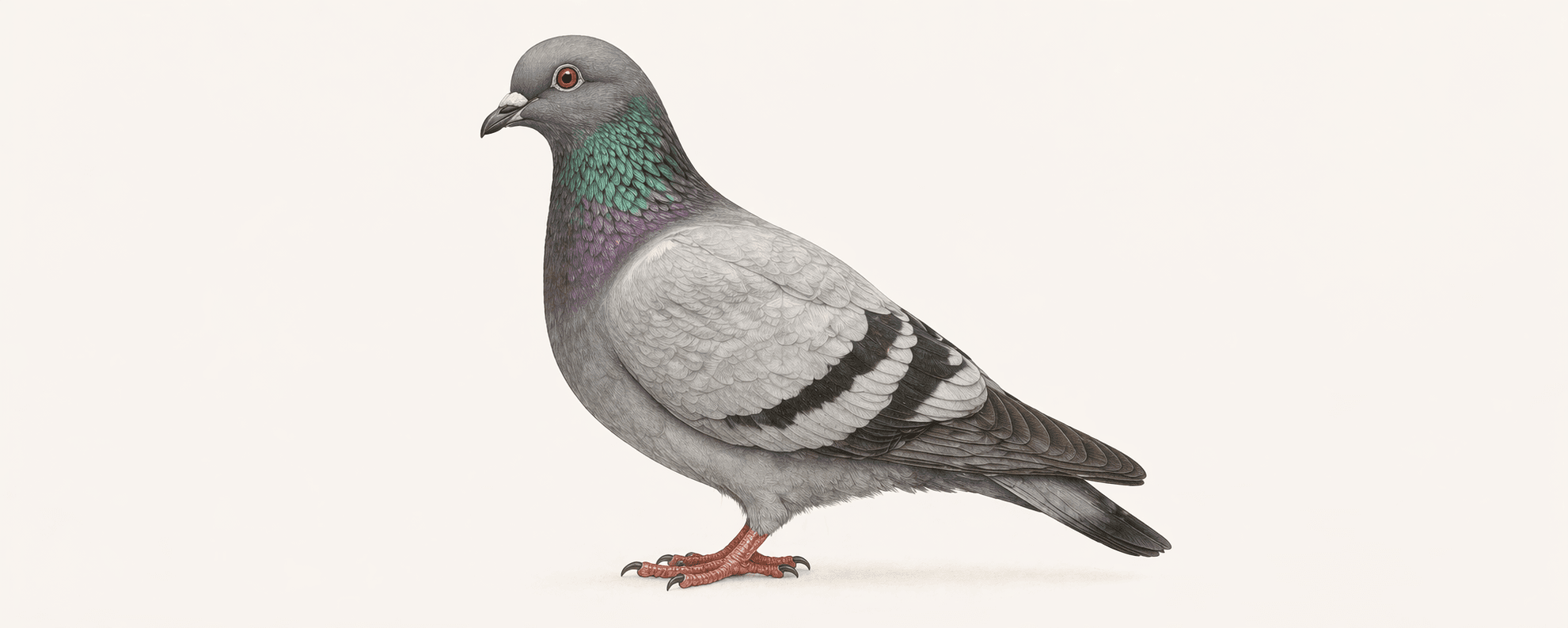
What should you do if pigeons colonise your balcony or roof in Monaco? Do not wait for the first nesting: remove all food and water sources, clean droppings with disinfectant after wetting them (never dry), install temporary deterrence, then have permanent protection fitted — nets, spikes or tensioned cables — by a professional. One pair tolerated in spring becomes a colony of twenty birds by autumn. Here is the full protocol applied on the Principality's facades, roofs and terraces.
Identify the pigeon problem: the unmistakable signs
The feral pigeon is faithful to its site: once settled, it never leaves on its own. Assess the stage of settlement, because the response depends on it. Stage 1 — observation post: scattered droppings on railings, daytime presence only; the birds are testing the site. Stage 2 — night roost: localised dropping accumulations under high points (cornices, air-conditioner tops, beams), feathers, dawn cooing; loyalty is forming. Stage 3 — nesting site: rough nests behind planters, under solar panels, in blind boxes; eggs or juveniles; droppings in thick layers — the site has become their territory and dislodging will take time. Associated damage: gutters blocked by droppings and nest material, dropping acidity attacking stone, ironwork and Belle Époque facades, ammonia smell, proliferation of nest parasites. Action: photograph each accumulation zone and log presence hours (dawn, day, night) — this record determines whether your site is a day post, a roost or a nursery, and therefore which device to install.
What NOT to do (mistakes that worsen the infestation)
Do not feed or let anyone feed: a single person throwing bread anchors an entire colony on the block. Never clean droppings dry: sweeping dry guano suspends dust that can carry respiratory pathogens — always wet with disinfectant, wear gloves and an FFP2 mask. Do not destroy an occupied nest yourself: beyond regulatory issues, adults rebuild within 48 hours in the same spot; without protection fitted immediately after, the operation is pointless. Skip gadget deterrents: plastic owls, hanging CDs and ultrasound lose all effect within one to two weeks — urban pigeons end up perching on them. Do not fit spikes in the wrong place: spikes on the top rail simply shift the birds to the planter below; without whole-site treatment, each partial device moves the problem two metres. Avoid home-made sticky products: dangerous for all birds and damaging for the facade. Action: stop all feeding immediately and inform the building manager — effective pigeon control is handled at facade scale, not balcony by balcony.
Immediate first steps (secure everything in 15 minutes)
Minutes 0-5: remove food and water — pet bowls, terrace crumbs, planter saucers, outdoor meal leftovers; without resources the site loses half its appeal. Minutes 5-10: for localised fresh droppings, spray household disinfectant, leave five minutes, wipe with disposable paper into a sealed bag, gloves mandatory; thick accumulations wait for the equipped team. Minutes 10-13: make perches temporarily uncomfortable — unstable objects on rails, reflective tape snapping in the wind on favourite spots. Minutes 13-15: close access to blind boxes and panel undersides; a wedged board blocks for a few days pending permanent mesh. Action: if a nest with eggs or juveniles is present, do not touch it — note its position and mention it when you call, so the professional can plan accordingly.
Isolate and contain to prevent spread
Pigeons colonise step by step: every tolerated perch becomes an anchor for the next generation. Balcony: bring in textile furniture, cover planters with temporary mesh, remove wind-sheltered corners (that is where they nest). Roof and plant: check solar panel undersides and air-conditioner tops — the Principality's two champion nesting sites; block temporarily with mesh. Gutters: have downpipes checked if pigeons station on the roof; a nest-blocked downpipe causes infiltration on the floor below at the first autumn rain. Building coordination: list unoccupied balconies and vacant flats with the manager — colonies settle first where nobody disturbs them. Yacht in port: covers on masts and radars, temporary tensioned lines on spreaders; droppings attack gelcoat and teak within days. Action: list every observed perching point on your facade; the permanent system must cover them all simultaneously or displacement is guaranteed.
Call a professional: when and why
From stage 2 (roost) and always at stage 3 (nesting), professional intervention is required: work at height, nest removal and guano disinfection demand equipment and method. Monaco Pest Solutions (Certibiocide N°121134, RCI Monaco 26S10394) provides: an ornithological site audit — perching, roosting and nesting points, colony count, flow analysis between your facade and neighbouring sites; secured rope-access work for facades, cornices and roofs beyond cherry-picker reach — decisive in the old town's narrow streets; full decontamination — contained removal of droppings and nests, disinfection, insecticide treatment of nest parasites that migrate indoors within 48 hours of removal; bespoke discreet systems — near-invisible nets tinted to the facade, stainless spikes, low-visibility tensioned cables, electric pulse systems for listed cornices where nothing must show, compatible with Belle Époque facades; and a documented result guarantee with before/after counts. Our 24/7 emergency line prioritises nests blocking drains and droppings on food-service areas.
The MPS pigeon-control protocol: 4 phases
Phase 1 — Audit and count (day one): mapping of perching and nesting points, dusk colony count, damage diagnosis (gutters, stone, ironwork), protection plan with installation diagram. Phase 2 — Sanitation (days 2-5): nest removal on a schedule compatible with occupancy, contained guano removal, disinfection and parasite treatment (an abandoned nest releases its hosts indoors within 48 hours). Phase 3 — Equipment (days 5-15): permanent devices fitted zone by zone — nets over courtyards and patios, spikes on rails and cornices, tensioned cables along ridge lines, mesh under solar panels and around plant boxes. Phase 4 — Control and guarantee (day 30, then yearly): verification count, adjustment for observed displacement, annual maintenance visit (net and cable tension, spike cleaning).
Prevention so pigeons never return
Zero feeding: co-ownership signage, terrace staff trained to clear immediately and leave no crumbs. Locked waste: closed containers, refuse-room door shut — street pigeons thrive on food waste. Spring inspection: every February-March, before the first clutch, check potential nesting sites (blind boxes, panels, dense planters). Device maintenance: a slack net or loose spike reopens the site within days; the annual visit is part of the protection. Vegetation: avoid unmeshed bushy planters on exposed balconies; prune facade climbers that offer nest platforms. Neighbourhood vigilance: one unprotected vacant balcony recolonises the whole facade; report abandoned sites to the manager. Full species profile and our systems on our pigeons page.
Special cases: palace hotel, yacht, residence, restaurant
Palace: the stake is invisibility — sculpted cornices, balustrades and ornamental roofs accept neither visible spikes nor coarse nets. We install low-visibility tensioned cables and pulse systems concealed in the mouldings, with rope-access work outside guest exposure hours. Yacht: masts, radars, spreaders and foredecks are prime perches in port; removable tensioned lines, marine-grade deterrents and a gelcoat cleaning protocol after every extended stay. Residence: pigeon-proofing is voted and treated facade-wide; we provide the manager with the technical file (diagram, counts, guarantees) for the agenda. Restaurant with terrace: terrace pigeons are beaten through crumb management and discreet cabling of dominant perch lines; our visits happen before opening. Next step: request your free quote with facade audit, or call the 24/7 emergency line if a nest blocks a drain or droppings contaminate a food area. Scratching in the loft rather than cooing? Check our guide on rat problems in Monaco: roofs and lofts are shared territory.
Zones served in Monaco and on the Riviera
We operate in particular on Saint-Roman and Cap-d'Ail.
Frequently asked questions
- Are pigeon droppings really dangerous to health?
- Yes, especially when dry: their dust can carry respiratory pathogens and parasites. Always clean after wetting with disinfectant, wearing gloves and an FFP2 mask, and leave thick accumulations to an equipped team.
- Can I remove a pigeon nest from my balcony in Monaco myself?
- An empty nest can be removed with gloves and a mask, followed by disinfection. An occupied nest (eggs, juveniles) should be reported to the professional: its removal follows a precise schedule and must be immediately followed by protective equipment, or the adults rebuild within 48 hours.
- What is the most effective and most discreet anti-pigeon system?
- It depends on the site: tinted nets for courtyards and patios, stainless spikes for exposed rails, low-visibility tensioned cables for ornamental cornices, pulse systems for listed facades. On prestige buildings, the cable-plus-pulse combination is invisible from five metres.
- Why do pigeons always come back to the same spot?
- The feral pigeon is philopatric: it returns to its birth and roosting site for life. As long as the site remains physically accessible, deterrence alone is not enough — only complete mechanical protection (nets, cables, spikes) breaks this fidelity.
- How long does a complete anti-pigeon installation take?
- Allow one to two weeks between the audit and the end of installation: droppings and nest sanitation first, then equipment zone by zone. The day-30 control count validates the result, and an annual visit maintains protection over time.