August 11, 2026 · 8-minute read
Flea problem in Monaco: what to do in an emergency? Complete guide
Ankle bites, a scratching pet? Our 8 flea emergency steps in Monaco: reliable testing, pet treatment, deep vacuuming and the full certified protocol.
What should you do about fleas in Monaco? Treat the animal and the environment on the same day, never one without the other: give your dog or cat a veterinary antiparasitic, vacuum floors, skirting and fabrics intensively, wash baskets and blankets at 60 °C, and have the environment professionally treated if bites persist beyond a week. 95% of the flea population (eggs, larvae, pupae) lives in your home, not on the animal. Here is the full emergency protocol applied in the Principality's villas, apartments and yachts.
Identify fleas: the unmistakable signs
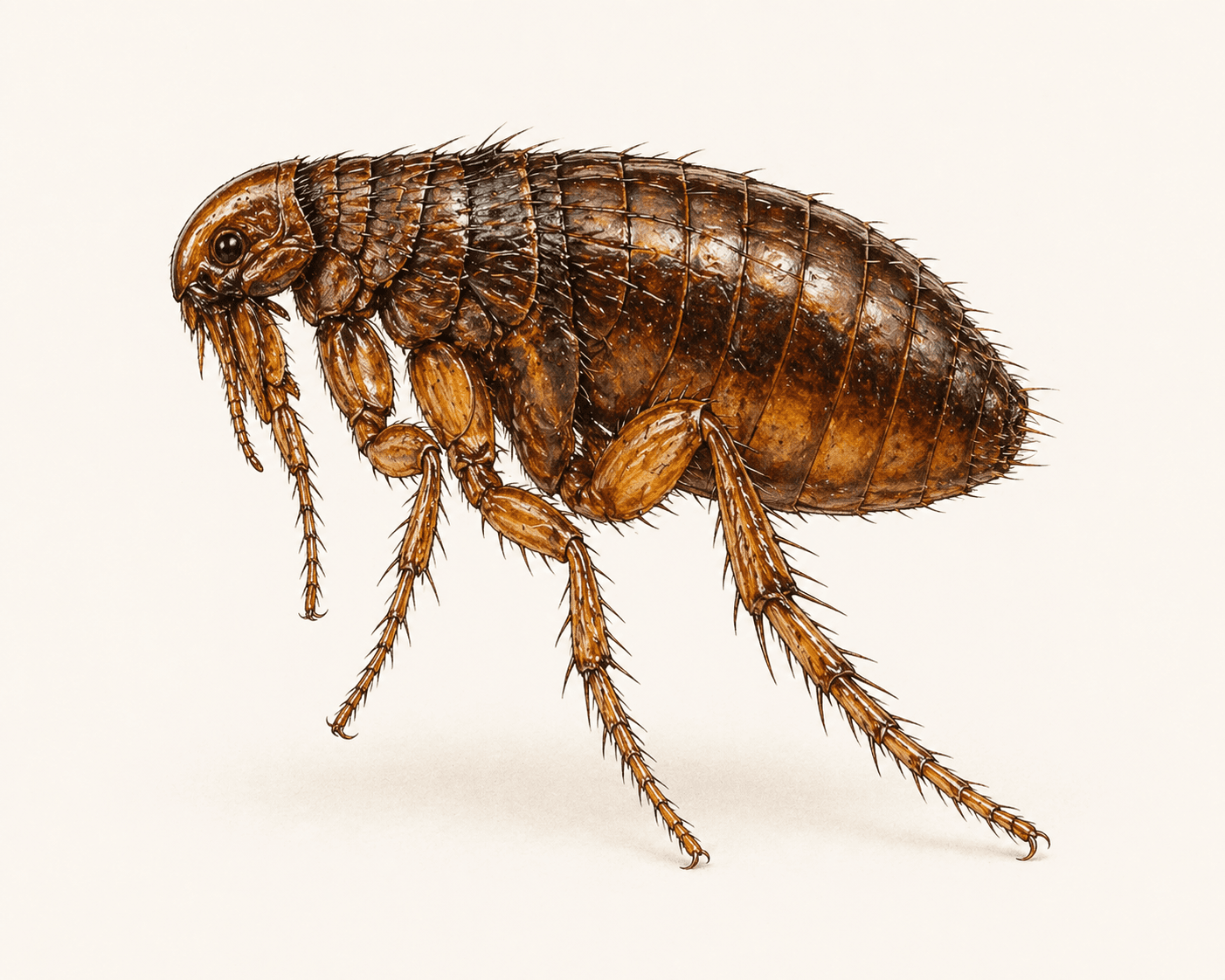
The cat flea — the dominant species on dogs, cats and in Riviera homes — measures 2-3 mm, reddish-brown, laterally flattened, jumping up to 30 cm. Check: on you, clustered bites on ankles and lower legs, small red spots centred on a point, highly itchy; on the animal, frantic scratching, nibbling at the tail base, and with a fine comb black "dust" that turns red on damp paper — digested-blood flea droppings, the absolute proof. Do the white-sock test: walk slowly through suspect rooms in long white socks; adult fleas jump on and stand out clearly. In advanced cases, whitish thread-like larvae appear in parquet gaps. Fleas in a pet-free home signal a wild host (stray cat under a terrace, bird or rodent nest in the loft) or a previously pet-occupied dwelling — dormant pupae wake to the new occupants' vibrations. Action: comb your pet over damp white paper and run the sock test in every room. The positive rooms define the treatment zone.
What NOT to do (mistakes that worsen the infestation)
Treating the animal but not the environment is mistake number one: the pet recontaminates itself walking through its own habitat, where eggs and pupae keep hatching for weeks. Avoid low-grade collars and spot-ons: underdosed, they select for resistance, and some dog products are toxic to cats — choose the antiparasitic with your vet. Do not bathe the animal right after a spot-on: you wash the product away before it spreads. Skip total-release foggers: the mist misses larvae tucked under skirting and deep in fibres. Do not leave rooms empty and closed hoping to starve the fleas: cocooned pupae wait up to six months and hatch en masse when vibrations and CO2 return — the classic "back from holiday" outbreak. Do not forget the car and the yacht: carriers, seats and cockpit cushions are overlooked reservoirs. Action: list every place the animal has frequented in the past thirty days (car, boat, second home) — each must follow the same protocol.
Immediate first steps (secure everything in 15 minutes)
Minutes 0-5: confine the animal to an easily treated tiled room and book a same-day vet appointment for a suitable antiparasitic (fast-acting tablet or spot-on according to species, age and weight). Minutes 5-10: gather baskets, blankets, cushions, covers and fabric toys for a 60 °C wash; what cannot take hot washing goes to the freezer for 48 hours or to the dry cleaner. Minutes 10-15: vacuum intensively the pet's sleeping areas, skirting boards, under furniture and rugs. Vacuum vibrations trigger pupal hatching — deliberately: they become vulnerable to treatment. Bin the bag immediately in a closed outdoor container. Action: repeat the vacuuming daily for fifteen days — the most effective mechanical weapon against juvenile stages, and a condition of chemical success.
Isolate and contain to prevent spread
Zoning: restrict the animal to already-positive rooms until treatment is complete; every newly visited room becomes a room to treat. Quarantine unwashed textiles in sealed bags. Do not send valuable rugs and sofas out for cleaning before treatment — transport spreads eggs and fleas through common areas; they are steam-treated in place. Postpone visits from other animals until the protocol ends. On a yacht, treat the boat and the home simultaneously if the animal sails: cockpit cushions and cabin carpets are ideal nurseries, and boat-home cross-contamination is the Riviera's leading cause of failure. If the focus comes from a wild host, neutralise the access (mesh) in parallel or the reservoir persists. Action: map the positive zones and hand it to the technician — professional treatment is calibrated room by room.
Call a certified professional: when and why
If bites persist beyond seven to ten days despite a treated animal, hot washes and daily vacuuming, the environment is saturated with juvenile stages: professional treatment is required. Monaco Pest Solutions operates under Certibiocide N°121134 (RCI Monaco 26S10394) with: source diagnosis — cat, dog, human or bird flea, identified under the microscope to locate the reservoir; combined adulticide plus insect growth regulator (IGR) treatment — the adulticide removes active fleas while the IGR sterilises eggs and larvae for months, the only combination that breaks the full cycle, unavailable over the counter at these concentrations; professional application — fine spraying on skirting, parquet gaps, furniture undersides and unwashable textiles, dry steam on valuable rugs and sofas; complex-case management — vacant dwellings with dormant pupae, wild-source infestations with access neutralisation, coordination with the yacht's vet; and animal safety, with species-appropriate products, re-entry delays and written instructions after every visit. Our 24/7 emergency line intervenes within 24 hours across Monaco and the Riviera.
The MPS eradication protocol: 4 phases
Phase 1 — Diagnosis and mapping (day one): species identification, activity testing with sticky light traps, mapping of positive zones, checking hidden reservoirs (lofts, terraces, crawl spaces), treatment plan with preparation instructions. Phase 2 — Combined treatment (day 1): prior professional vacuuming, adulticide + IGR spraying on all development surfaces, steam on valuable textiles, treatment of vehicles and the boat where relevant; rooms re-entered after complete drying (written instructions, pets included). Phase 3 — Hatching window (days 7-21): pupae protected in their cocoons hatch progressively and meet the IGR; the client's daily vacuuming accelerates this destocking. Residual bites during this window are normal and expected. Phase 4 — Control and closure (days 21-30): light-trap readings, a targeted second pass if a residual focus persists (included in the protocol), final validation and an annual prevention plan.
Prevention so fleas never return
Year-round veterinary antiparasitic: on the Riviera, the mild climate keeps the flea cycle active twelve months a year — the "winter pause" is the classic trap. Weekly vacuuming of sleeping areas, skirting and furniture undersides; monthly 60 °C wash of baskets. Weekly fine-comb check over damp paper: early detection prevents the full cycle from establishing. Back from holiday: treat the animal before returning and vacuum the whole home on arrival to trigger and remove dormant pupal hatchings. Wild hosts: mesh accesses under terraces and lofts, do not feed stray cats on your property, have abandoned nests checked. Newly occupied dwelling: if previous occupants had pets, a preventive inspection avoids dormant pupae waking six months later. Full flea cycle on our fleas page.
Special cases: villa, yacht, palace hotel
Villa with garden: shaded areas the animal frequents (under-terrace, kennel, garden sheds) are outdoor foci to treat together with the interior; stray cats and hedgehogs maintain the reservoir there. We treat inside and outside in a single intervention. Yacht: a ship's dog contaminates cockpit cushions, carpets and cabins within days. Specific protocol: steam treatment of marine textiles, IGR spraying of cabins, vet coordination for the animal, and a check before every guest embarkation with pets. Palace and residence: pet-friendly suites are treated preventively between stays (steam + IGR), with discreet light traps as continuous monitoring — a standard we operate for several Riviera establishments. Next step: request your free quote, or call the 24/7 emergency line if bites persist despite your treatments. Bites in rows on the upper body rather than the ankles? See our guide on bed bug problems in Monaco: the differential diagnosis determines two completely different protocols.
Zones served in Monaco and on the Riviera
We operate in particular on Beausoleil and Roquebrune-Cap-Martin.
Frequently asked questions
- Why do I still have fleas when my pet is treated?
- Because 95% of the population — eggs, larvae, pupae — lives in the environment: rugs, skirting, parquet, basket. These stages keep hatching for weeks. Only combined treatment of the animal AND the home breaks the cycle.
- Can fleas settle in a home without pets?
- Yes: they then come from a wild host (stray cat, bird or rodent nest) or from previous occupants' animals. Dormant pupae survive up to six months in an empty dwelling and hatch at the new arrivals' vibrations.
- How long does it take to get rid of fleas completely?
- Three to four weeks with the combined protocol: active fleas die within days, but cocoon-protected pupae hatch progressively for two to three weeks and then meet the growth regulator. Residual bites during this window are normal.
- Is flea treatment dangerous for my cats and dogs?
- Not with a professional protocol: products and re-entry delays are chosen according to the species present, and written instructions are provided after every visit. Always mention cats, dogs, exotic pets and aquariums before the intervention.
- How do you tell flea bites from bed bug bites?
- Fleas mainly bite ankles and lower legs, in small scattered spots, often during the day. Bed bugs bite skin exposed during sleep, in rows of three to five, at night. The white-sock test confirms fleas within minutes.