August 11, 2026 · 8-minute read
Bed bug problem in Monaco: what to do in an emergency? Complete guide
Bites in a row, black spots on the mattress? Our 8 bed bug emergency steps in Monaco: detection, linen containment, professional treatment, prevention.
What should you do if you suspect bed bugs in Monaco? Do not move the mattress or your suitcase to another room: inspect mattress seams with a torch, seal bed linen in airtight bags, wash at 60 °C, and have the diagnosis confirmed by a professional within 48 hours. Every infested object you move seeds a new room. Here is the full emergency protocol our teams apply in the Principality's hotels, residences and yachts, where international traffic makes this pest the number-one risk for high-end bedding.
Identify bed bugs: the unmistakable signs
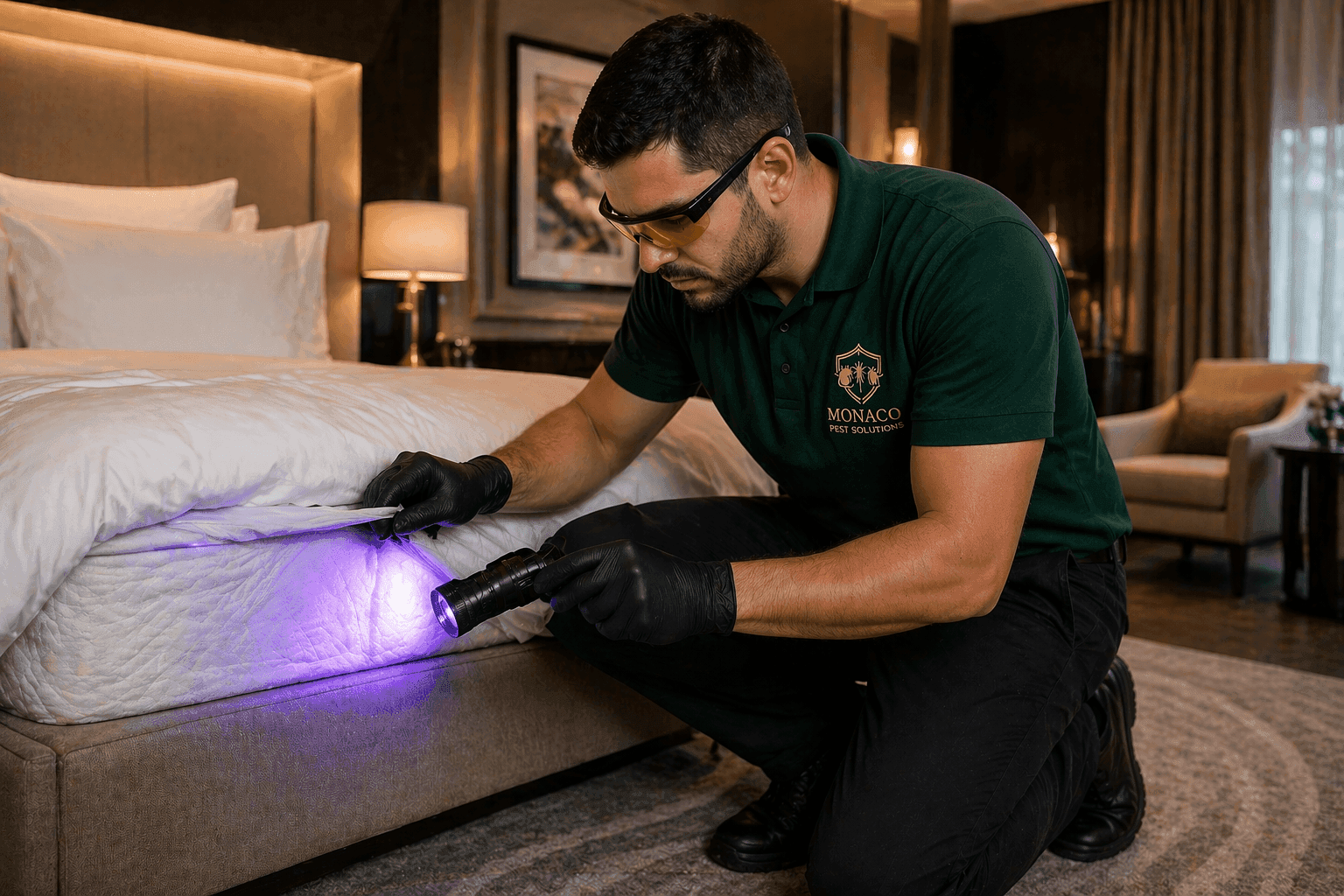
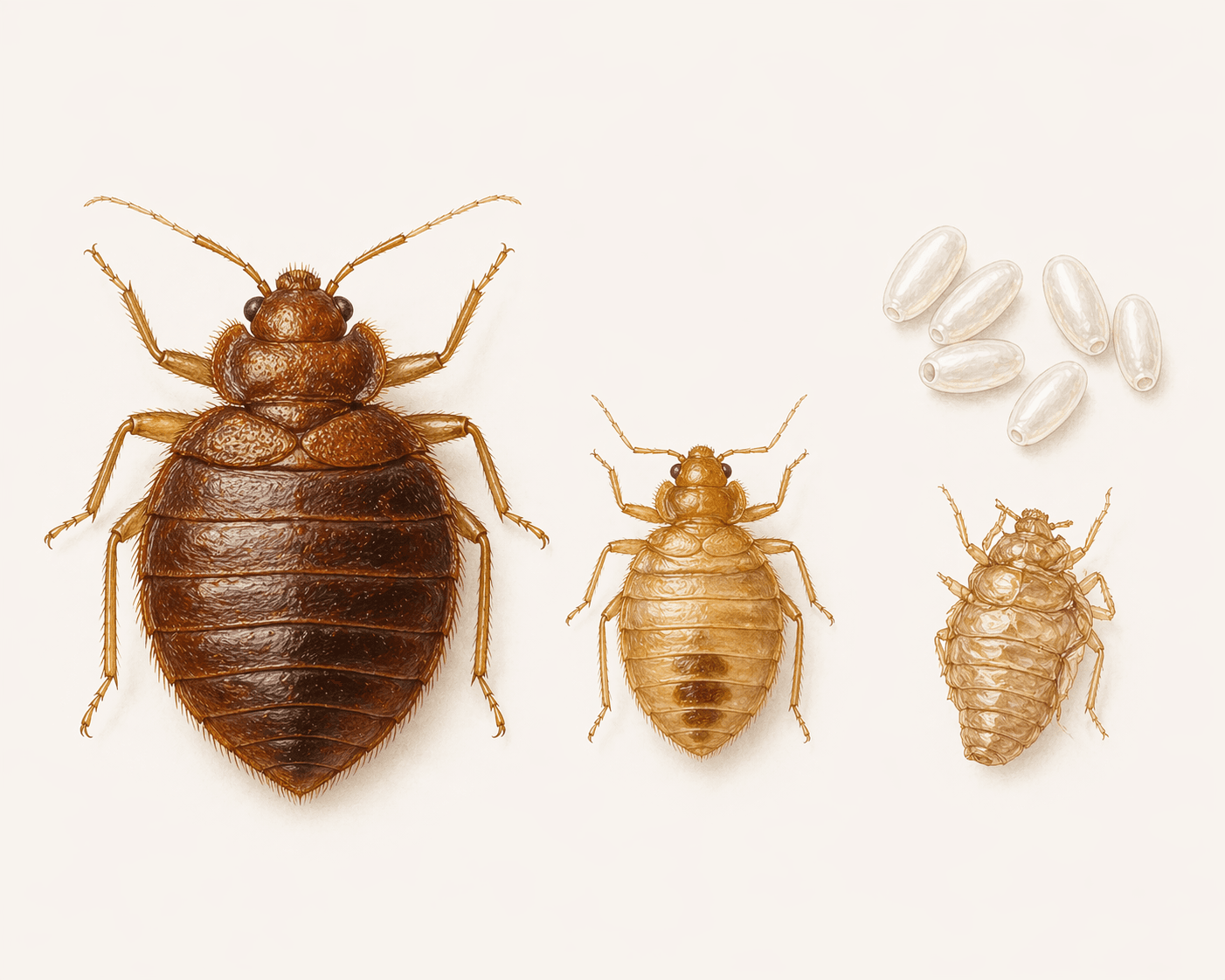
The adult bed bug is 4-7 mm, reddish-brown, flat as a lentil, wingless. It neither jumps nor flies: it walks at night, drawn by the sleeper's carbon dioxide. Check methodically: bites grouped or aligned in rows of three to five on skin exposed during sleep (some people show no reaction at all — the absence of marks proves nothing); black ink-dot stains on mattress seams, headboard and frame crevices; small blood streaks on the sheets; translucent shed skins and 1 mm white eggs glued in clusters; and a sweetish coriander-like smell in heavily infested rooms. Action: torch-inspect mattress seams, headboard screws, skirting behind the bed and wall sockets. Tape any specimen and photograph it — species confirmation drives the whole treatment.
What NOT to do (mistakes that worsen the infestation)
Do not switch bedrooms or sleep on the sofa: bed bugs follow your CO2 and colonise the new room within nights — you have just doubled the treatment area. Do not spray consumer insecticides: over-the-counter pyrethroids scatter the bugs into adjacent rooms and Riviera populations are widely resistant. Do not discard the mattress: carrying it through corridors and lifts seeds every floor, and the new bed is recolonised from the skirting within a week. Do not move suitcases, clothes or cushions to another room "to save them" — the number-one spread mechanism. Do not wait for more bites: each female lays five to fifteen eggs a day. Action: freeze the situation — nothing leaves the room except in a sealed airtight bag.
Immediate first steps (secure everything in 15 minutes)
Minutes 0-5: wearing gloves, remove sheets and covers by rolling them inward without shaking, and seal them at once in knotted waterproof bags. Minutes 5-8: run everything washable at 60 °C minimum; what cannot take hot washing goes into a -20 °C freezer for 72 hours, in its bag. Minutes 8-12: pull the bed 20 cm from the walls and remove anything hanging to the floor — the bed must become an island. Minutes 12-15: vacuum mattress seams, base and skirting with the crevice tool; bin the vacuum bag immediately in a knotted sack outside, then suck a little diatomaceous earth through the hose to neutralise survivors. Action: keep sleeping in the treated room, bed as an island — this concentrates the bugs on the secured bed instead of pushing them to explore the flat.
Isolate and contain to prevent spread
Encase mattress and base in certified zipped bed-bug covers, kept on for at least twelve months — trapped bugs eventually starve. Place smooth interceptor cups under each bed leg: climbing bugs get stranded, and the cups double as your before/after counting tool. Nothing leaves the room without a sealed bag — linen, suitcases, books, soft toys — each bag labelled with contents and date. Steam-treat suitcases or bag them in the sun behind glass: sustained heat above 55 °C kills all stages in minutes. In a hotel or residence, freeze the affected room plus the adjoining rooms (left, right, above, below) for inspection: bugs travel along skirting and ducts. Action: note the interceptor installation date and count catches every morning to objectively track treatment efficacy.
Call a certified professional: when and why
The bed bug is the hardest pest to eradicate yourself: eggs resist most insecticides, resistance is widespread, refuges are credit-card thin. Call a professional at the first visual confirmation — every week of delay multiplies the population. Monaco Pest Solutions operates under Certibiocide N°121134 (RCI Monaco 26S10394) with: certified canine detection that screens a room in minutes and pinpoints live foci with reliability no human eye can match — decisive for delimiting the real treatment zone in a hotel or on a yacht; heat treatment raising the room to 55-60 °C for several hours, lethal to all stages including eggs, residue-free — the reference for palace suites and cabins; 180 °C dry steam on mattresses and skirting; targeted professional chemicals in rotation to defeat resistance; and absolute discretion, in plain clothing, scheduled with housekeeping or the captain. Our 24/7 emergency line arranges a canine inspection within 24 hours across Monaco and the Riviera.
The MPS eradication protocol: 4 phases
Phase 1 — Diagnosis and delimitation (day one): visual and canine inspection, mapping of foci, classification of every room (infested, adjacent, clean), written treatment plan. Phase 2 — Combined treatment (days 1-3): heat or steam on sleeping areas, professional insecticide on skirting, frames and furniture backs, diatomaceous earth in inaccessible voids; linen follows the sealed-bag, 60 °C wash, hot-dry circuit. Phase 3 — Second pass (day 14): treatment of hatchlings from eggs laid before the first visit — non-negotiable; skipping it is the leading cause of relapse. Interceptor counts. Phase 4 — Final control and closure (days 28-45): validation canine inspection, device removal, end-of-treatment certificate — a valuable document for reassuring a hotel guest, an owner or a captain before a charter.
Prevention so bed bugs never return
After every trip: open the suitcase on hard floor (never on the bed), inspect seams, put clothing straight into a 60 °C wash, store the case in a closed cover. In hotels: luggage on the rack away from the bed, quick check of mattress seams and headboard before unpacking. Keep the full encasements on after treatment: they make any reinfestation visible within days instead of months. Steam or freeze second-hand furniture, frames and old books for 72 hours before they come in. In establishments, train housekeeping in the four-point check (seams, headboard, skirting, armchair) at every room turnover: early reporting divides the cost of an incident by ten. Full biology and detection technology on our bed bug page.
Special cases: palace hotel, yacht, residence
Palace and hotel: bed bugs arrive in luggage, never through poor hygiene. The winning protocol combines quarterly preventive canine screening of floors, a documented turnover procedure and a quarantine room for suspect linen. We work in unmarked attire, outside guest hours, and systematically treat adjoining rooms. Yacht: crew and guest cabins share thin partitions and common ducts; one focus can spread through a whole corridor in a single crossing. Canine inspection before and after each charter, steam treatment of mattresses in port, quarantine for outside laundry. Residence and villa: household staff and visiting guests are the most frequent unwitting vectors; fit guest rooms with discreet interceptors and inspect after every extended stay. Next step: request your free quote with canine inspection, or call the 24/7 emergency line for a discreet intervention within 24 hours. Bites around the ankles rather than in rows? Compare with our guide on flea problems in Monaco.
Zones served in Monaco and on the Riviera
We operate in particular on Monaco-Ville and Jardin Exotique.
Frequently asked questions
- How can I be sure it's bed bugs and not fleas?
- Bed bugs bite skin exposed during sleep, in rows of three to five, and leave black stains on mattress seams. Fleas mainly bite ankles, during the day, and jump — a bed bug never jumps.
- Should the mattress be thrown away in case of bed bugs?
- No. Carrying the mattress out spreads bugs through the whole building, and a new mattress is recolonised within days from the skirting. Heat or steam treatment plus a certified full encasement saves the mattress in almost every case.
- Is heat treatment against bed bugs 100% reliable?
- Heat held at 55-60 °C for several hours kills all stages including eggs, with no chemical residue. Reliability depends on temperature uniformity, monitored by probes; a second pass at day 14 locks in the result.
- How long can bed bugs survive without feeding?
- Several months: at room temperature an adult bed bug can fast for six months, longer in cool conditions. That is why full encasements must stay on for at least twelve months and vacant flats never clear up on their own.
- Is a canine bed bug inspection really more reliable?
- Yes: a certified detection dog locates live foci, including behind skirting and inside bed bases, in minutes per room. It delimits the treatment zone precisely, which avoids treating rooms that are actually clean.